
HIOKI Current Transducers / Pass-through Sensors
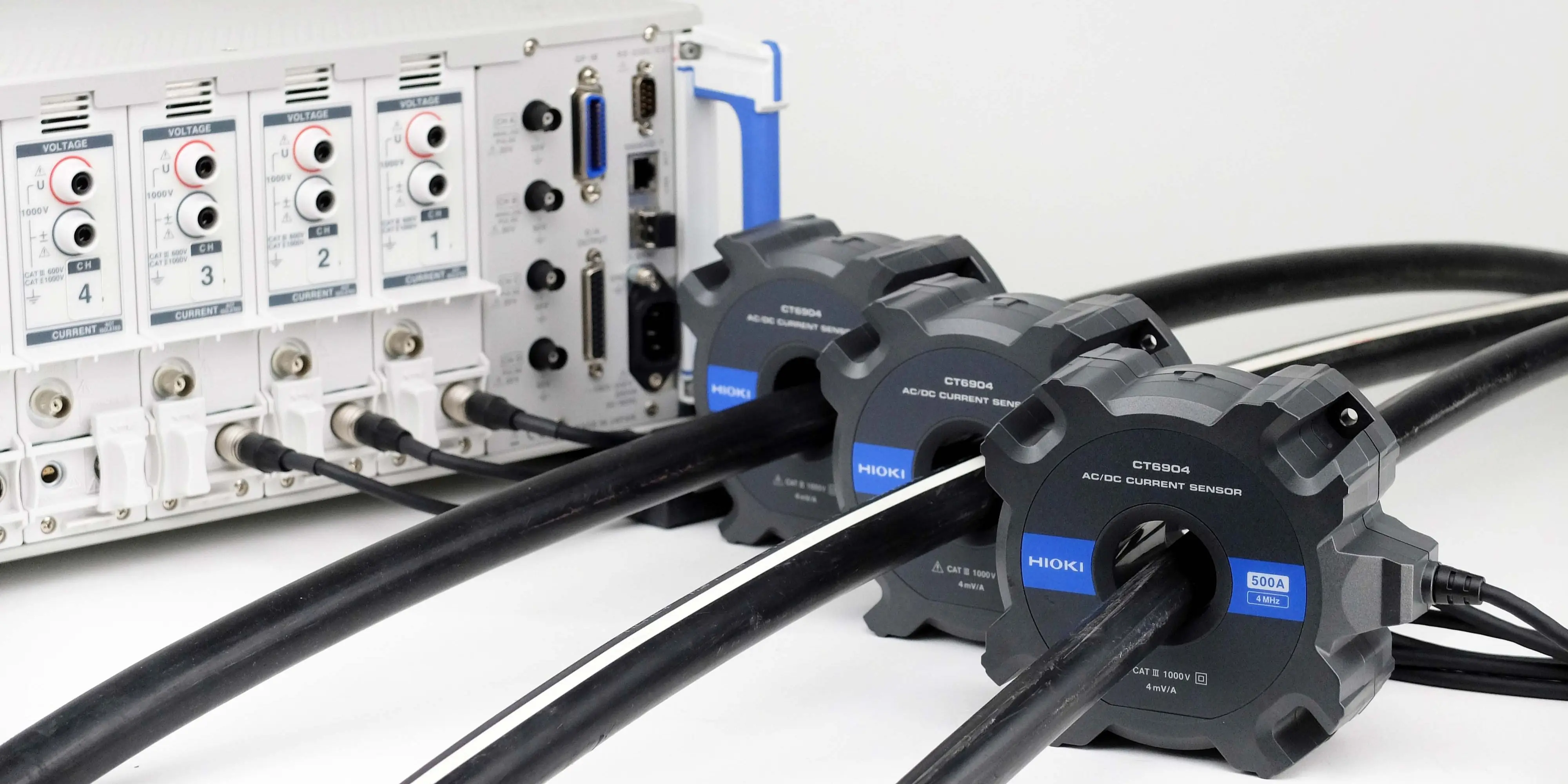
High-Accuracy AC/DC Current Measurement for Power Analysis
-
High-Current Transducers up to 2000 A
For high-current power analysis, efficiency testing, EV drivetrain development, and applications where accuracy, repeatability, and low phase error are critical. - Current Transducers up to 200 A
For precise AC/DC current measurement in power electronics, motor, inverter, and converter testing, with models covering fast current dynamics, harmonic analysis, and power grid connection testing.


HIOKI CT6862-05 - AC/DC Current Sensor, Fluxgate, 50 A / 1 MHz


HIOKI CT6863-05 - AC/DC Current Sensor, Fluxgate, 200 A / 500 kHz

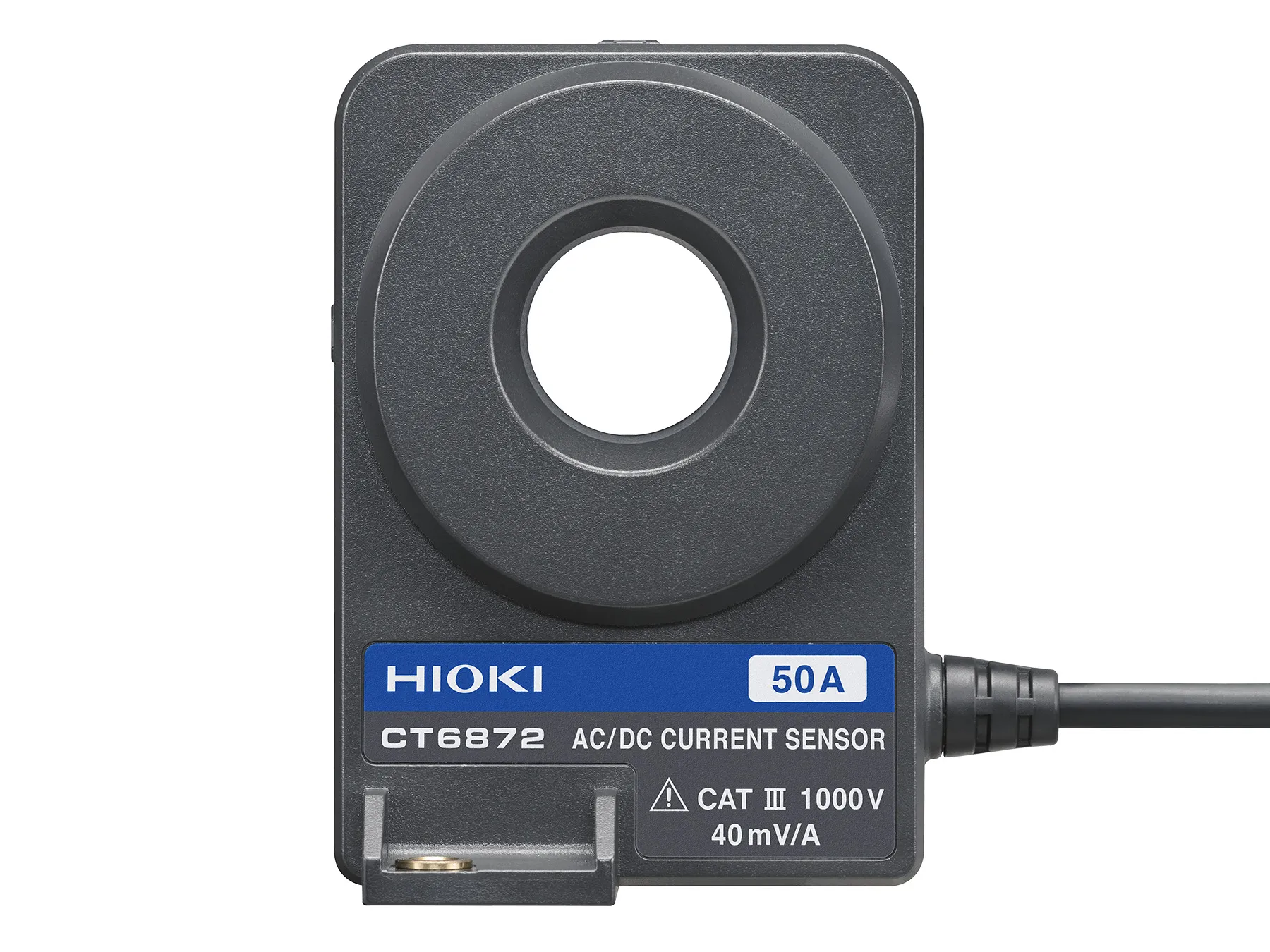
HIOKI CT6872 - AC/DC Current Sensor, 50 A / 10 MHz

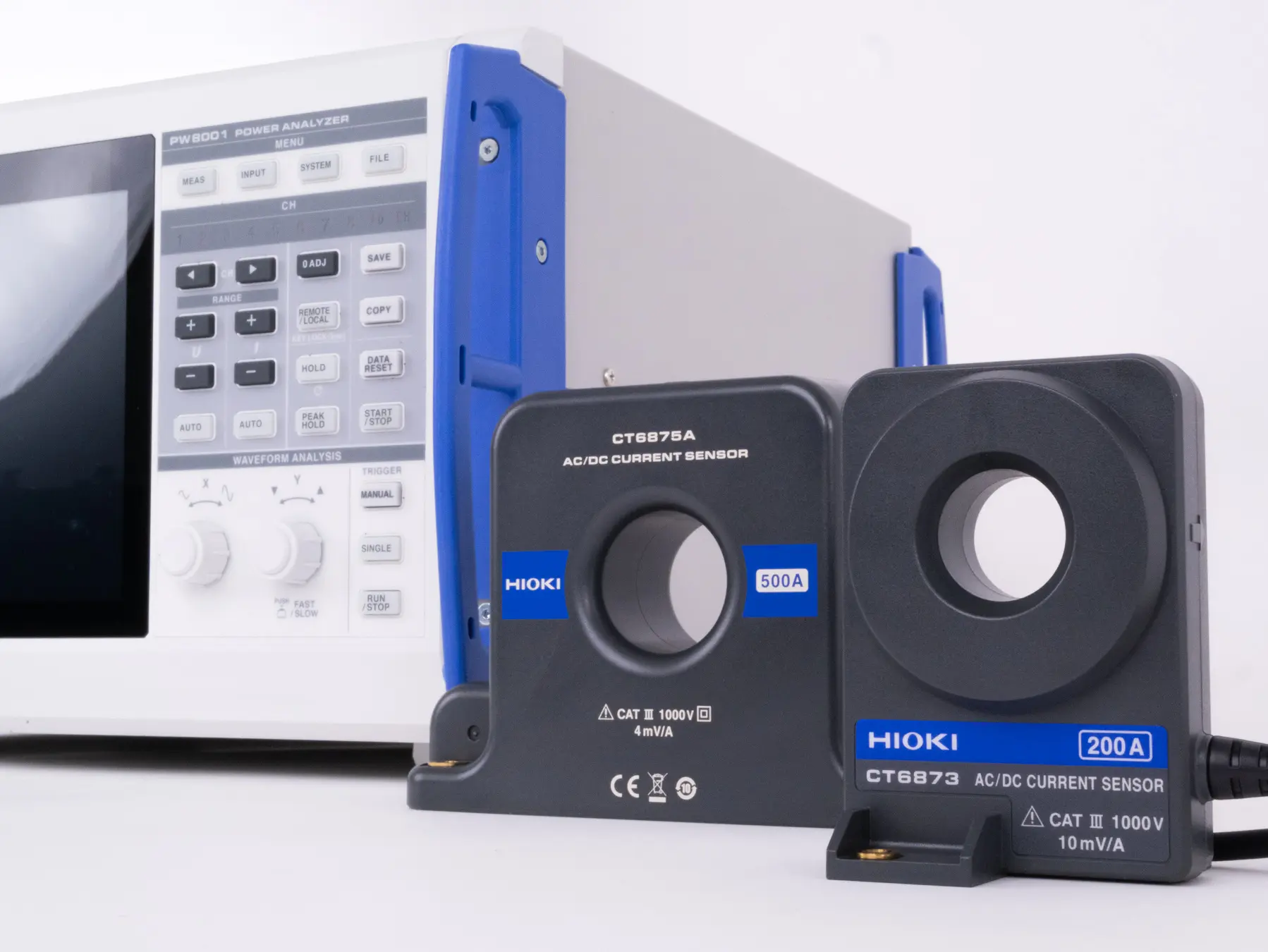
HIOKI CT6873 - AC/DC Current Sensor, 200 A / 10 MHz


HIOKI CT6875A - AC/DC Current sensor, 500 A / 2 MHz


HIOKI CT6876A - AC/DC Current sensor, 1000A / 1.5 MHz
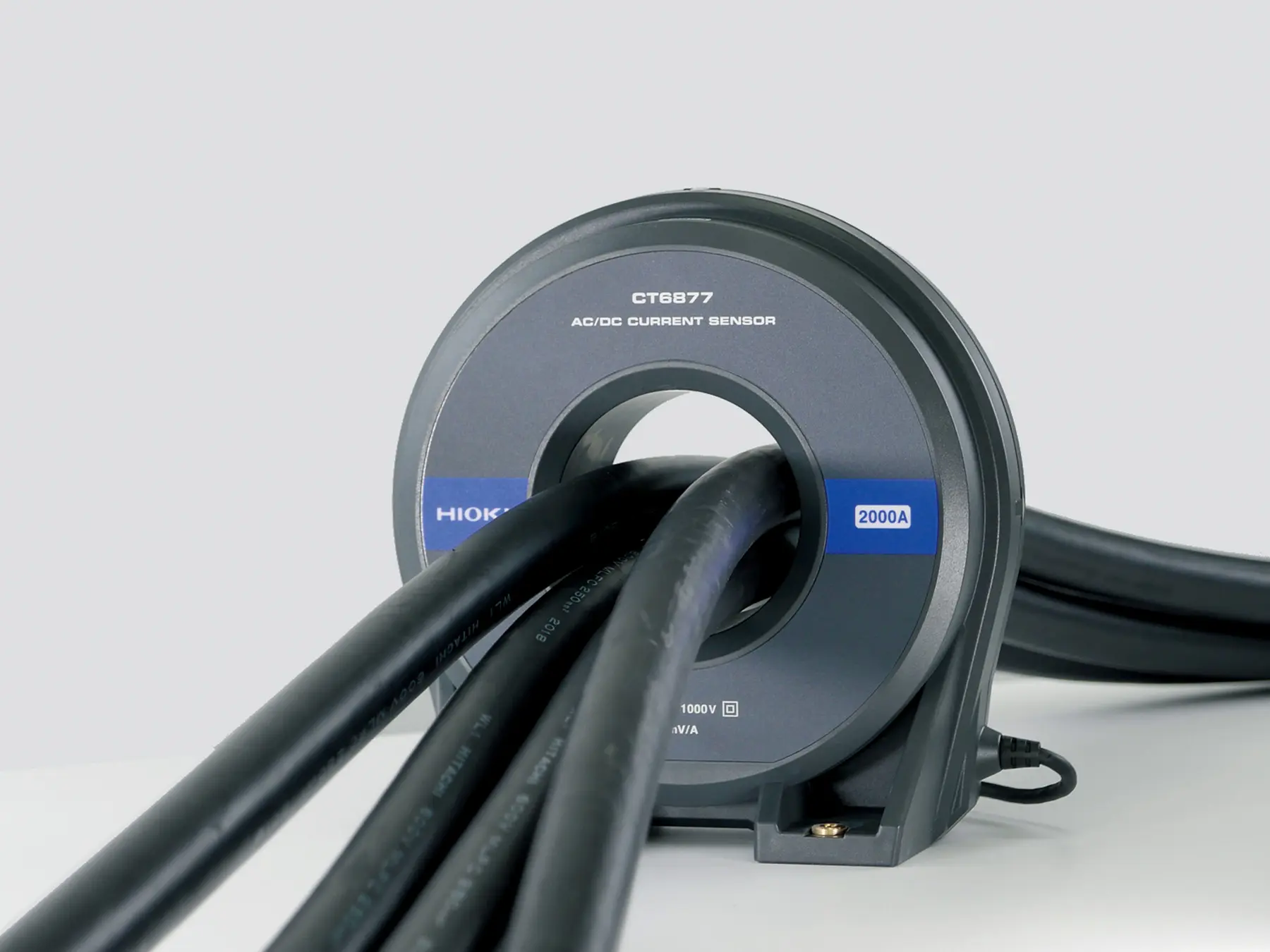
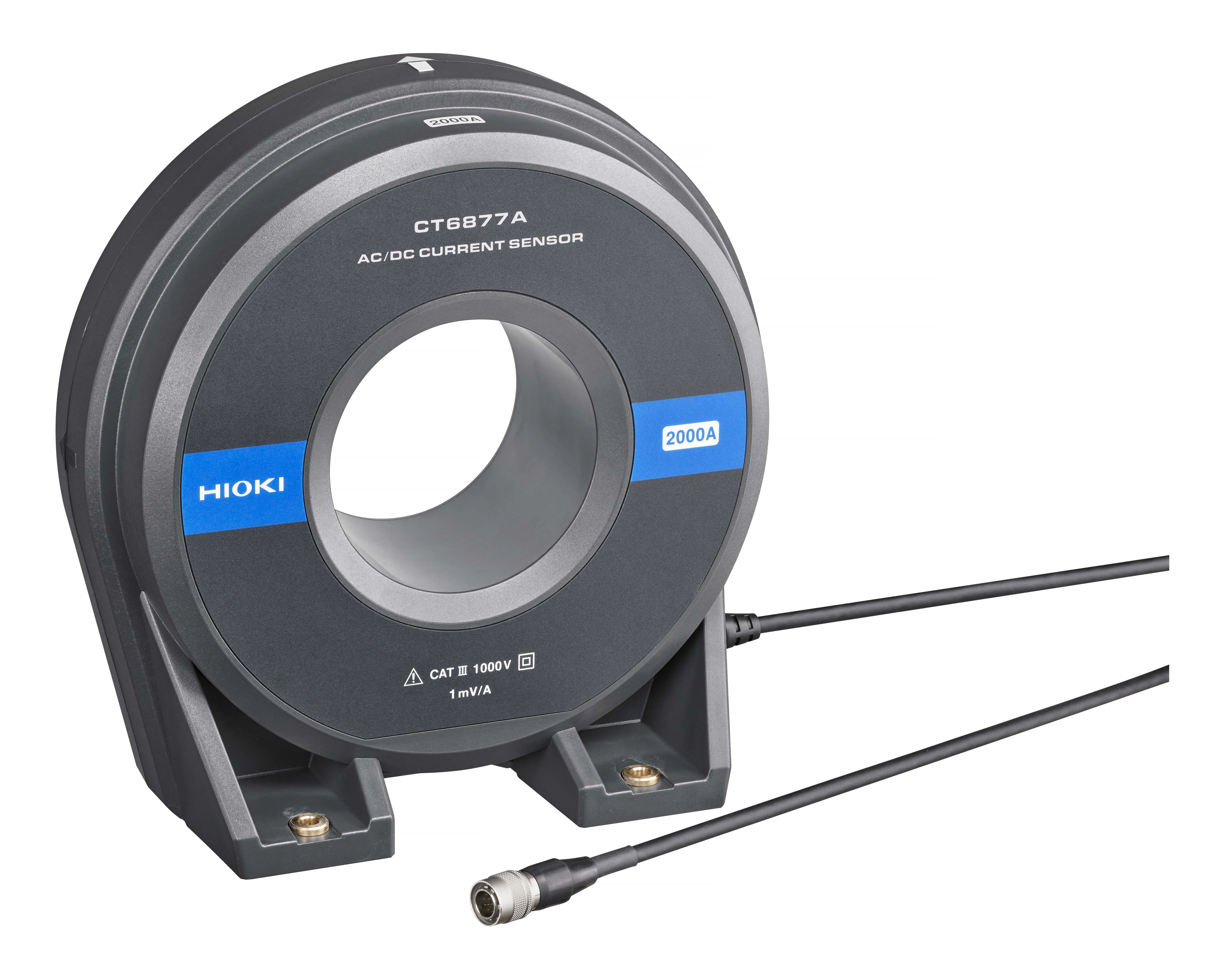
HIOKI CT6877A - AC/DC-Current sensor, 2000 A / 1 MHz
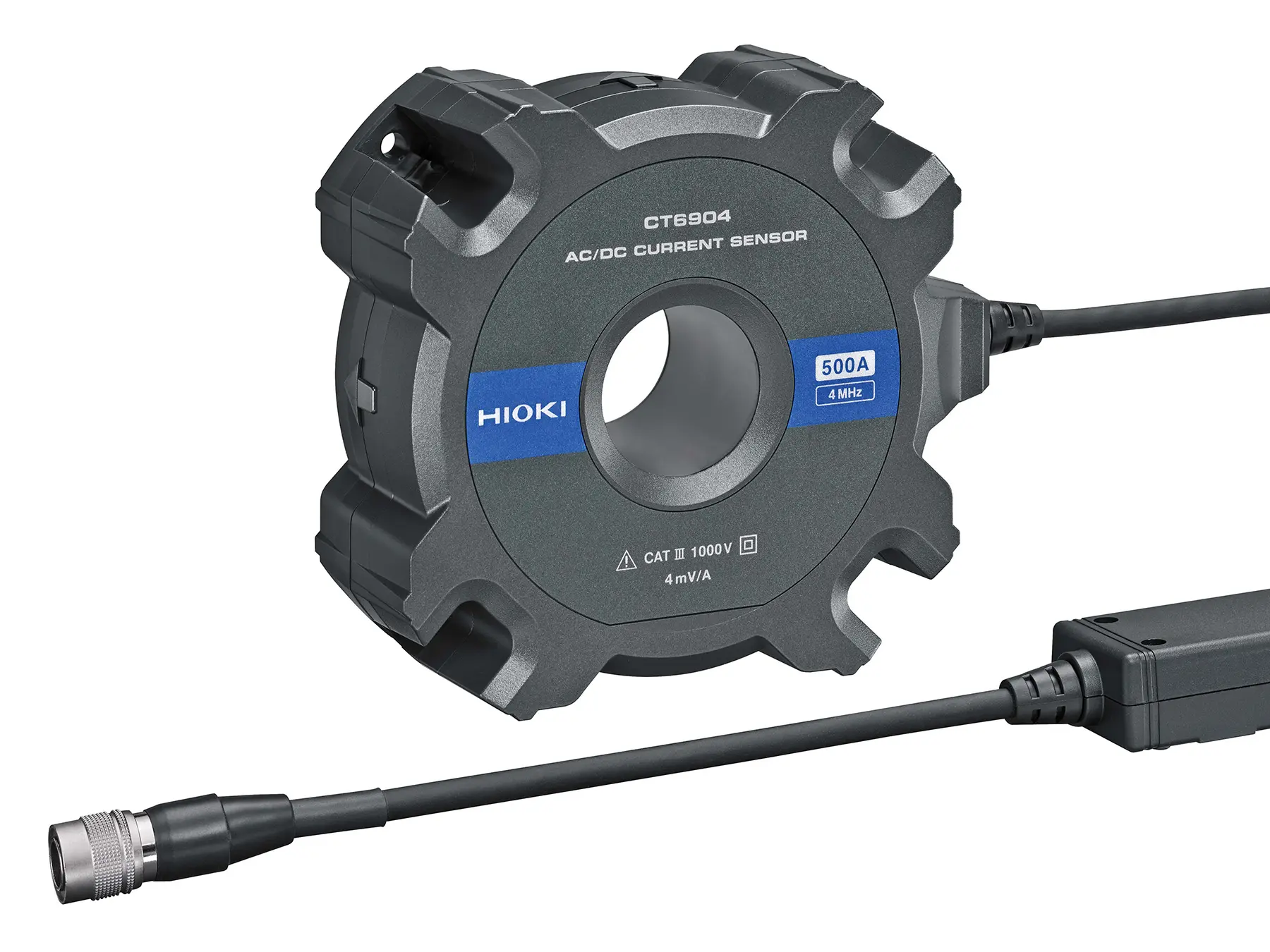

HIOKI CT6904A - High-precision AC/DC current sensor, 500 A / 4 MHz
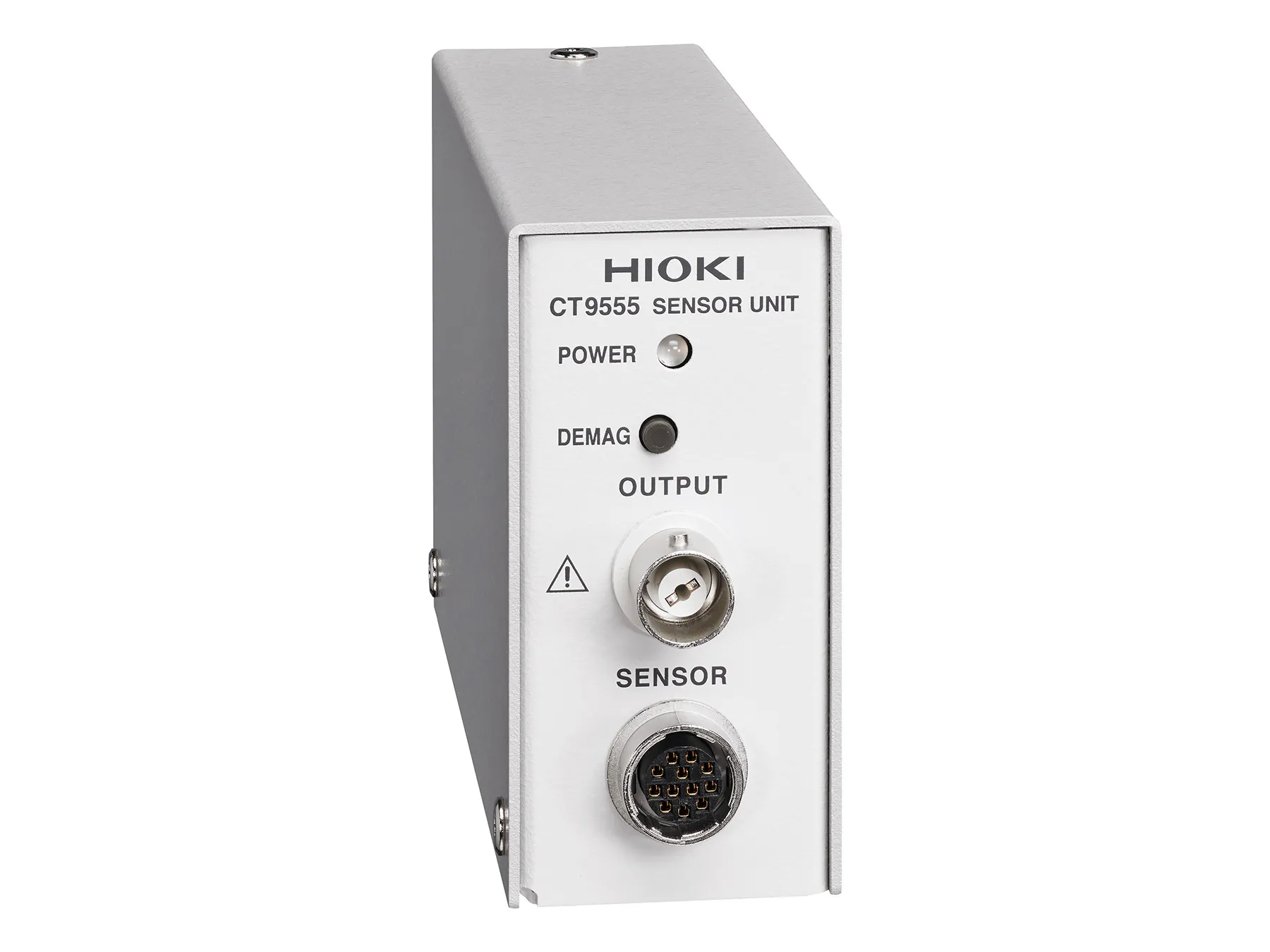

HIOKI CT9555 - Current Sensor Interface, 1-Channel
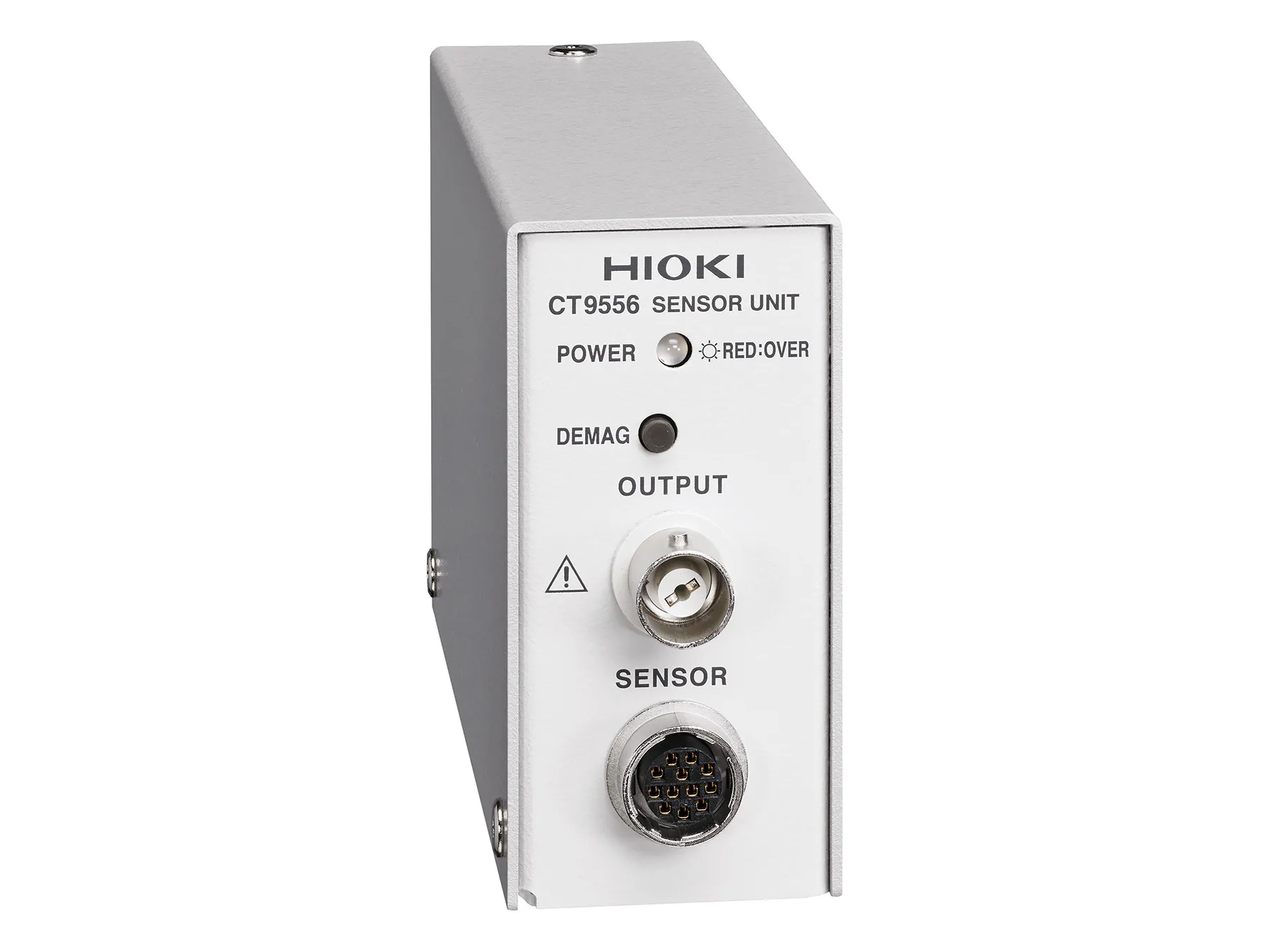
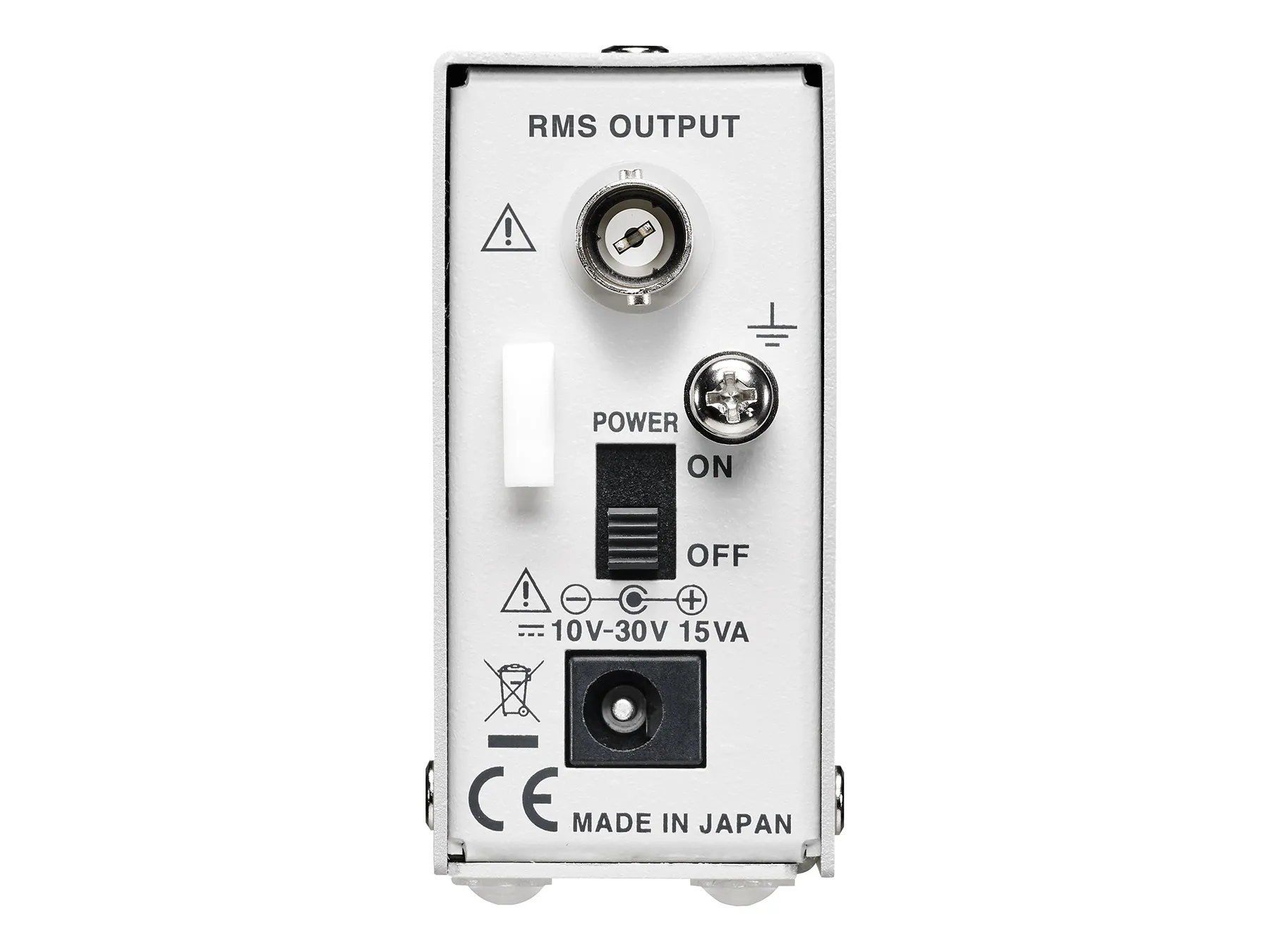
HIOKI CT9556 - Current Sensor Interface, 1-Channel, with RMS Output
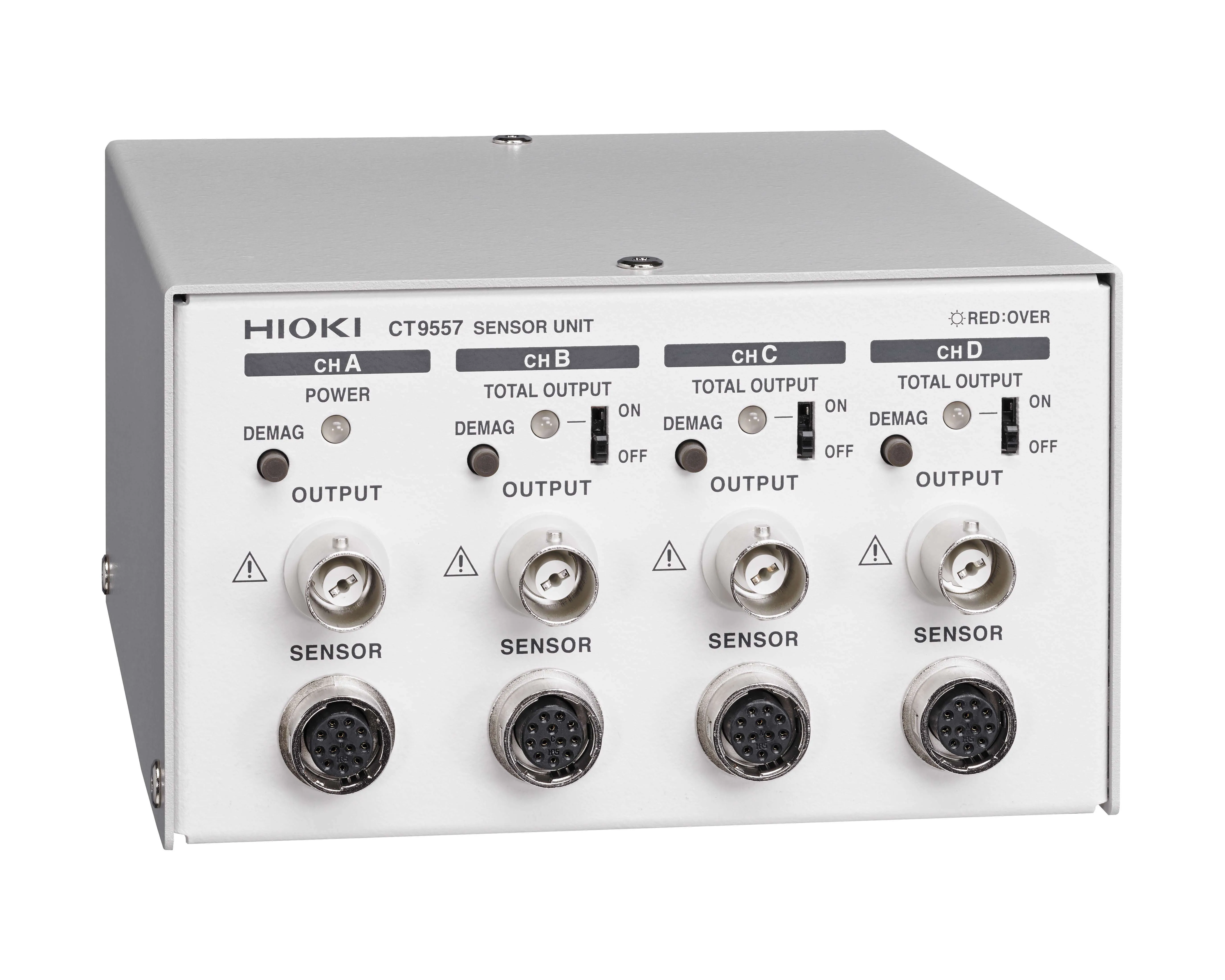
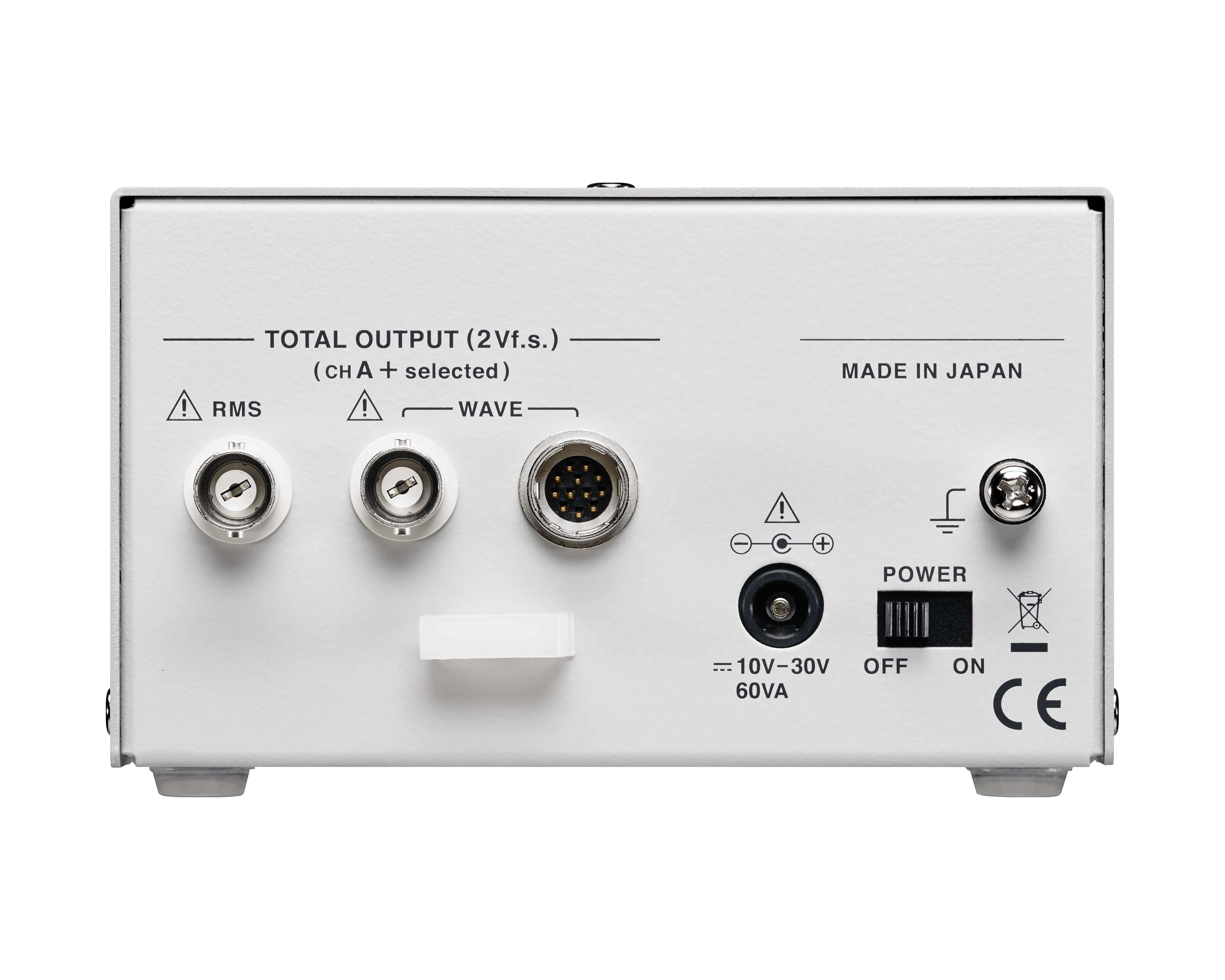
HIOKI CT9557 - Current Sensor Interface, 4-Channel
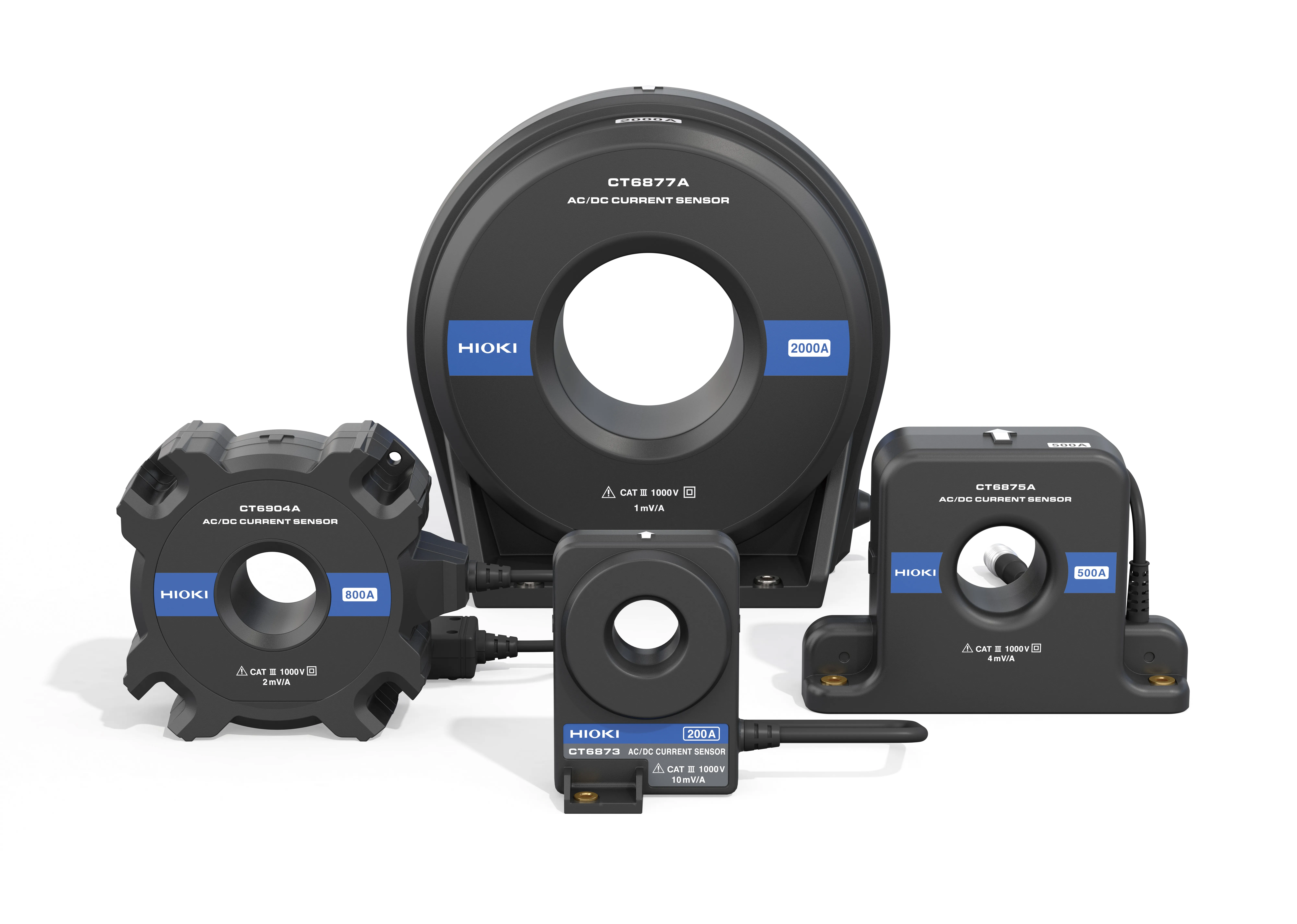
Select your Current Transducer
The selection of the right current sensor model for your measurement task: Are you measuring high currents in a power analyzer setup, or analyzing faster current changes in power electronics testing? The right current transducer depends on the current level, the signal speed, and the conductor size in your setup.
Use the table below to compare the main selection criteria: rated current, bandwidth, basic accuracy, and maximum conductor diameter. Checking these values help narrow down the models before checking detailed specifications and system compatibility.
| Model | Rated current | Bandwidth | Basic accuracy | Max. Conductor diameter |
|---|---|---|---|---|
| CT6877A | 2000 A | DC – 1 MHz | 0,04 % rdg | Ø 80 mm |
| CT6876A | 1000 A | DC – 1.5 MHz | 0,04 % rdg | Ø 36 mm |
| CT6875A | 500 A | DC – 2 MHz | 0,04 % rdg | Ø 36 mm |
| CT6904A | 500 A | DC – 4 MHz | ±0,025 % rdg | Ø 32 mm |
| CT6873 | 200 A | DC – 10 MHz | ±0,03 % rdg | Ø 24 mm |
| CT6872 | 50 A | DC – 10 MHz | ±0,03 % rdg | Ø 24 mm |
| CT6863-05 | 200 A | DC – 500 kHz | ±0,05 % rdg | Ø 24 mm |
| CT6862-05 | 50 A | DC – 1 MHz | ±0,05 % rdg | Ø 24 mm |
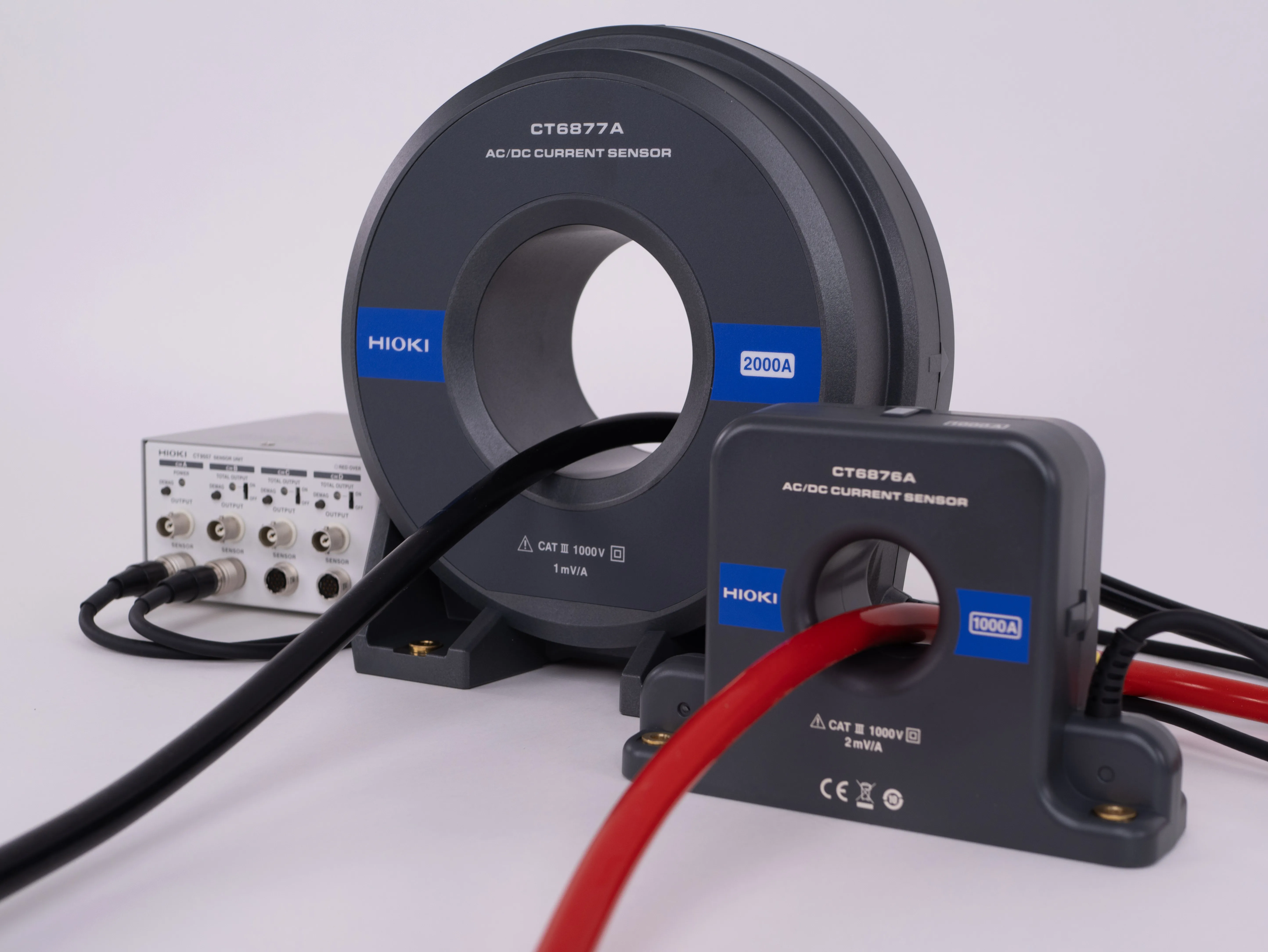
High-Accuracy AC/DC Measurement for Test Benches
HIOKI high-current transducers provide precise and repeatable AC/DC current measurement for power analyzer setups and high-current test benches. Typical applications include efficiency analysis, EV drivetrain development, inverter and converter testing, and other power electronics measurements where low phase error and stable results are critical.
The group ranges from 500 A models to the high-current modelCT6877A for measurements up to 2000 A. The CT6904A achieves ±0.025% rdg. accuracy, making it the high-precision reference model within the lineup.
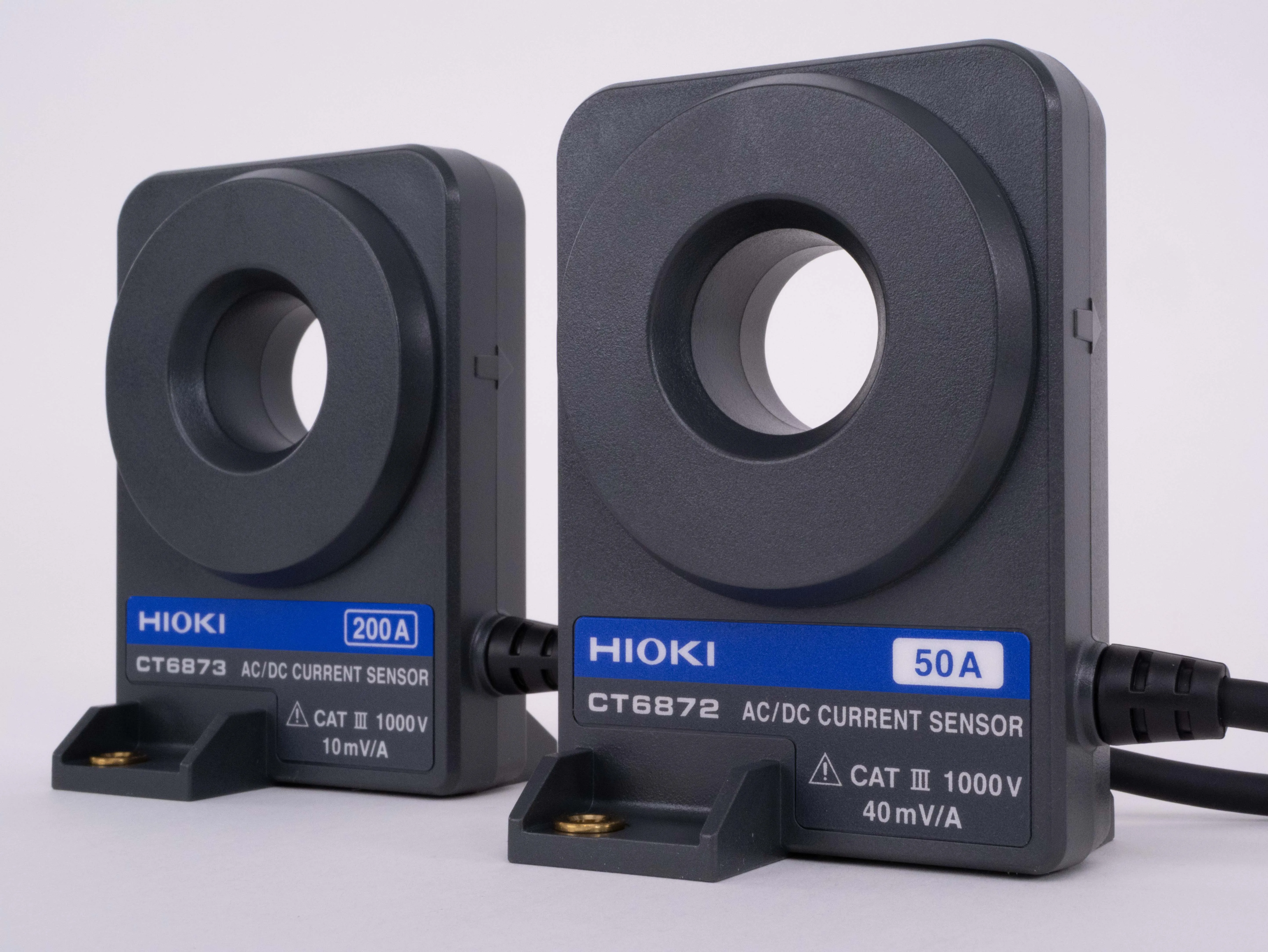
Fast Current Dynamics in Power Electronics Testing
The HIOKI Current transducers up to 200 A are designed for precise AC/DC current measurement where fast signal behavior needs to be captured reliably. They are well suited for waveform observation, harmonic analysis, inverter and converter testing, motor drive evaluation, and power grid connection testing.
Within this group, CT6873 and CT6872 are the high-frequency performers, combining current ranges up to 200 A or 50 A with bandwidths up to 10 MHz. This makes them suitable for analyzing fast current dynamics in modern power electronics
Explore more topics about Current Sensing

DC Current Measurement and Bandwidth
All you needed was a precise sensor to measure DC current, and after talking to HIOKI you ended up ordering a 10MHz AC/DC current sensor… Does HIOKI employ sales magicians who can sell ice to eskimos? Or does bandwidth also matter when measuring DC?
Read more in our blog
Zero-Flux Current Sensors: Like in "Back to the Future"?
Do you remember the “flux capacitor” that Doc Brown invented in “Back to the Future”? It was the core component in that iconic DeLorean which – after supplying it with 1.21 GW of energy – would allow Marty McFly to travel through time.
Read more in our blog