The difference is not so much what can be measured in principle. What matters is why the measurement is made, where it is made, and which measurement logic is used.
A power logger answers questions about energy consumption. A power Quality analyzer examines the quality of the electrical supply.
Power loggers: understanding energy consumption
A power logger is the right instrument when the main focus is energy consumption, load profiles, and demand.
Typical questions include:
• How much energy is being used?
• When do load peaks occur?
• How does consumption change over a day, a week, or a month?
• Which loads dominate the overall load profile?
• Is there potential to reduce energy costs?
A power logger typically records voltage, current, power, and energy over longer periods of time. Its strength is not the analysis of individual short events, but the continuous observation of load behavior.
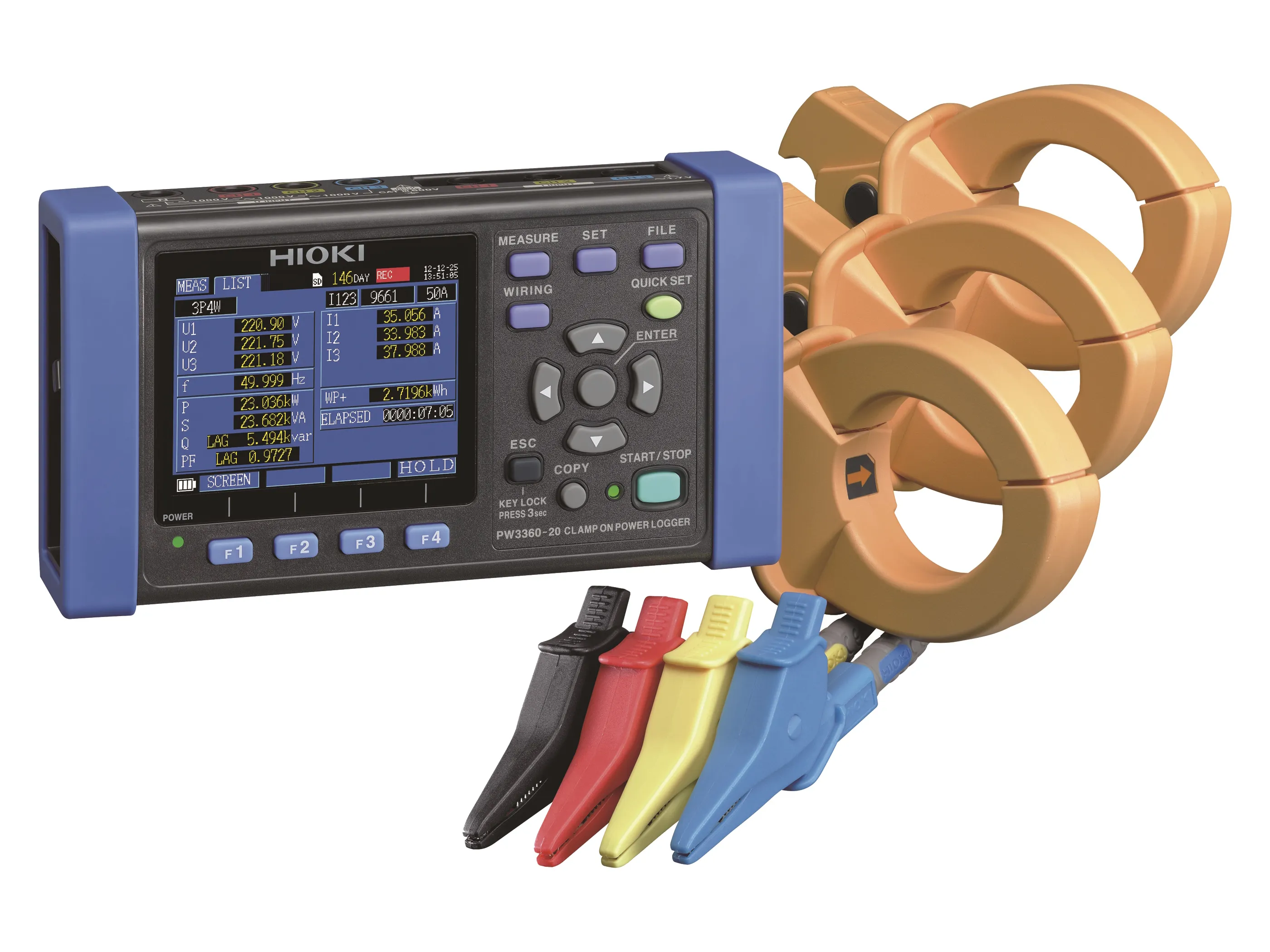
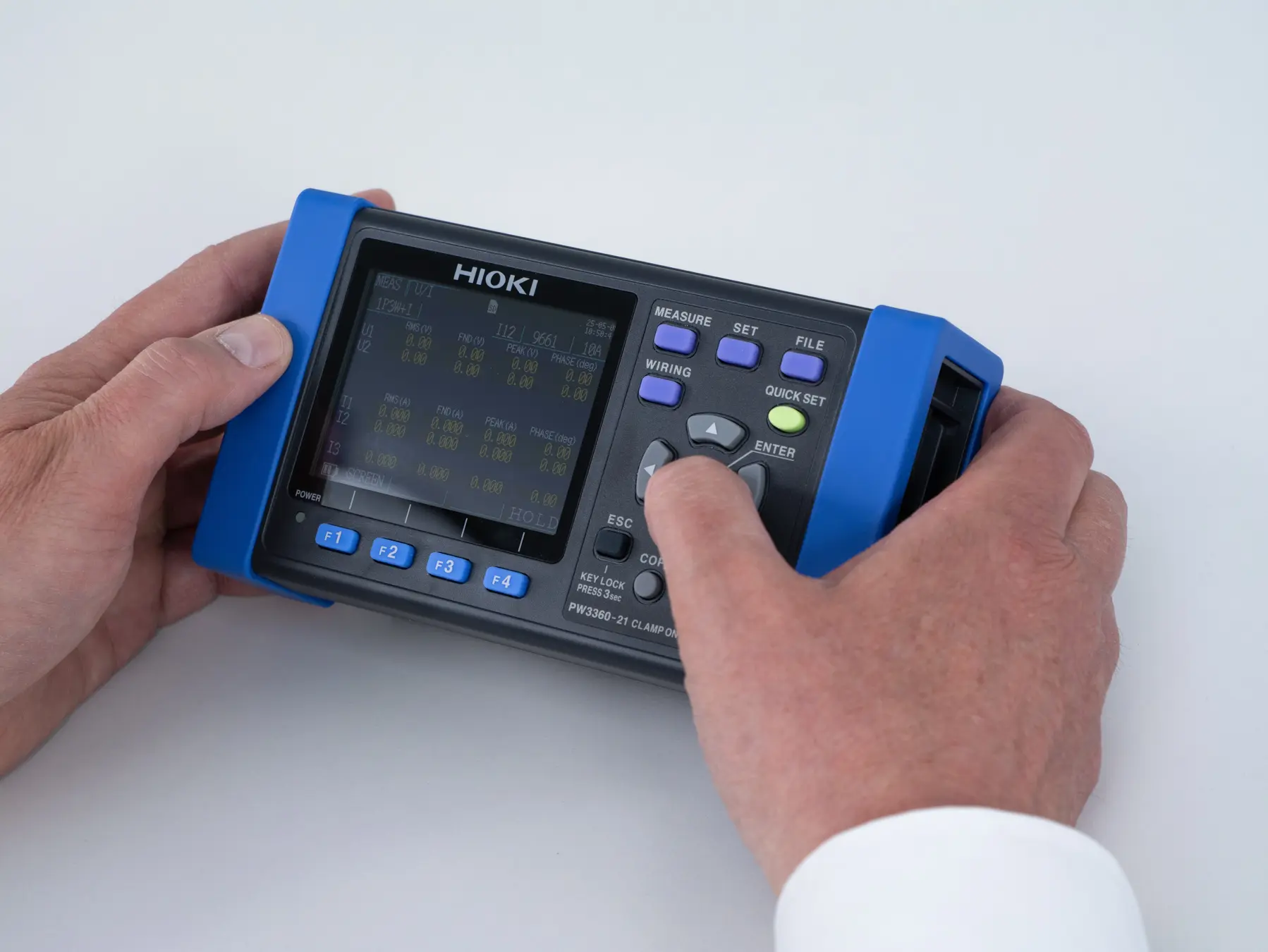
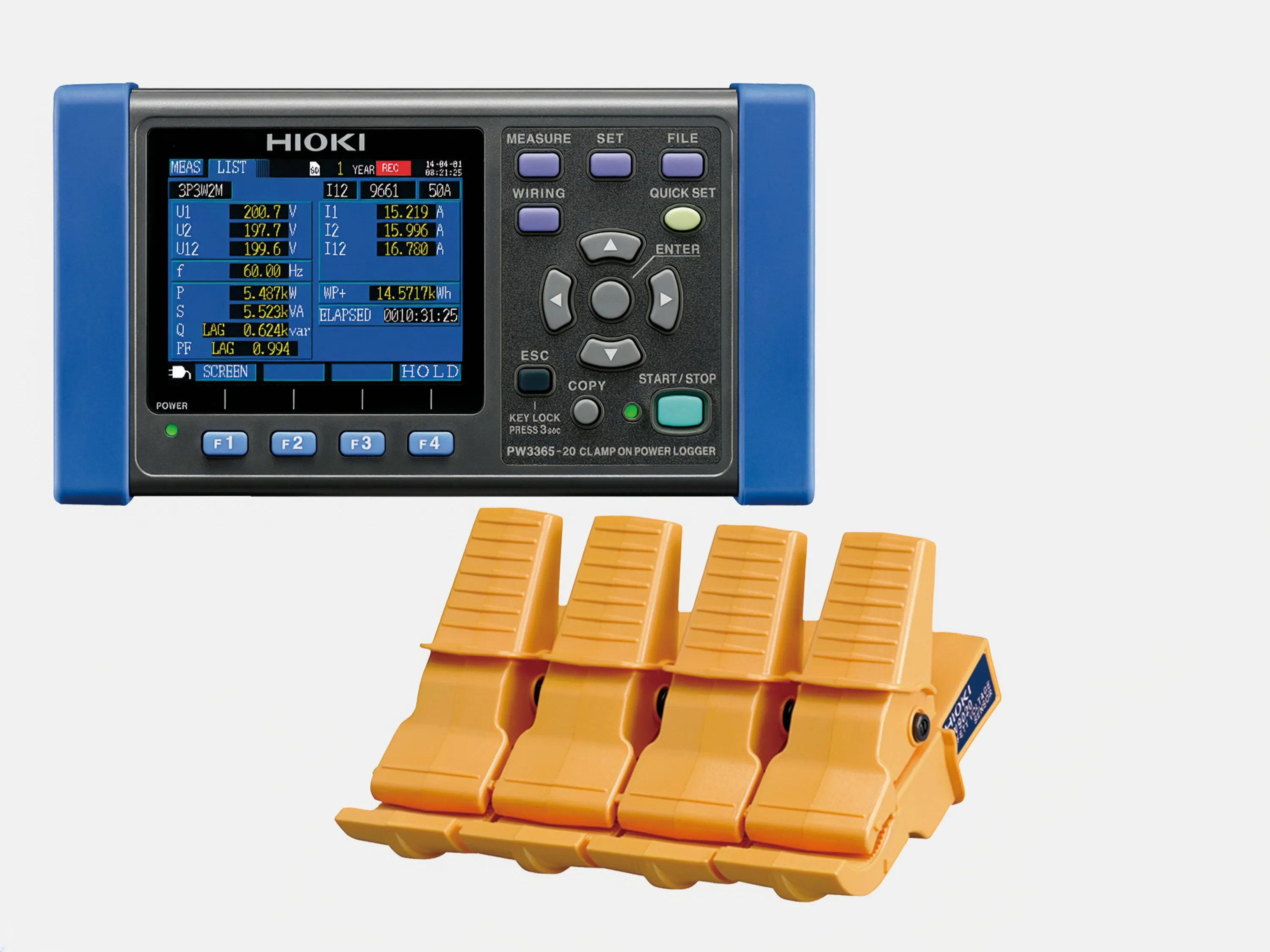
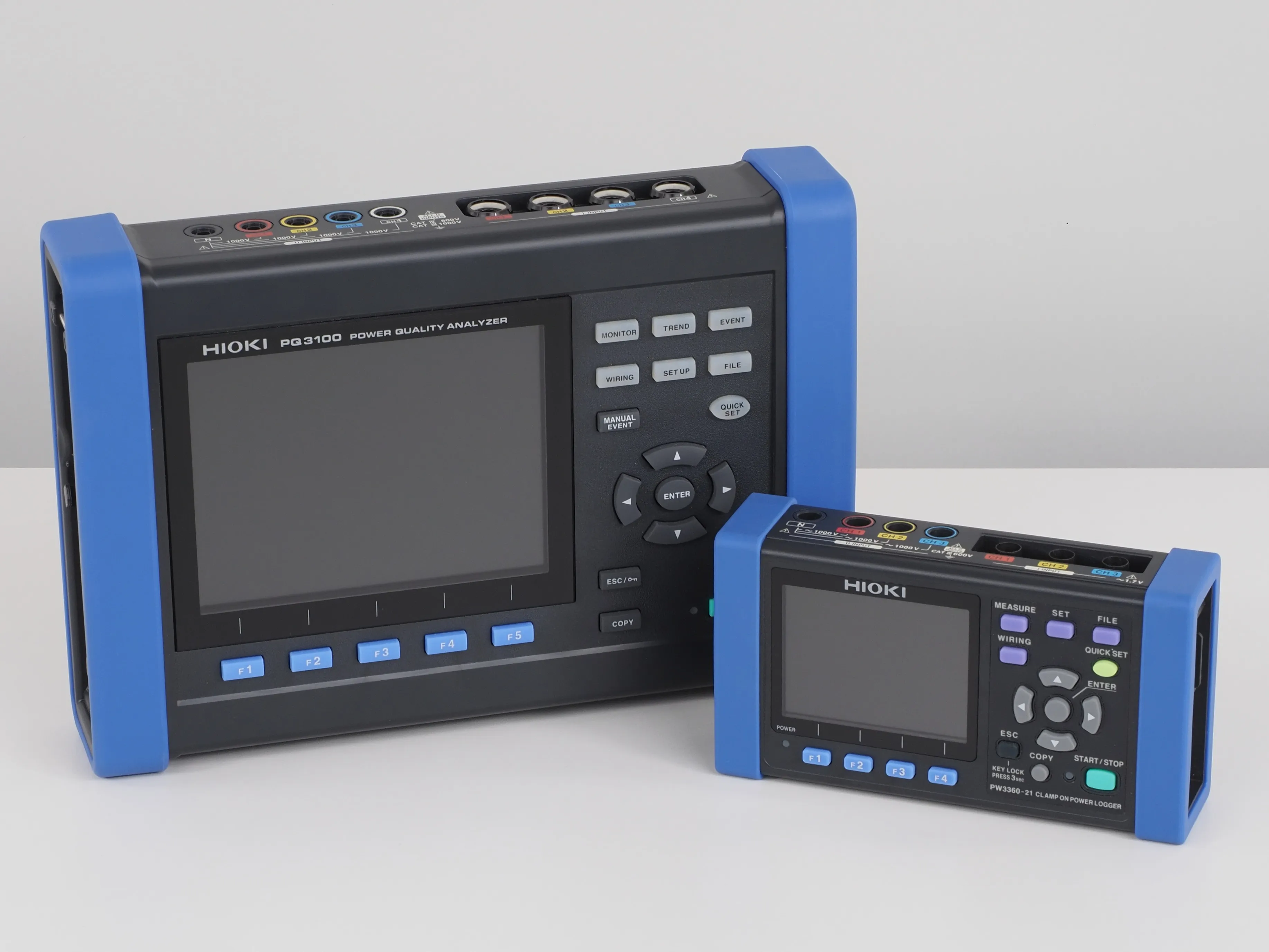
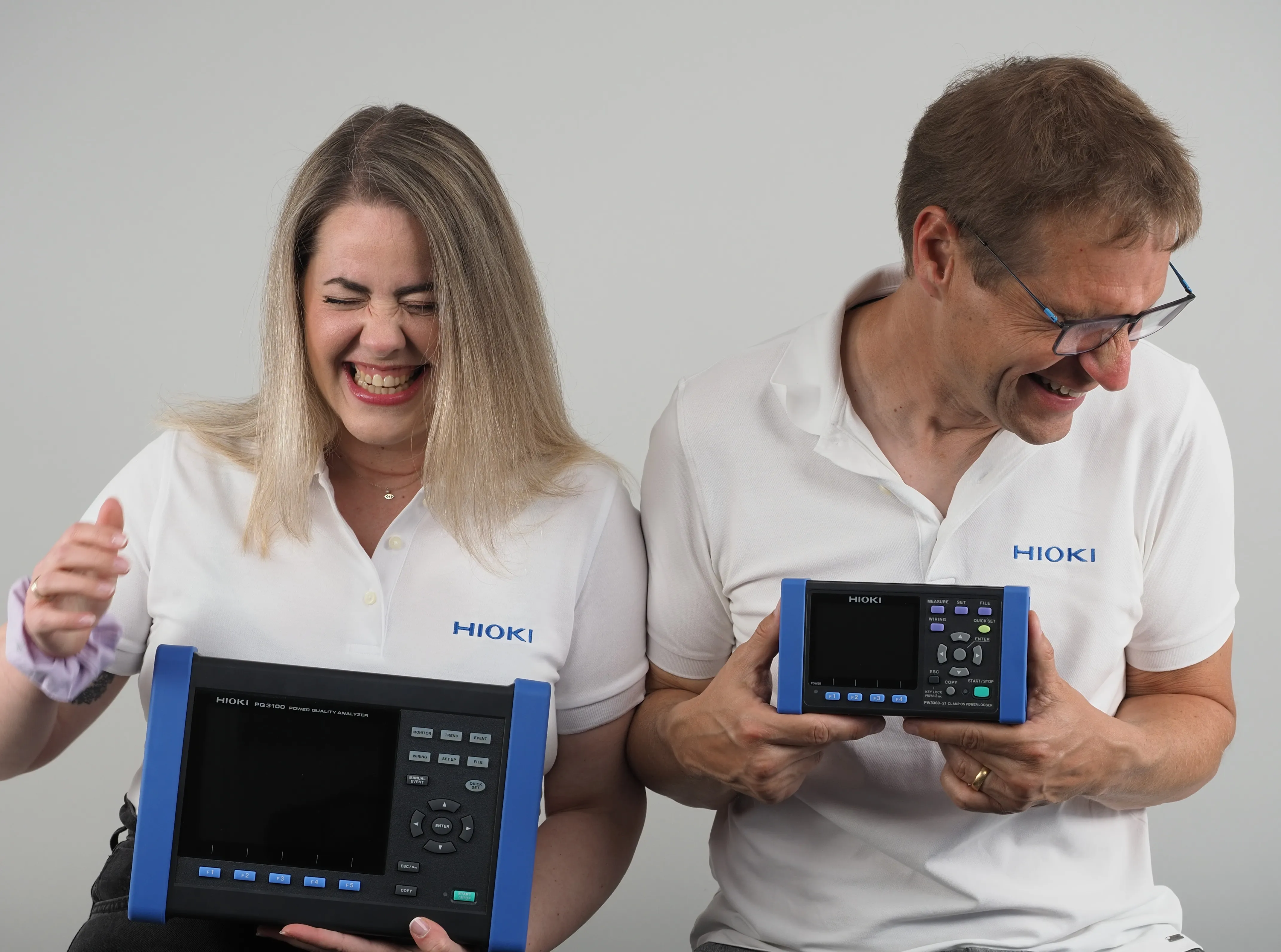
HIOKI power loggers such as the PW3360-20, PW3360-21, or PW3365 are designed, like power loggers in general, for grid-related measurements. Their power calculation is therefore based on a measurement frequency of 50 Hz or 60 Hz and uses complete cycles to achieve high measurement accuracy: 10 cycles at 50 Hz and 12 cycles at 60 Hz. In both cases, this results in a 200 ms calculation window.
What a power logger does not provide is a deeper analysis of the data within this 200 ms calculation window. Very short power events cannot be detected as specific events and recorded together with the corresponding waveform. Instead, the power logger stores the calculated power values. In return, it can do this reliably over long periods, such as one or several weeks.
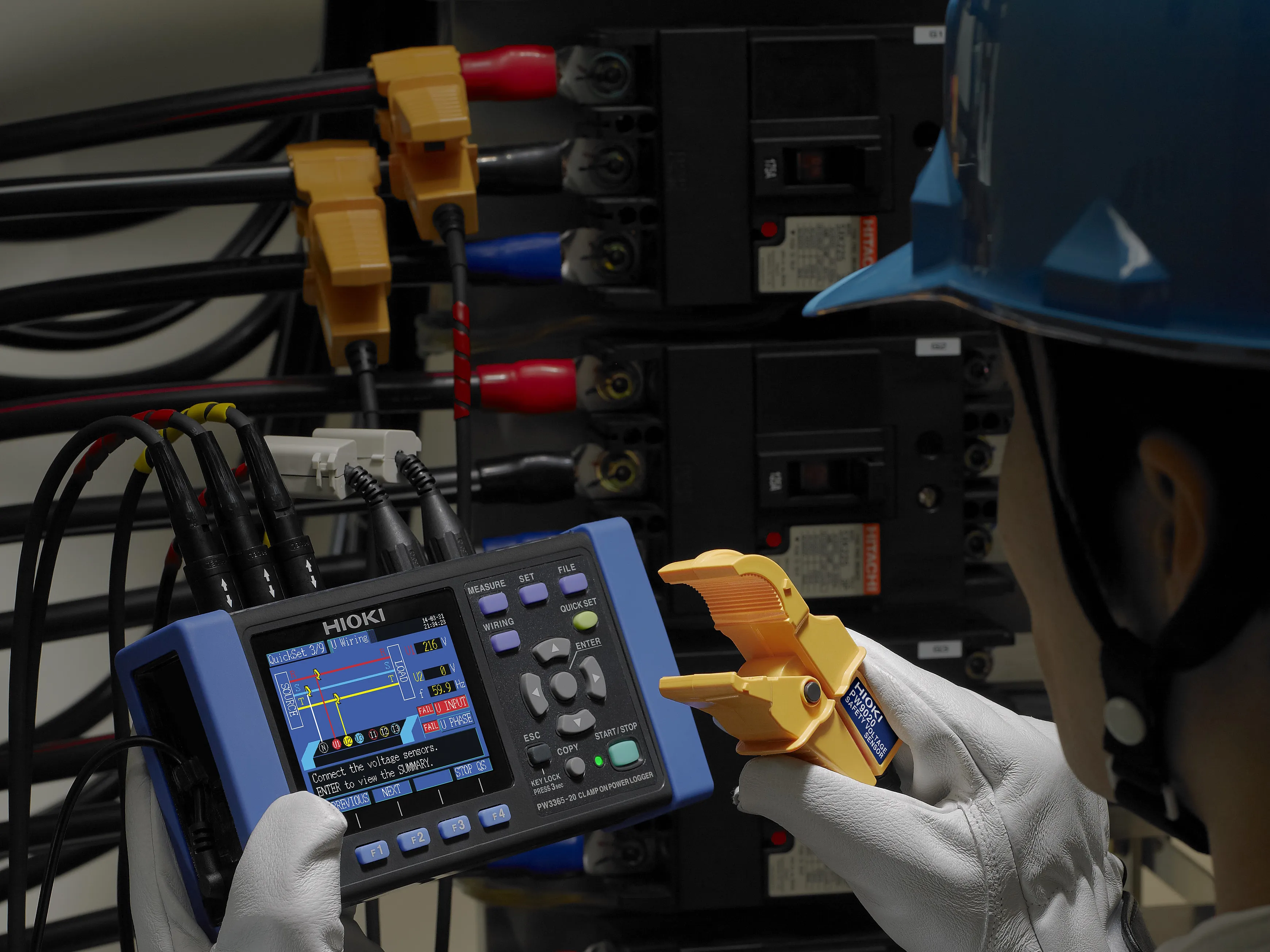
Power loggers such as the PW3360-21 or PW3365 can also record harmonic values or THD. This is useful in practice because harmonic components can, for example, indicate non-linear loads. However, the primary task remains the long-term recording of consumption and load data.
Power quality analyzers: detecting and documenting power quality events
Like a power logger, a power quality analyzer is designed for grid-related measurements, typically in 50 Hz or 60 Hz systems. It also covers the typical basic measurements of a power logger. However, its main purpose is not the recording of consumption and load profiles, but the detection and documentation of power quality events.
Typical questions include:
• Did voltage dips, voltage swells, or interruptions occur?
• Were transients detected?
• When did a power quality event occur?
• How long did it last?
• Was the corresponding waveform recorded?
To answer these questions, a power quality analyzer needs a trigger system that can detect power quality events. Typical examples are voltage dips, voltage swells, interruptions, or transients. Such events can be very short and still be enough to reset controllers, stop drives, or trip protective devices.
Power Quality: Where standards come in
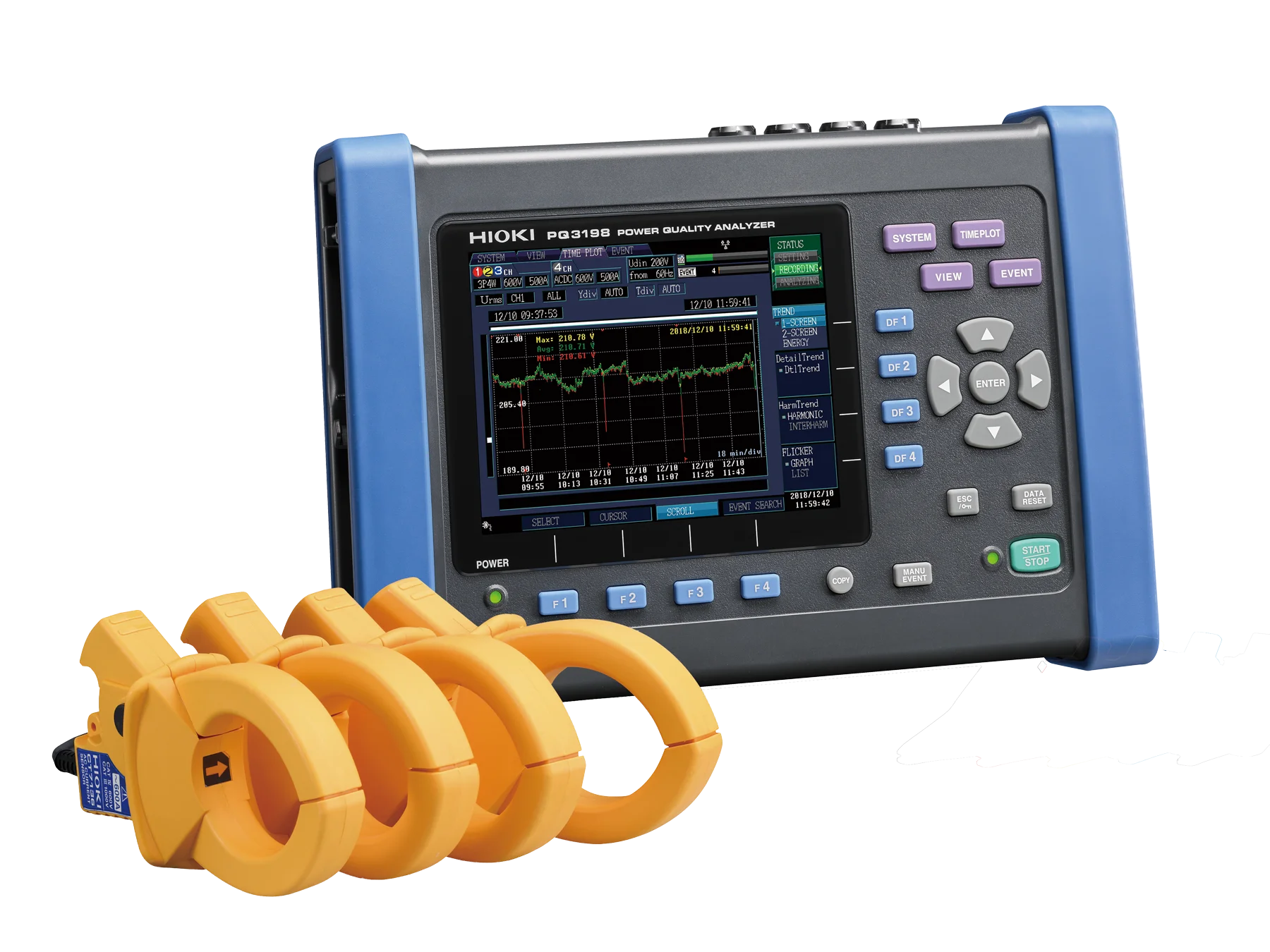
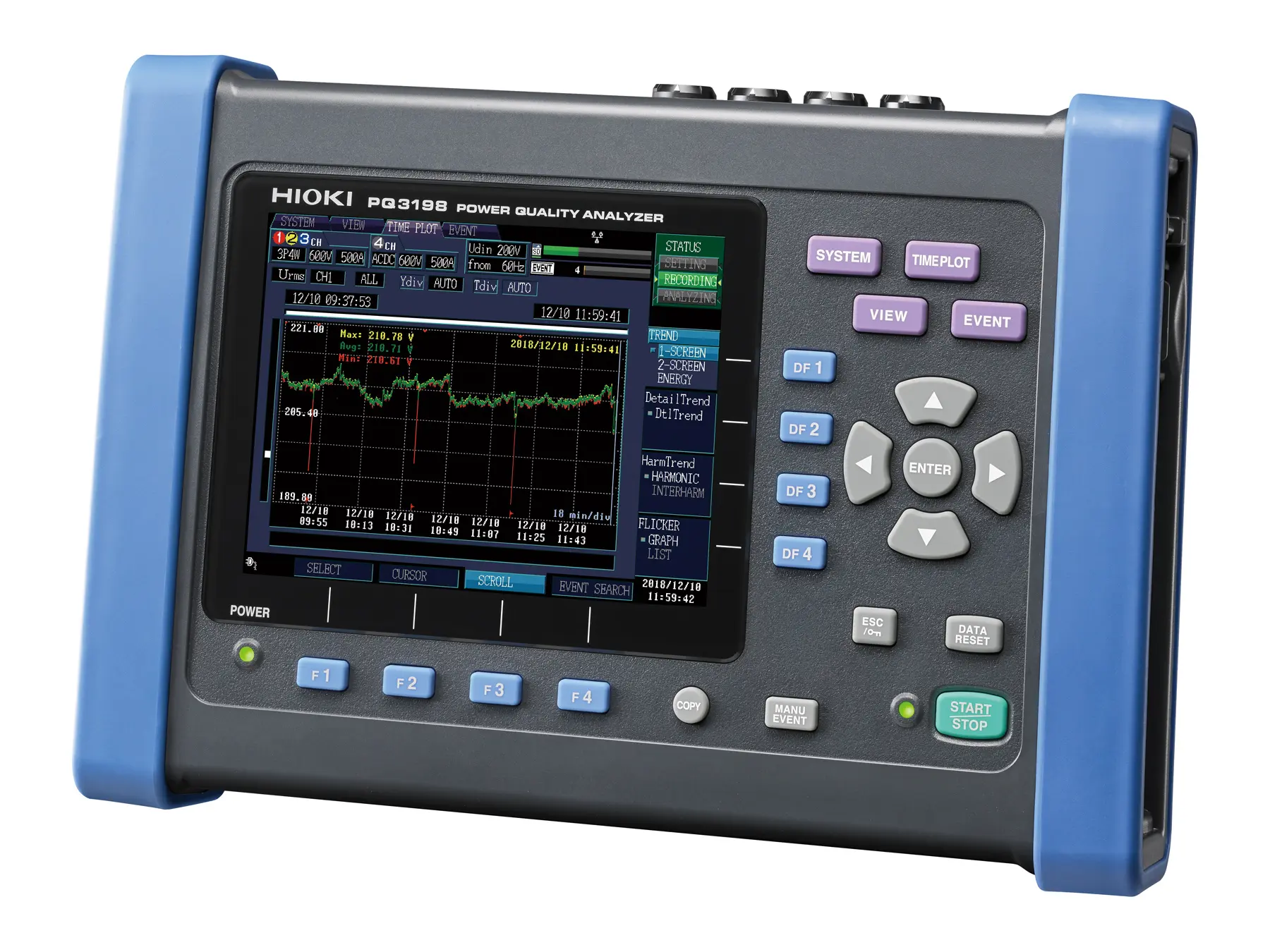
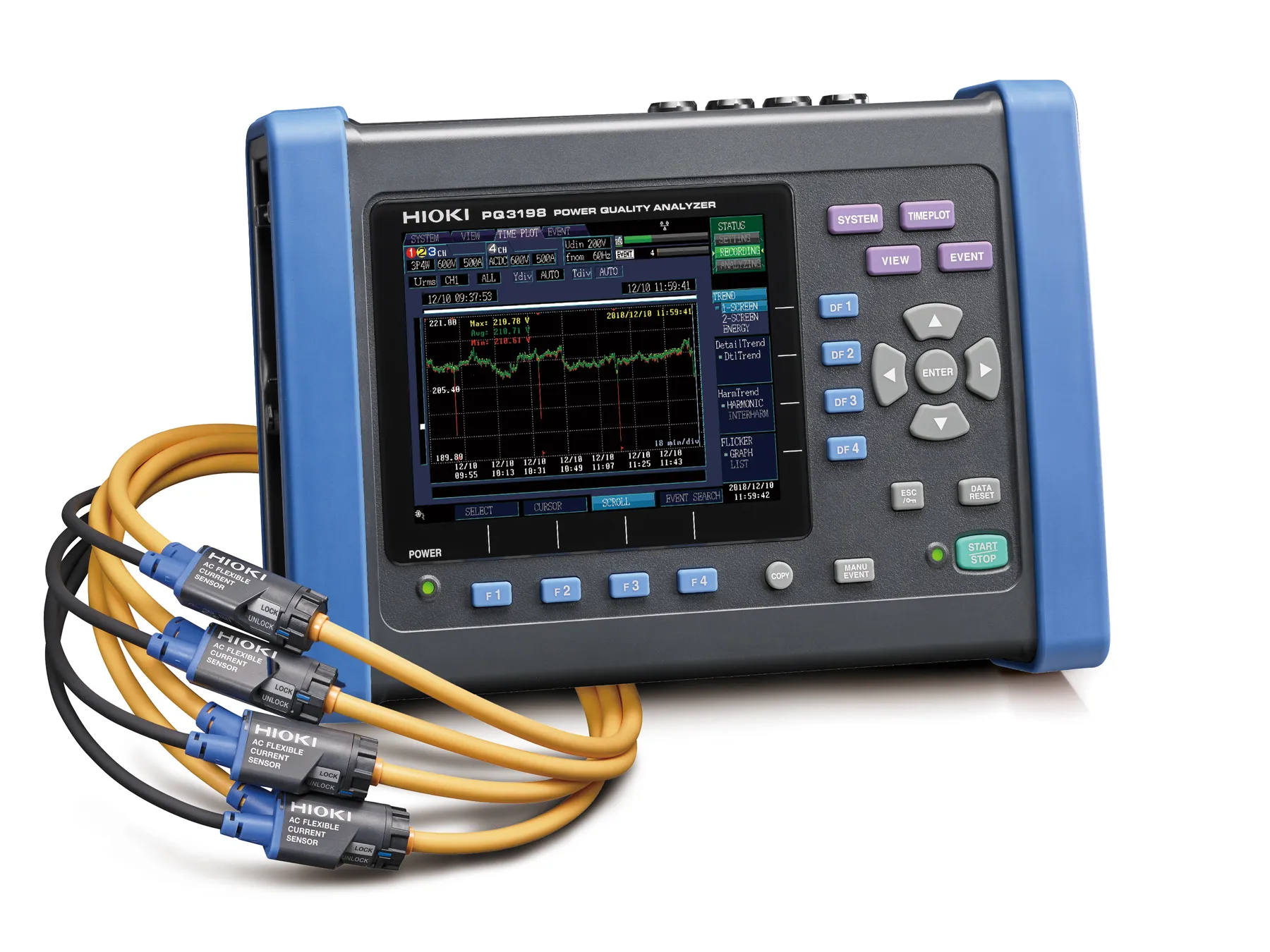
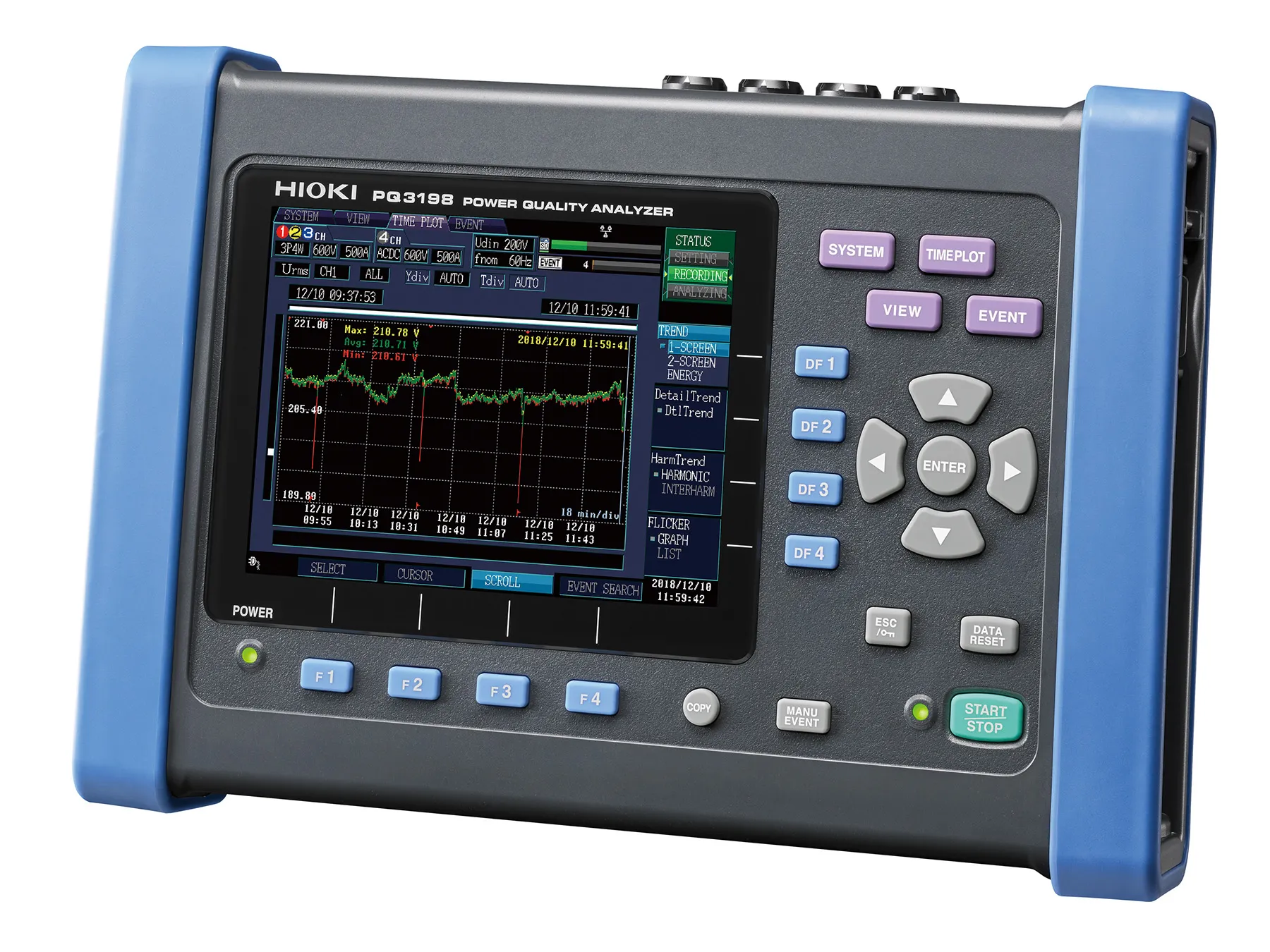
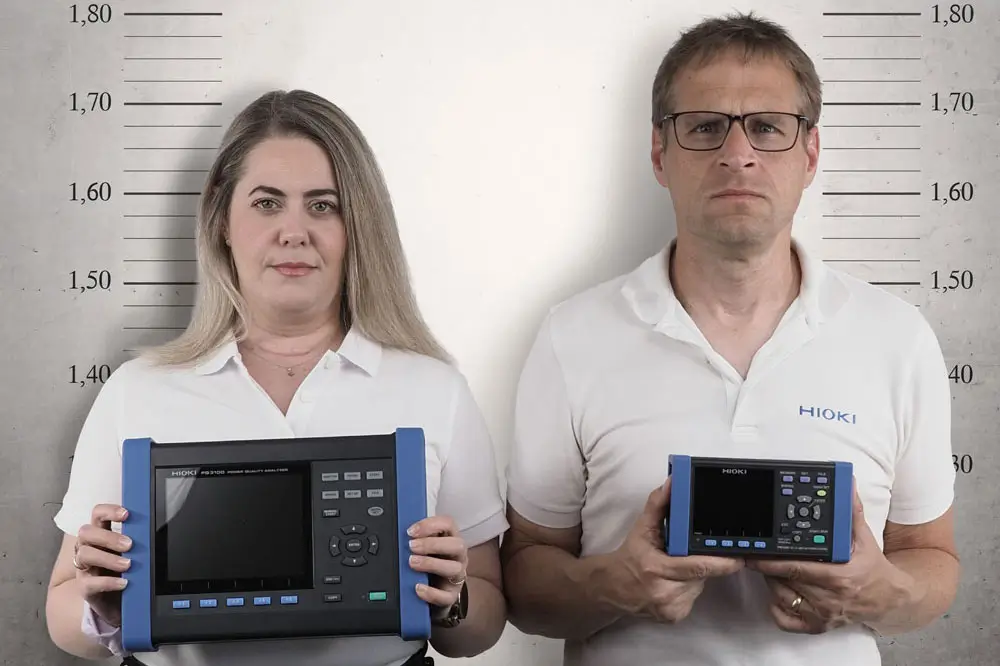
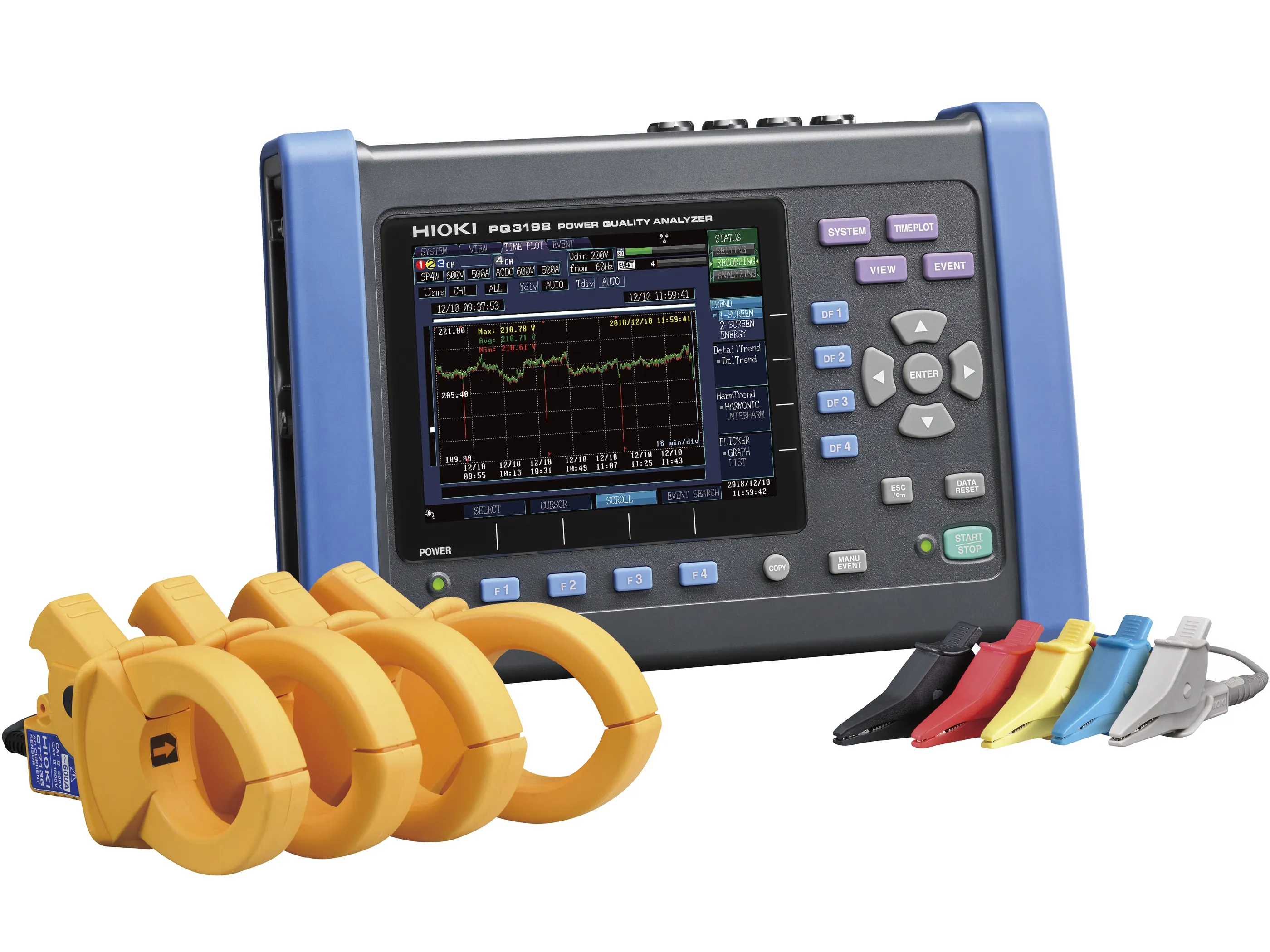
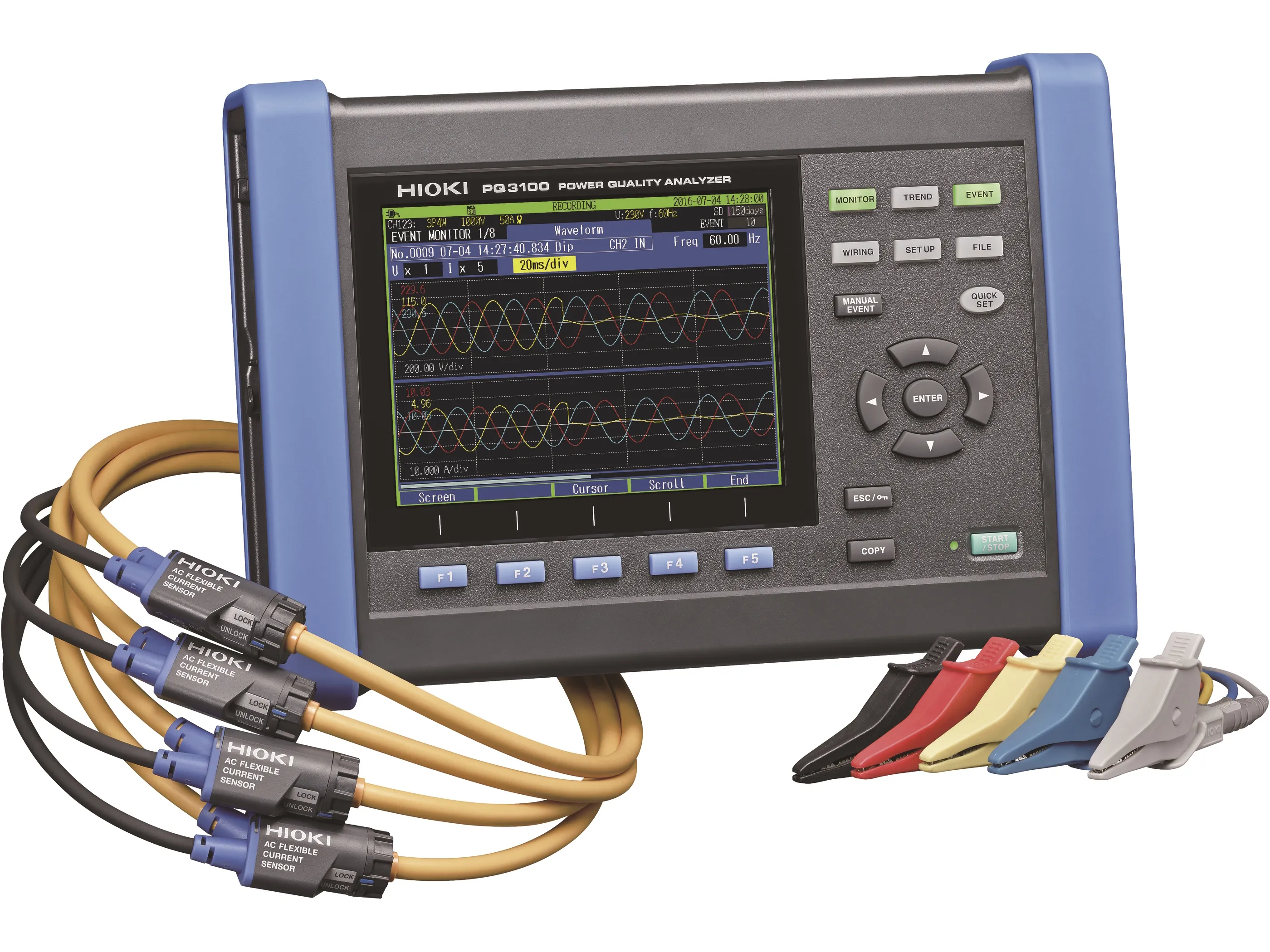
The term “power quality analyzer” alone does not define how an instrument measures power quality. For that, IEC 61000-4-30 is the important reference. It specifies which power quality parameters are measured, how they are measured, and which measurement classes apply. The HIOKI PQ3198 meets the requirements of Class A, while the HIOKI PQ3100 is designed as a Class S instrument. In other words, an instrument that can display harmonics or flicker is not automatically a power quality analyzer according to IEC 61000-4-30.
In simple terms, Class A is the stricter class. Whether you think of the “A” as “Advanced” or “Accuracy”, the idea is easy to remember: Class A is used when measurement results need to be especially reliable and comparable, for example for evidence, disputes, or acceptance tests. If a grid operator suspects that machines or installations in a factory are affecting power quality, measurements at the point of connection will most likely be carried out with a Class A instrument.
Class S stands for “Survey”. It is intended more for overview measurements, condition checks, and troubleshooting when the first step is to understand the situation on site. For example, a machine manufacturer could record power quality at a customer’s factory before installing a machine in order to document the existing supply conditions. The recorded data may also show that certain recurring events were already present before the new equipment was installed, rather than being caused by it.
Neither Class A nor Class S says whether power quality is “good” or “bad”. The classes describe requirements for the instrument and the measurement method. IEC 61000-4-30 defines how power quality parameters are measured, but it does not define pass/fail limits. That assessment is made using other documents, especially EN 50160 in Europe for voltage characteristics in public electricity networks. Depending on the application, contracts or project-specific limits may also apply.
Conclusion
Power loggers and power quality analyzers can record similar electrical values. The difference is not the individual measured value, but the task of the instrument.
A power logger documents load and consumption data.
A power quality analyzer documents power quality events.
That is why harmonics alone do not make an instrument a power quality analyzer. What matters is whether the instrument only records values over time, or whether it can detect, trigger, and document events.