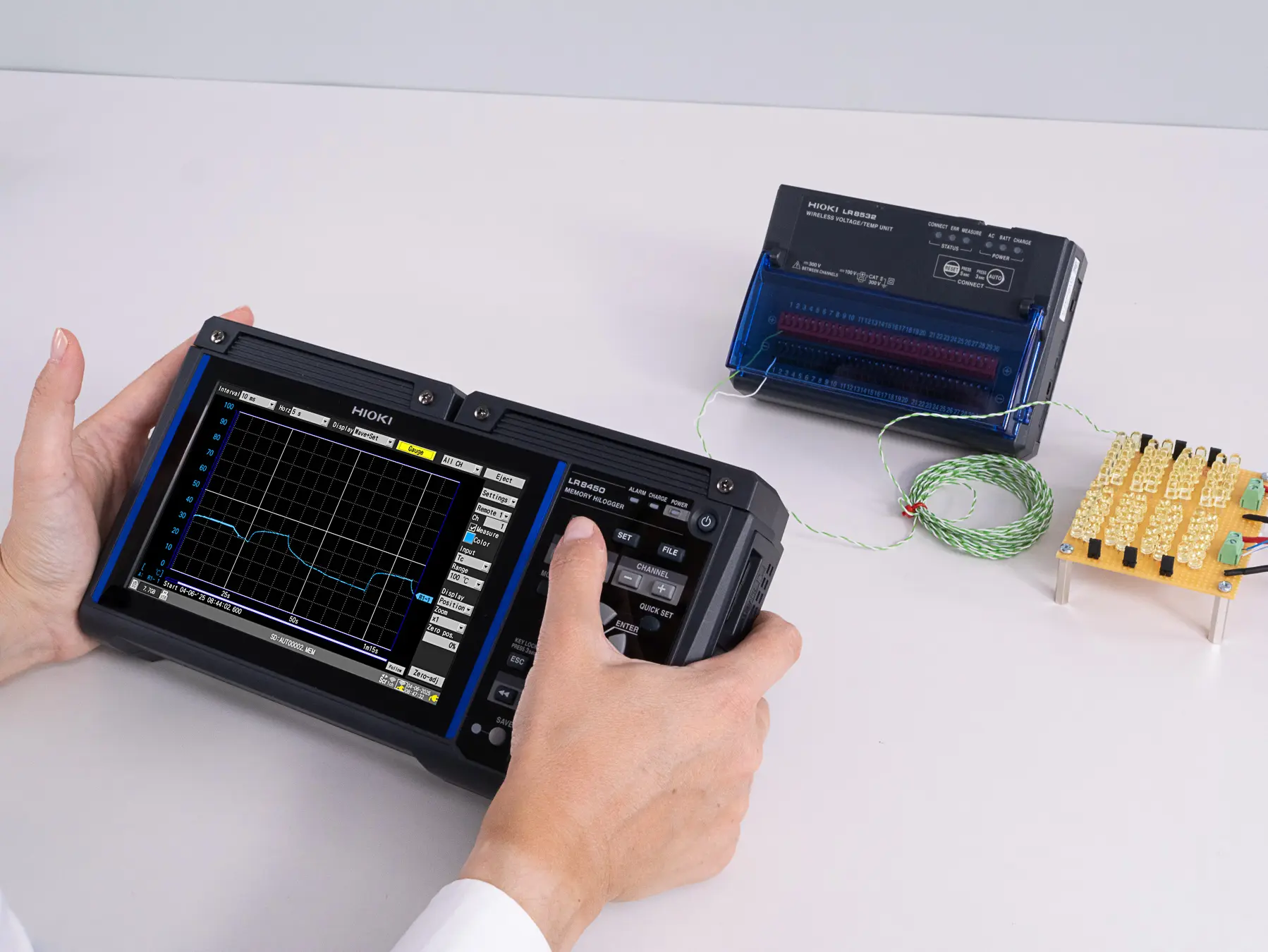
Do you feel the heat? Why understanding heat flow goes beyond temperature measurement
Measuring temperature is common practice in industrial and scientific settings. But temperature alone doesn't reveal how heat behaves – two components may have the same temperature yet behave completely differently in terms of heat flow. Specific heat flow measurement can give more dynamic insights on how temperature is transferred, stored, or lost.
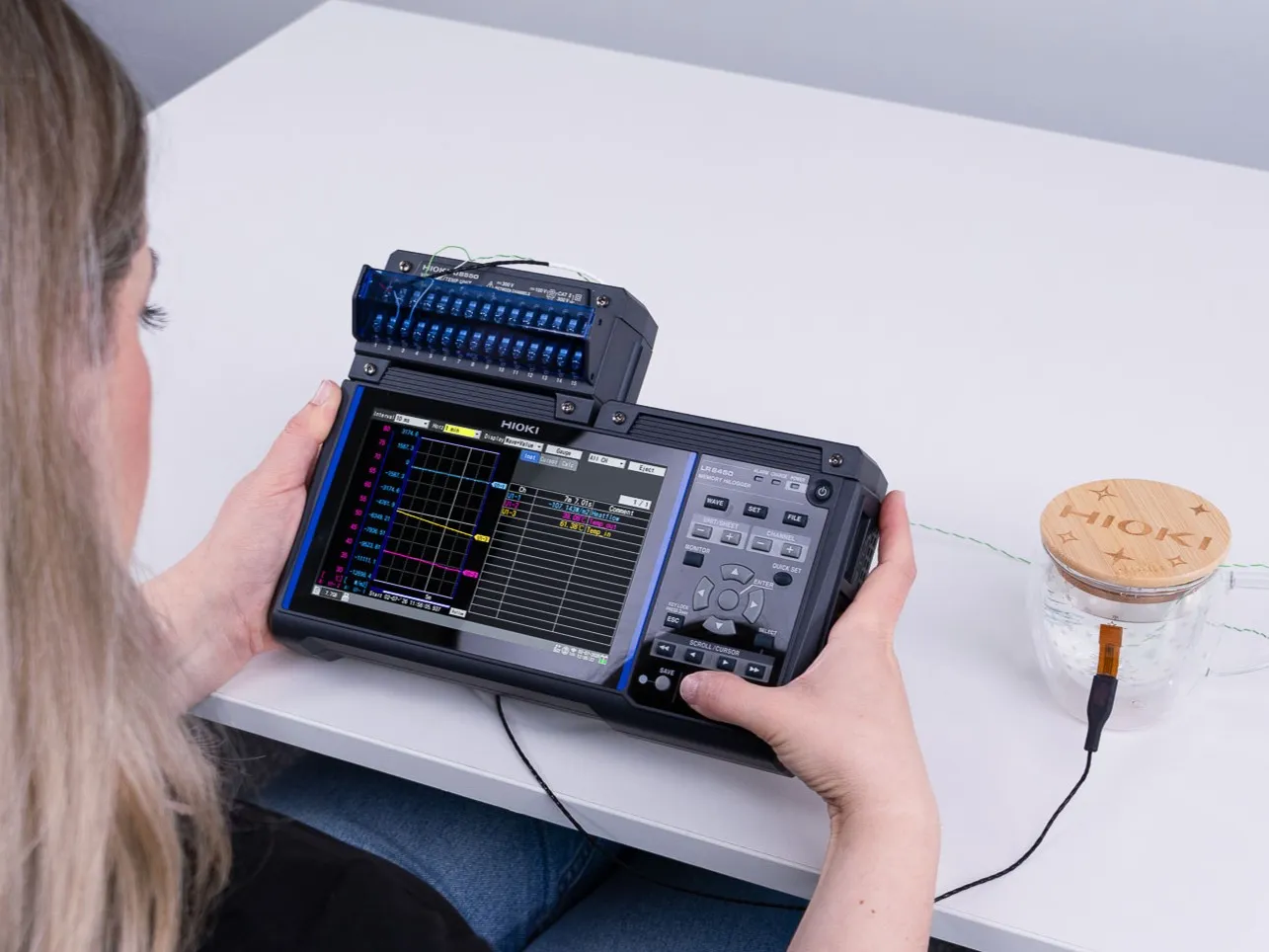
Temperature measurement provides only a snapshot of thermal conditions at a specific moment. While sensors like thermocouples or RTDs (e.g. Pt100) are reliable for detecting temperature, they don’t reveal whether heat is accumulating, dissipating, or moving in a particular direction. Without that insight, engineers risk making decisions based on incomplete data – jeopardizing system performance, reliability, and efficiency.
Take electronics, for instance. A heat sink might show a stable temperature of 40°C, which on the surface appears acceptable. However, without knowing the actual rate of heat dissipation, engineers can’t determine whether the cooling system is effectively removing excess energy or merely delaying a buildup. If the processor continues generating heat faster than it can be dispersed, the system could silently drift toward thermal runaway – leading to degraded performance, unexpected shutdowns, or even permanent damage.
When temperature isn’t the whole story
Heat flow measurement fills these gaps by quantifying the rate of energy transfer through a material or system over time. It turns static thermal data into dynamic insights, allowing professionals to:
• Identify inefficiencies in thermal management
• Improve energy performance and insulation strategies
• Optimize system design and reliability
For R&D teams, heat flow measurement can significantly accelerate development cycles. Rather than waiting hours for temperature changes to determine which components generate or dissipate heat, engineers can observe heat transfer directly and in real time. This saves time and enables faster iteration and validation of thermal designs.
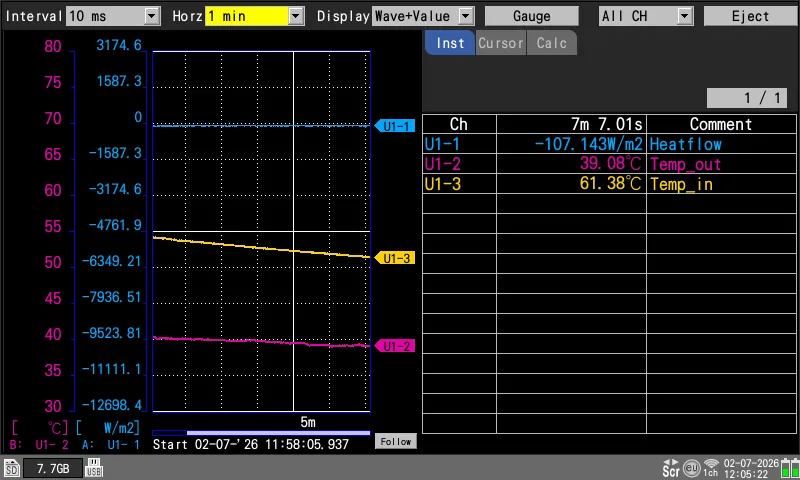
Heat flow across industries – invisible energy loss, visible impact
Heat flow data plays a critical role across a wide spectrum of applications. In building insulation, it helps evaluate material performance and detect energy loss through walls or windows. In industrial processes – such as boilers, furnaces, or composite curing – heat flow monitoring ensures consistent performance and safety. Automotive engineers rely on it to analyze cabin heat distribution and understand the thermal impact on vehicle components.
In the realm of electronics, heat flow measurement is essential for optimizing cooling strategies and preventing overheating in compact, high-performance systems. It also supports HVAC professionals in verifying the effectiveness of radiant heating and cooling installations. In scientific research, it enables the study of heat behavior in both materials and environmental systems. Even agriculture and meteorology benefit – soil heat flux data improves both climate modeling and crop yield forecasting.
One of the most valuable aspects of heat flow measurement is its ability to quantify energy loss. For example, excess heat emitted by industrial machinery often signals wasted energy. By identifying these inefficiencies, engineers can design smarter insulation, improve ventilation, or implement more effective cooling strategies—resulting in better performance and energy savings.
What you need for accurate heat flow data
Accurate heat flow analysis relies on two critical components:
• The right heat flux sensor
Heat flux sensors detect energy transfer through surfaces. Choosing the right one depends on the application, sensitivity needs, and environmental factors. For low-level heat transfer, high-sensitivity sensors are essential. Rugged versions are necessary for extreme environments. Placement also matters – poor contact or external airflow can skew results.
• High-accuracy data loggers
Since heat flow signals are often subtle, a high-resolution data logger is needed to capture meaningful changes. Multi-channel loggers are especially useful in complex setups like multilayered materials or electronic boards where several points need monitoring.
Side by side: a closer look at HIOKI’s heat flow data loggers
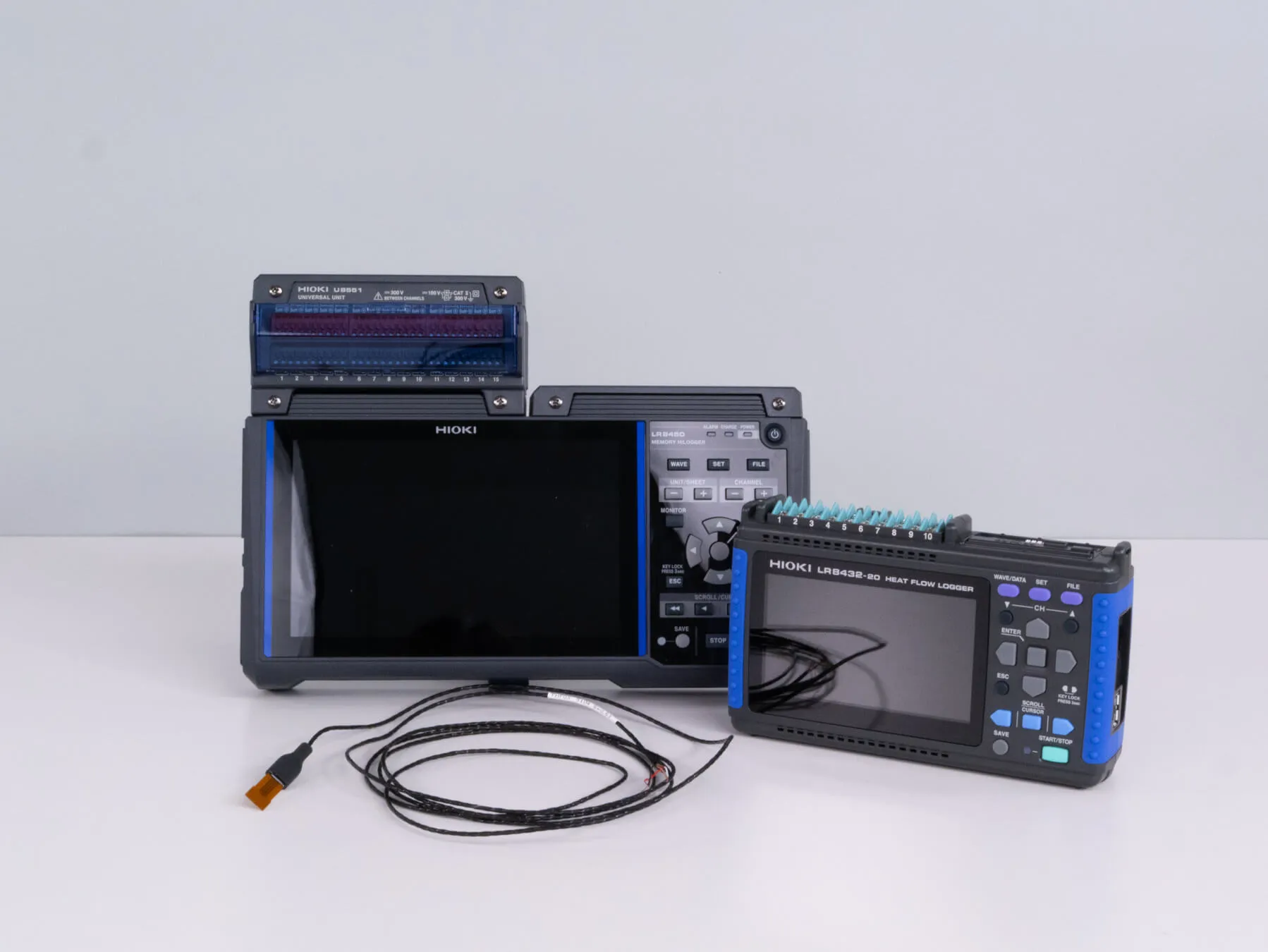
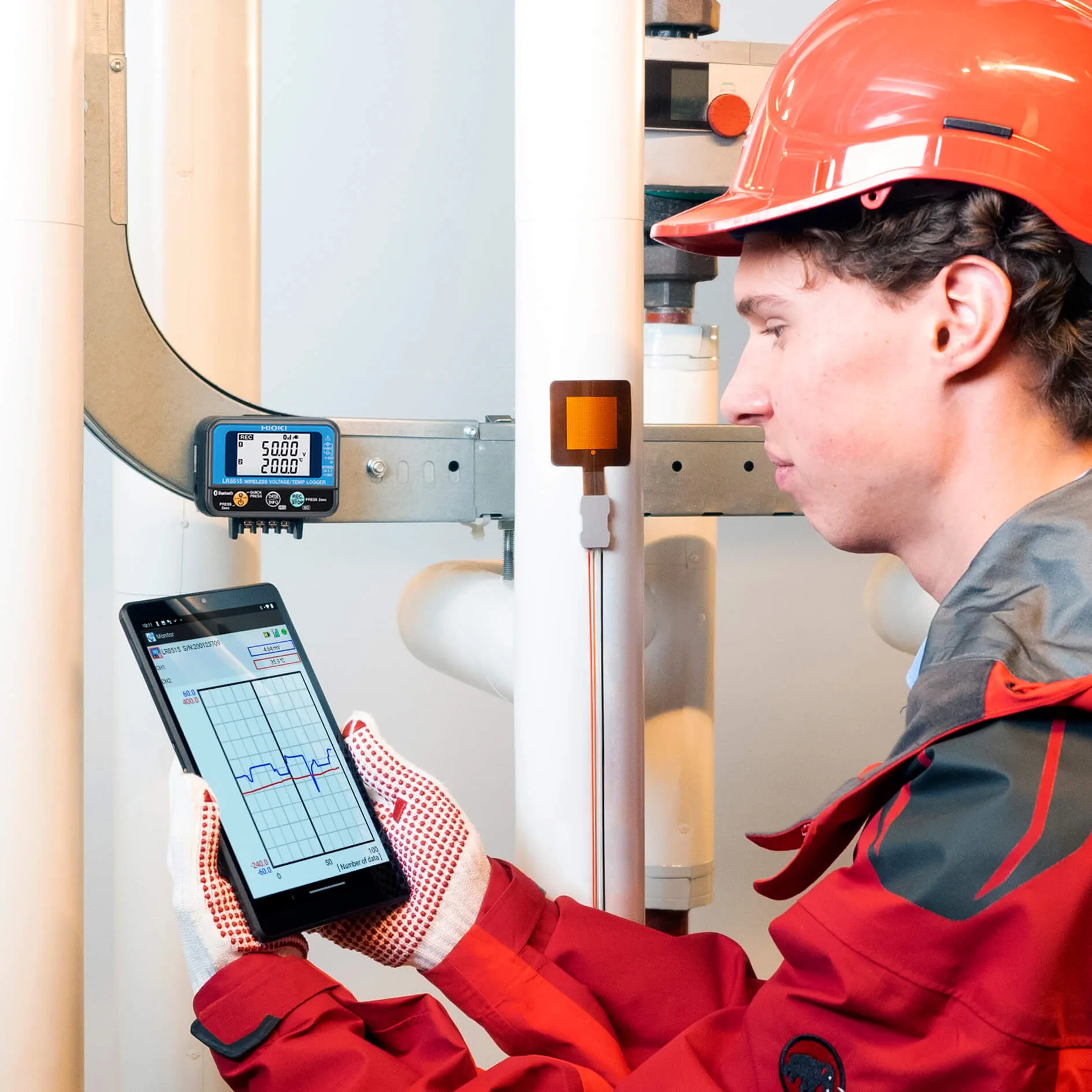
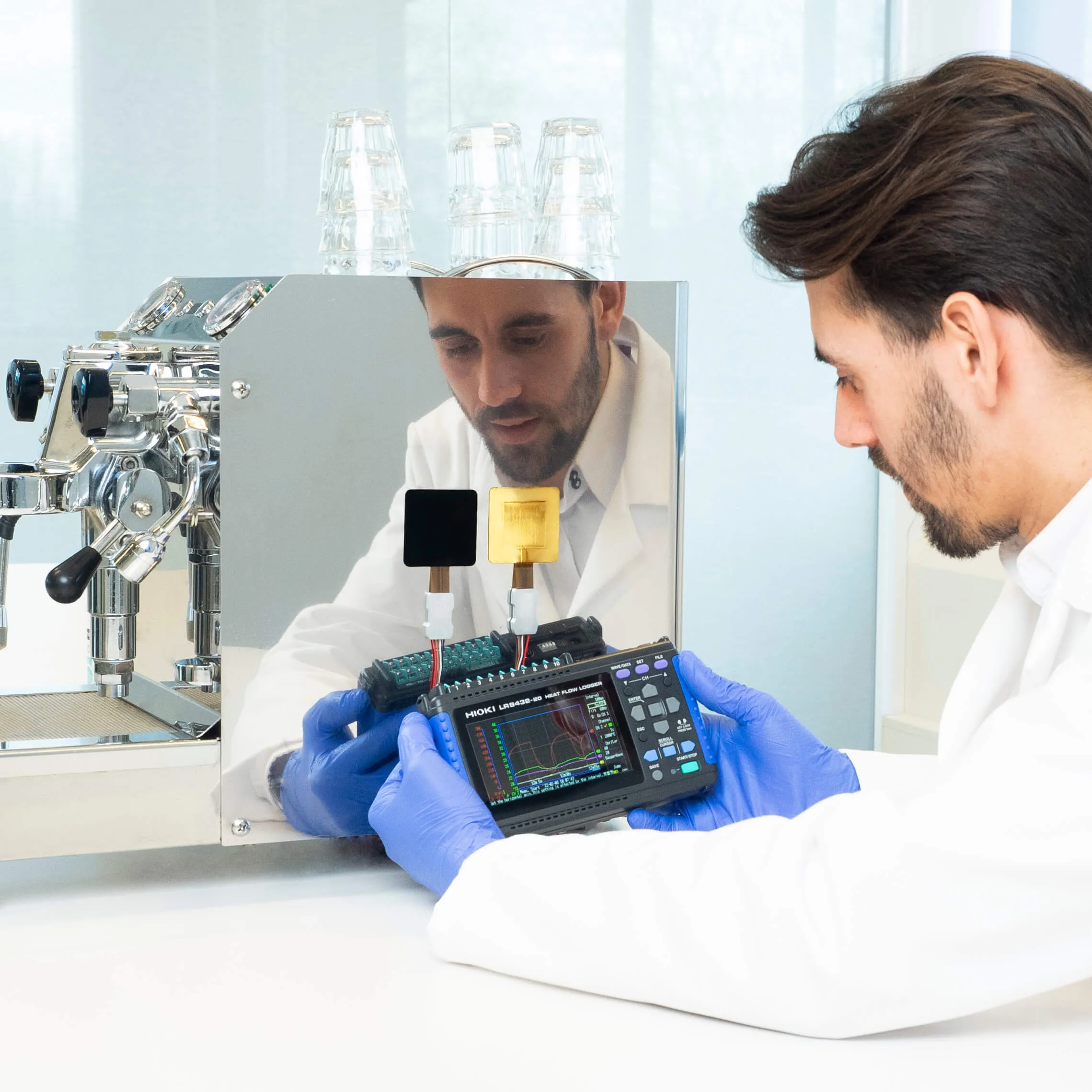
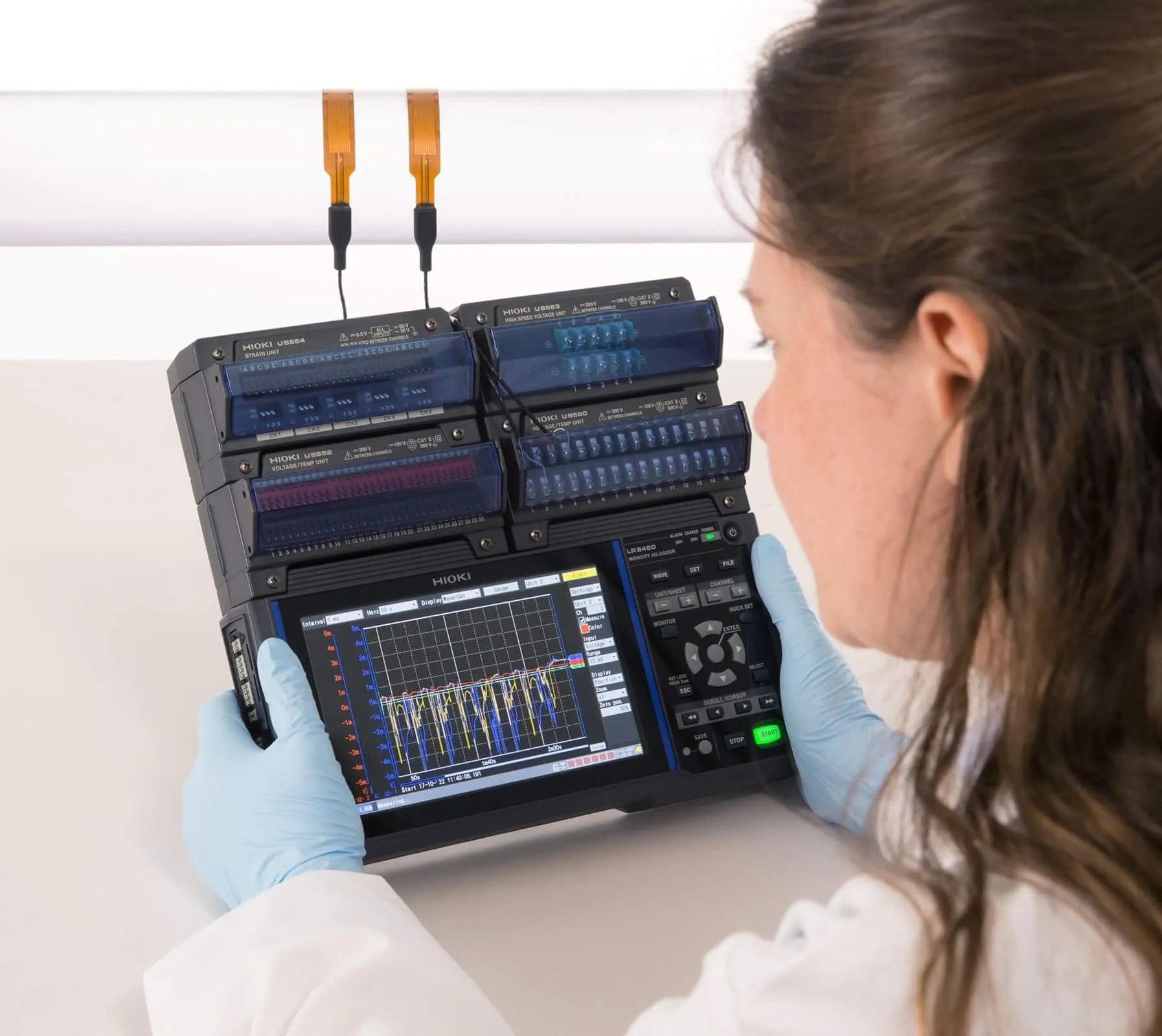
Comparison of HIOKI Heat Flow Loggers
|
Feature |
Data Logger |
Data Logger |
Wireless Data Logger |
|
Max analog channels |
2 |
10 |
330 |
|
Pulse channels |
- |
4 |
8 |
|
Max update interval |
0.1 s |
10 ms |
1 ms |
|
Power supply |
AC, DC, AA batteries |
AC, DC, battery |
AC, DC, battery |
|
Wireless support |
Bluetooth |
n/a |
WLAN |
|
Heat flow |
✓ |
✓ |
✓ |
|
Other measurement items |
Voltage, temperature (thermocouples) |
Voltage, temperature (thermocouples), 4-20 mA signals |
Voltage, temperature (thermocouples, RTDs, thermistors), 4-20 mA signals, current, strain, CAN FD |
Better designs begin with better thermal data
While temperature measurement remains a fundamental tool, it doesn’t tell the whole story. Heat flow measurement provides a deeper, more dynamic view of how energy moves through systems. This insight is critical not only for thermal optimization and energy efficiency, but also for saving time during development.
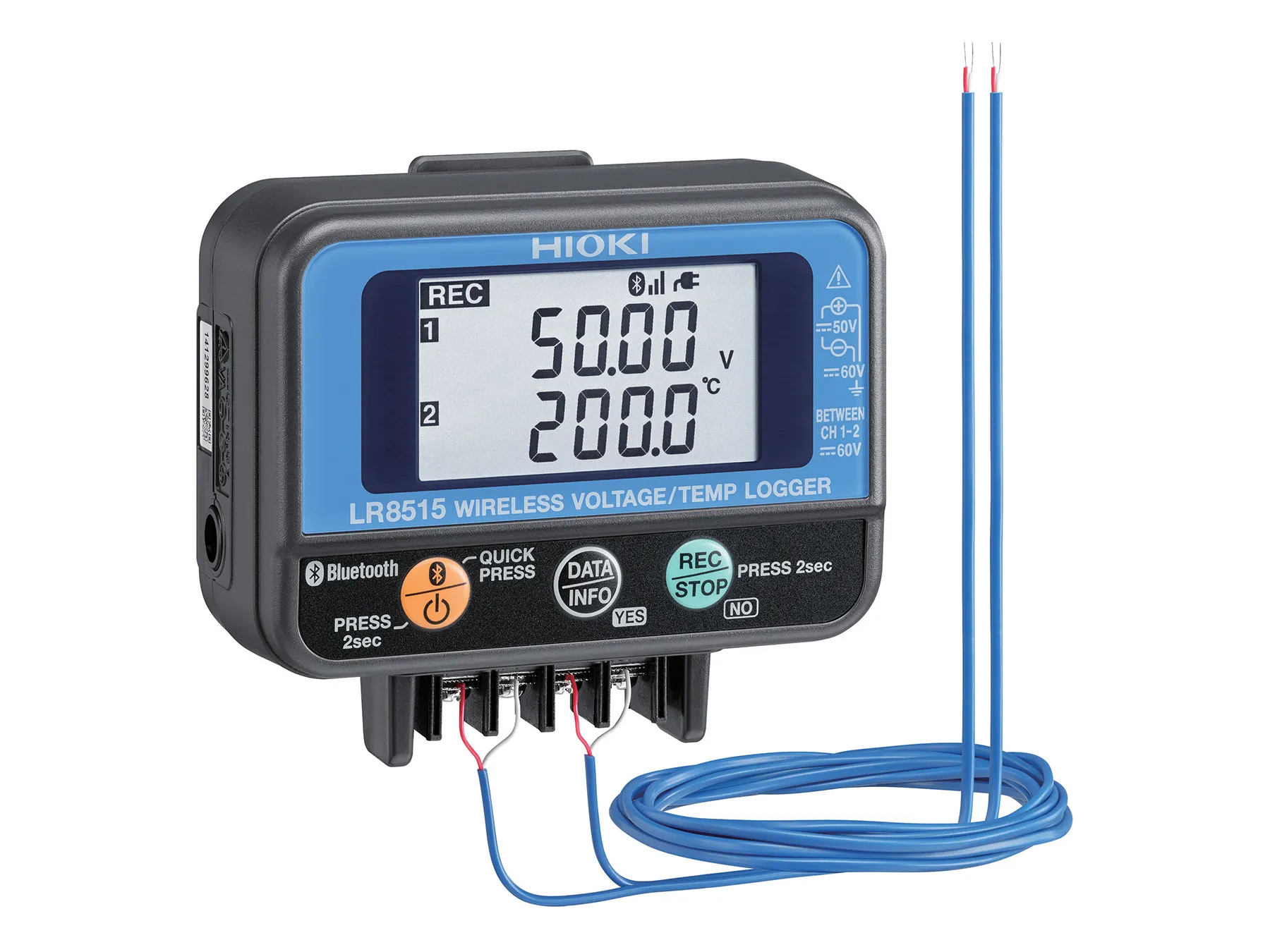
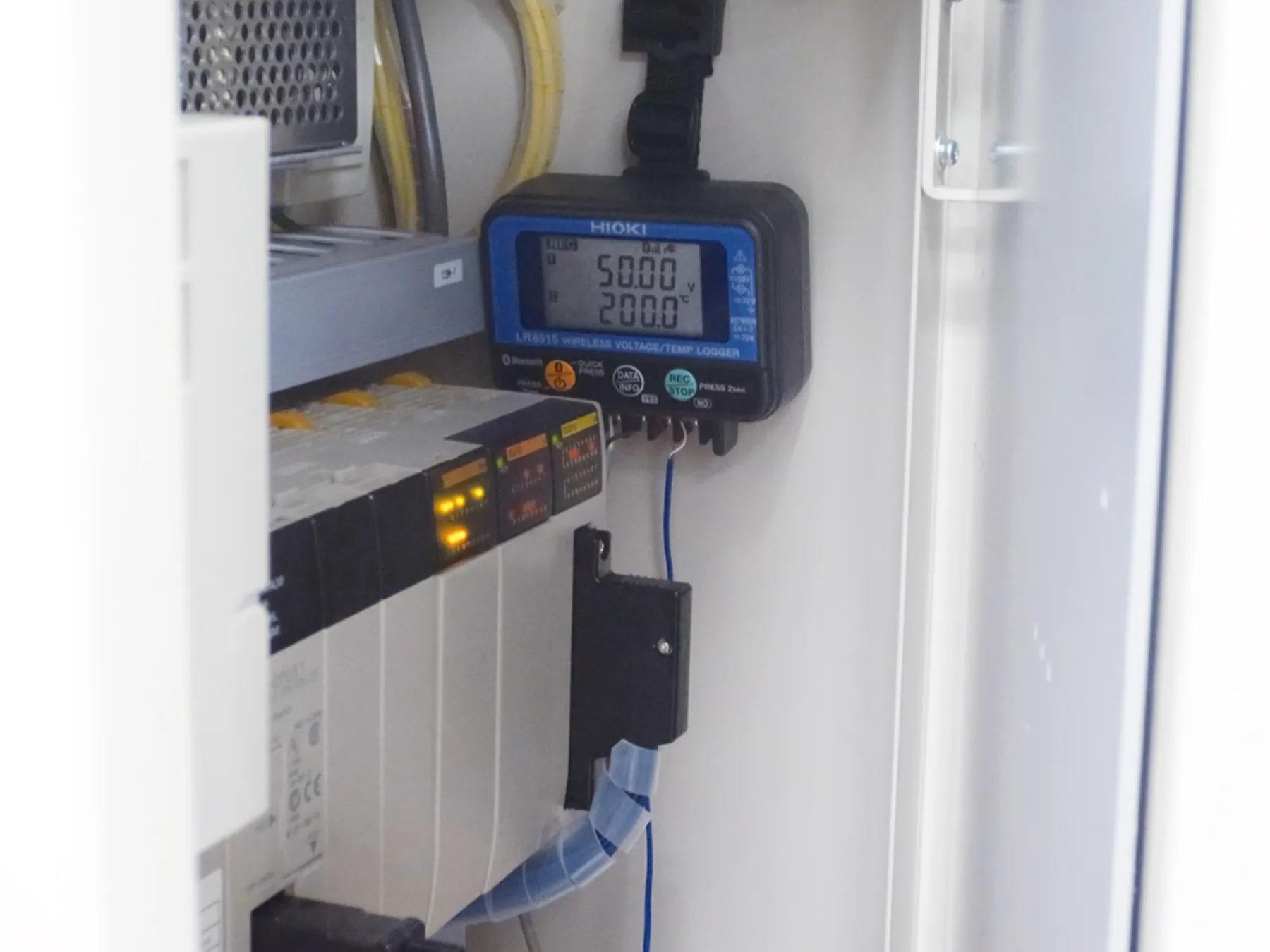
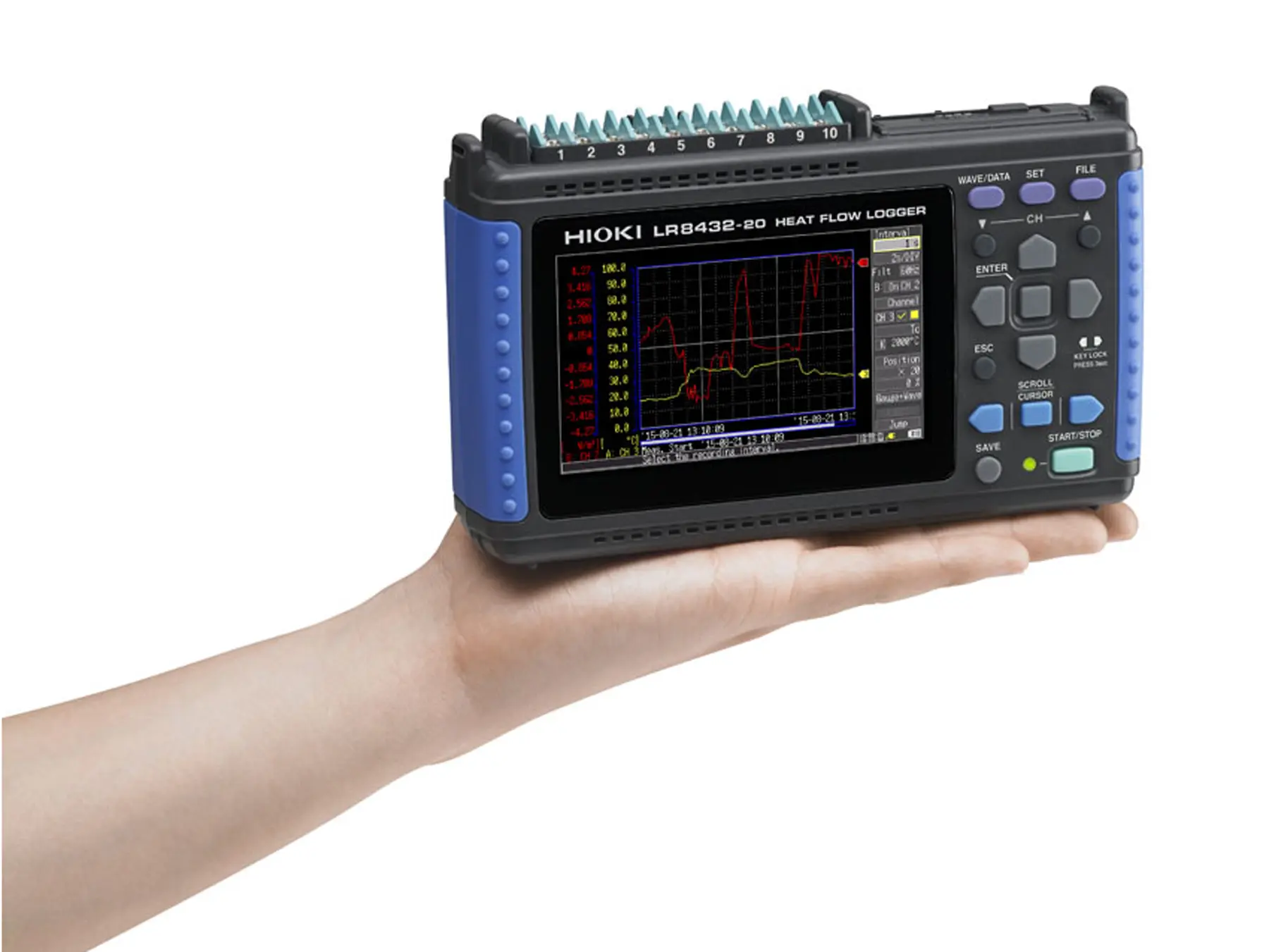
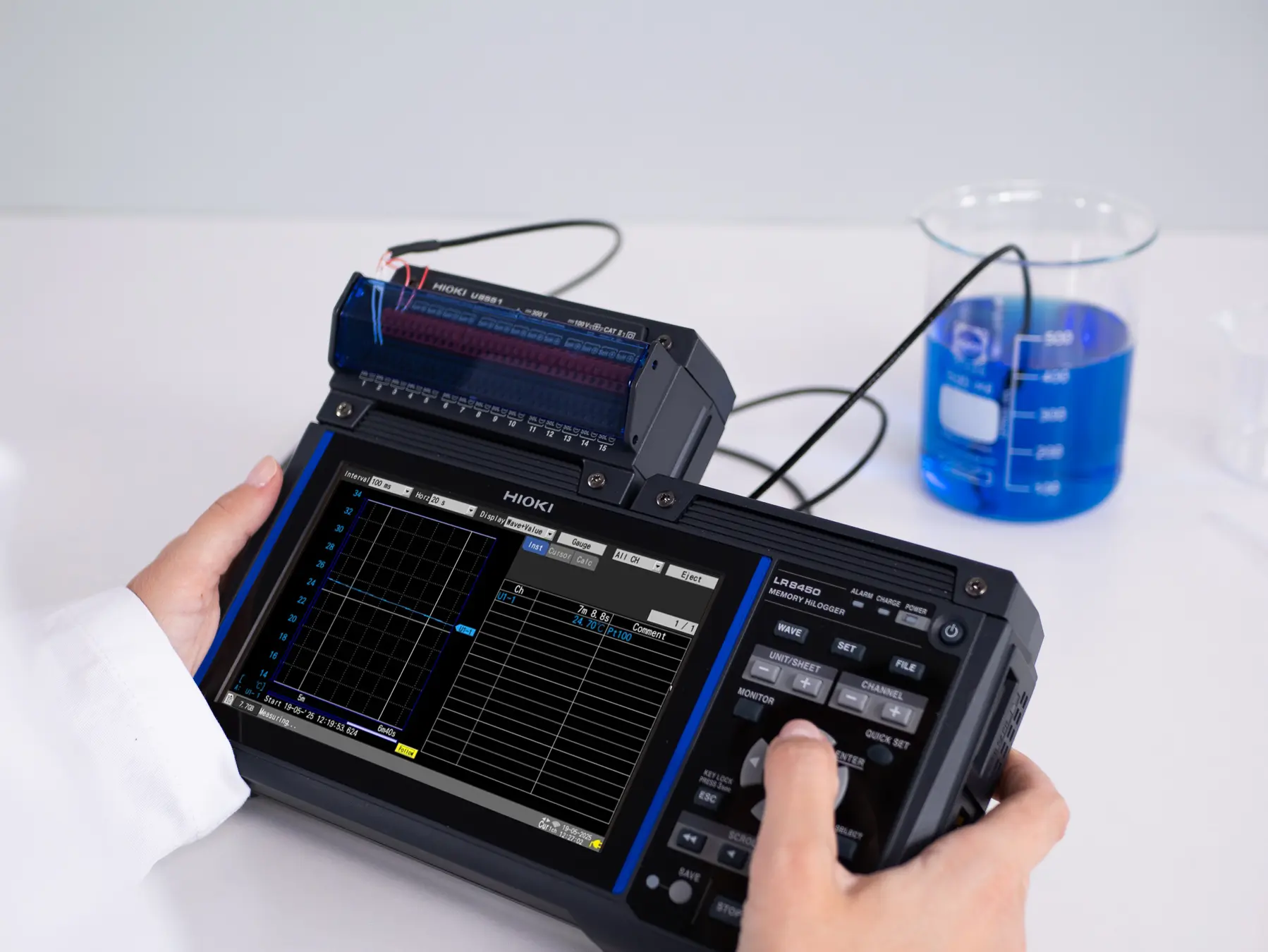
Tools like the LR8515, LR8432 and LR8450 help professionals to better understand, manage, and improve heat behavior in everything from electronics to industrial equipment. As the demand for performance, reliability, and efficiency grows, heat flow measurement will be an increasingly valuable asset in engineering and research.