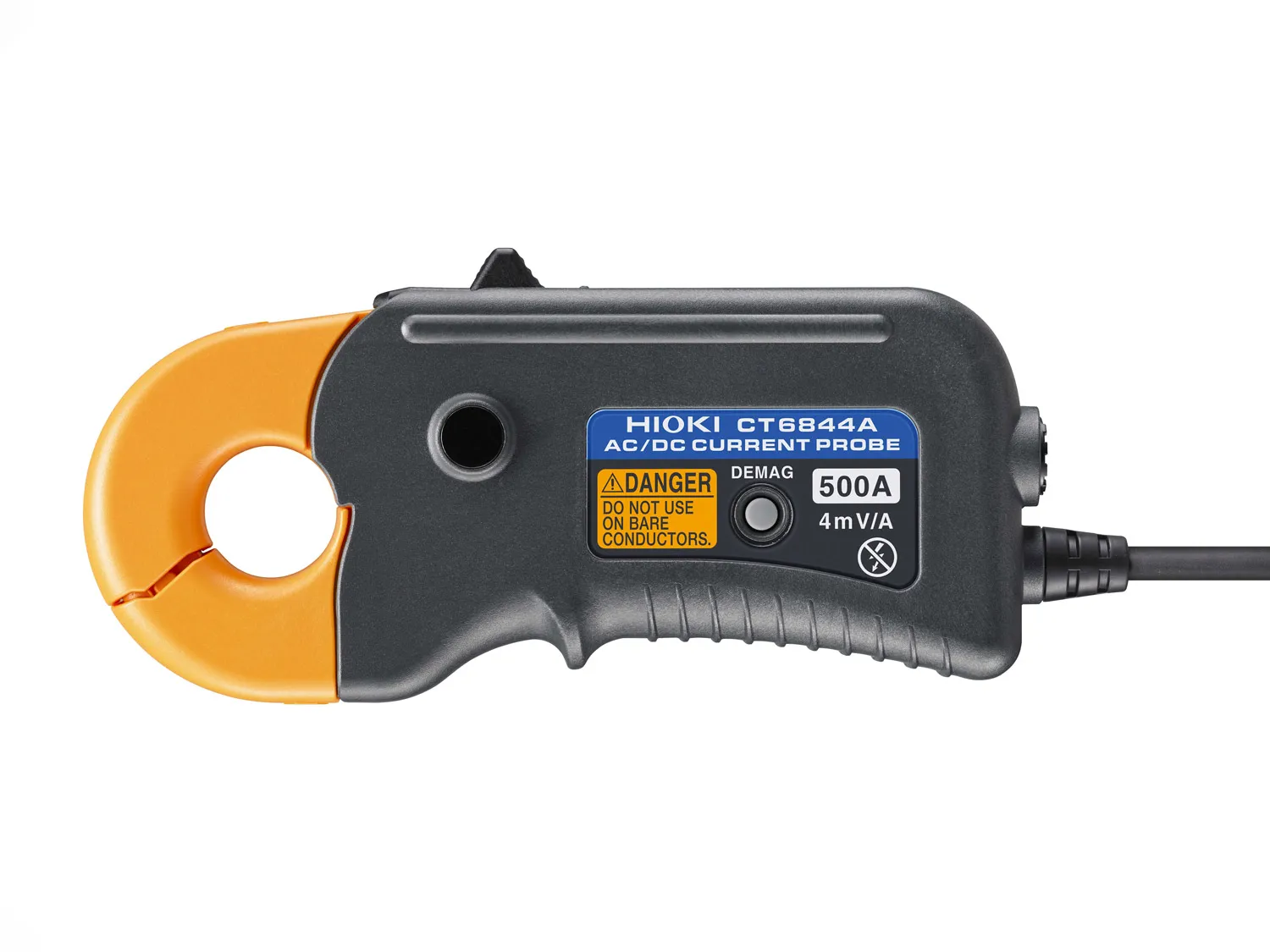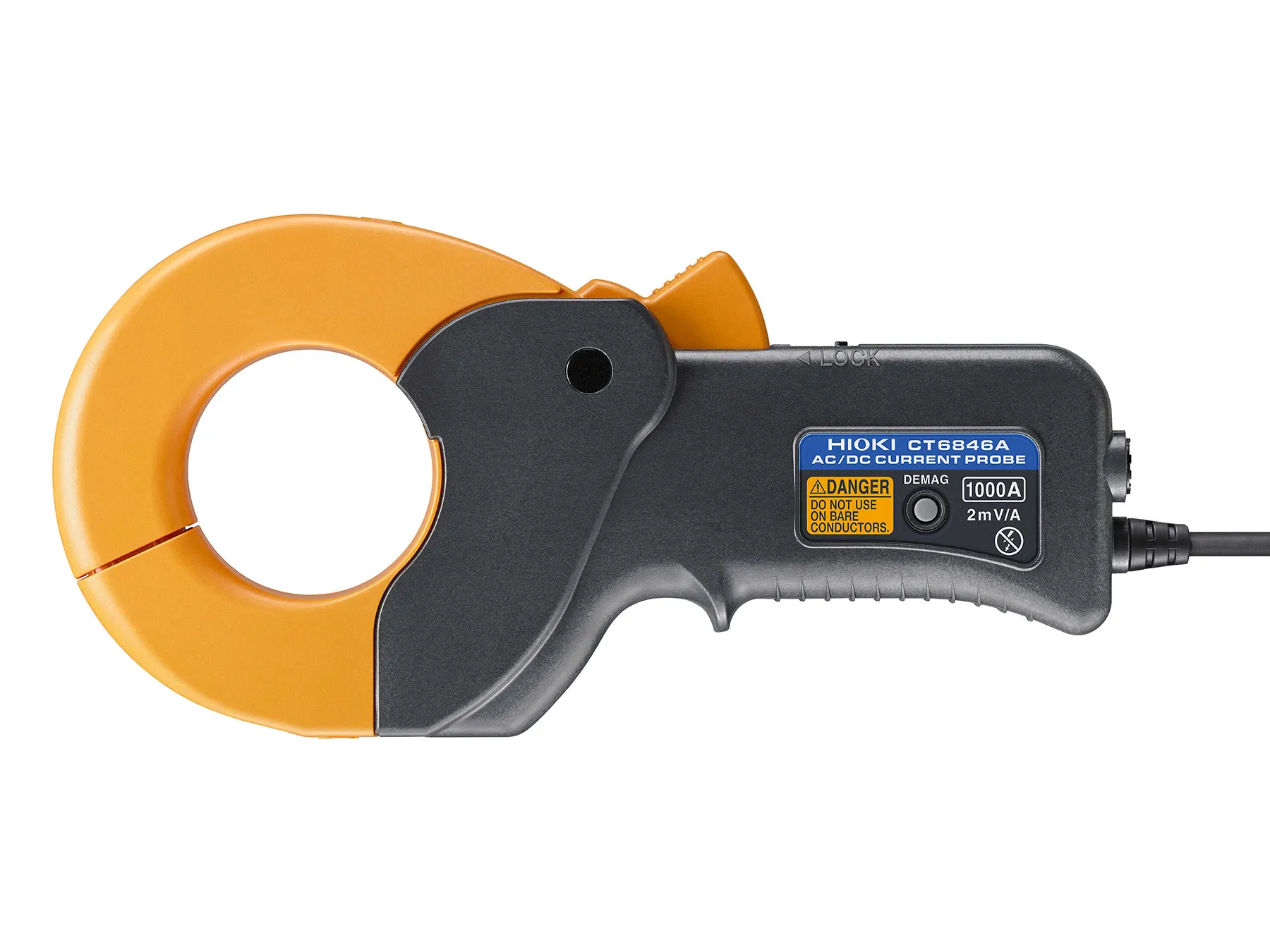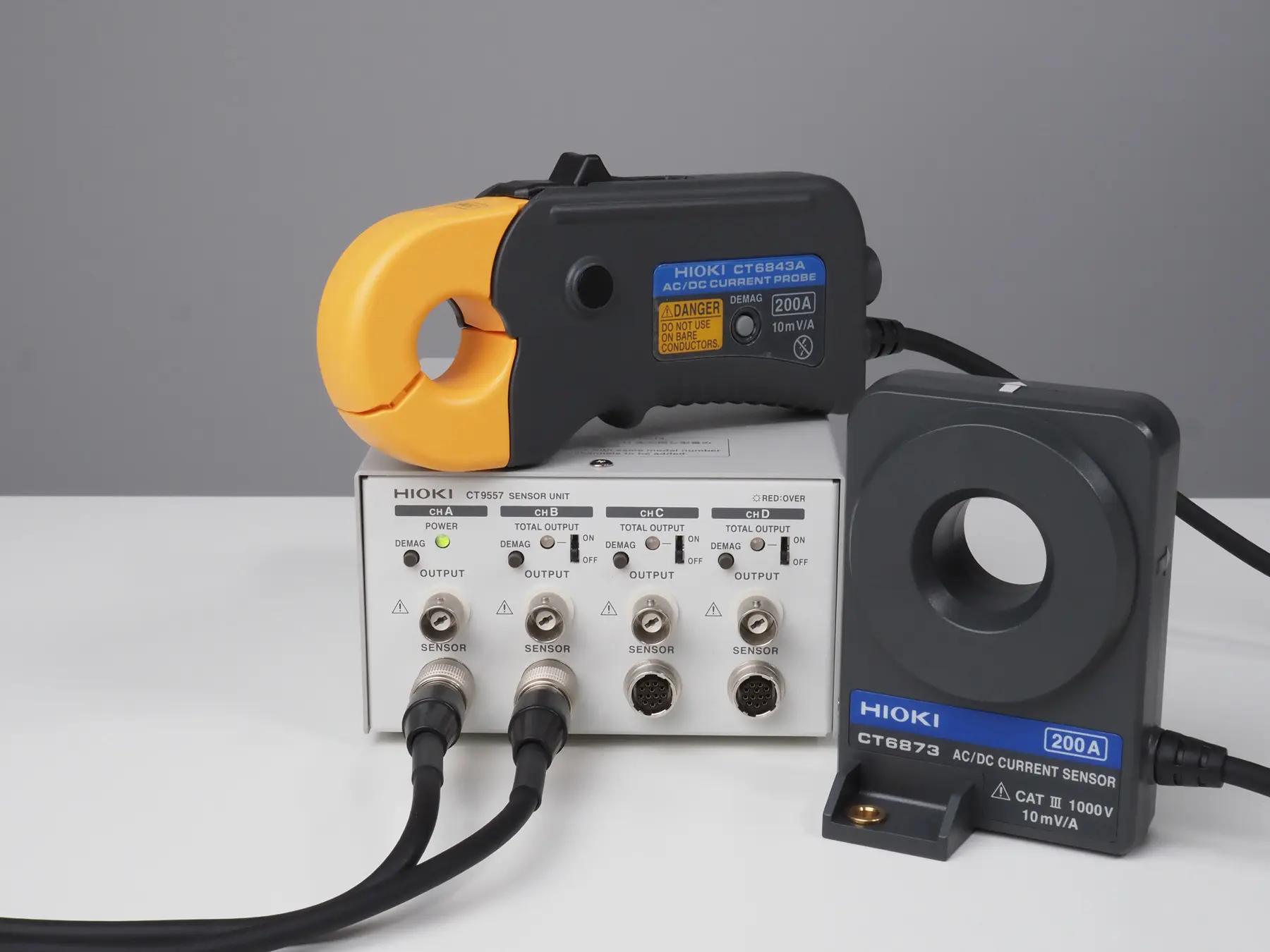
Using shunts to measure currents in power analysis might be an option for small currents, but when you look at measuring currents above 30A then typically current sensors come into play.
However, every current sensor in the world produces a gradually increasing phase error in the high-frequency region due to group delays of the circuitry. Additionally, differences in the design of various sensor models cause the magnitude of this error to vary.
A phase shift correction function allows to compensate this error. To make such a phase shift correction function work properly you need two things:
• A power analyzer making the correct calculations in its software
• A current sensor with a known phase shift
A good way to explain the calculations in the power analyzer software is by comparing it to the “deskew” function of an oscilloscope: If two different signals arrive at the oscilloscope at different times due to latencies then the “deskew” function lets you align those signals by compensating the latency with a fixed time value.
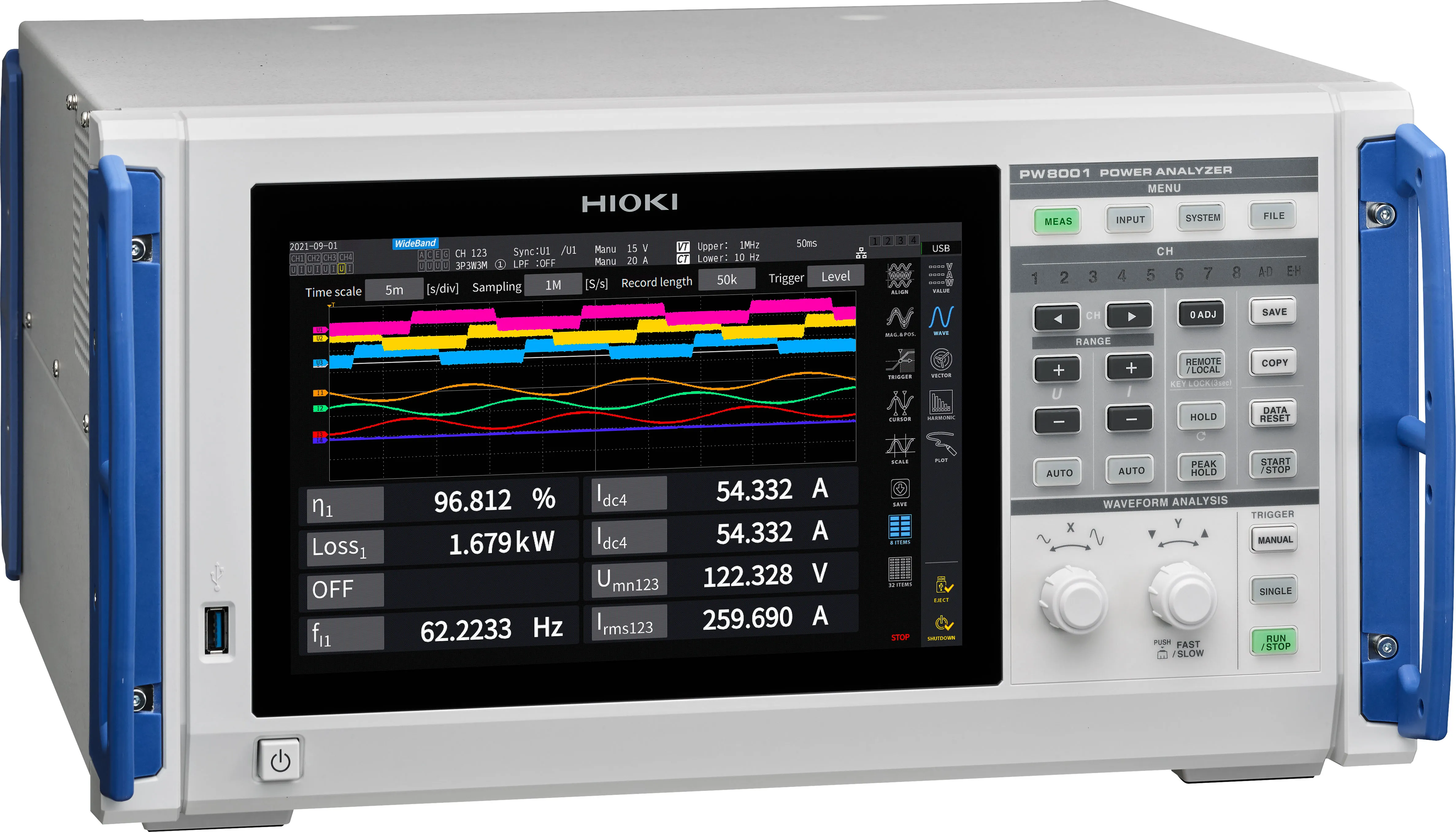
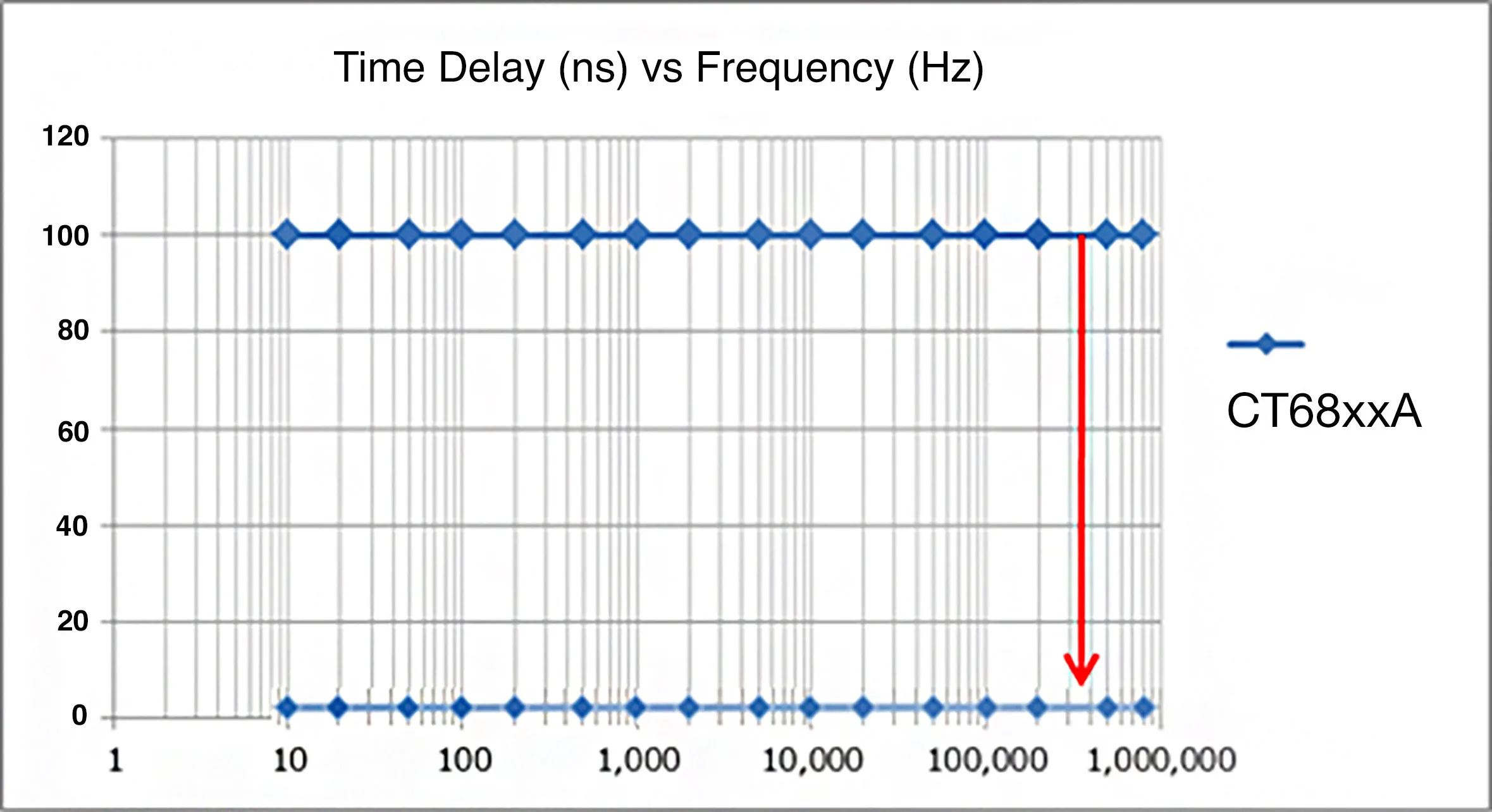
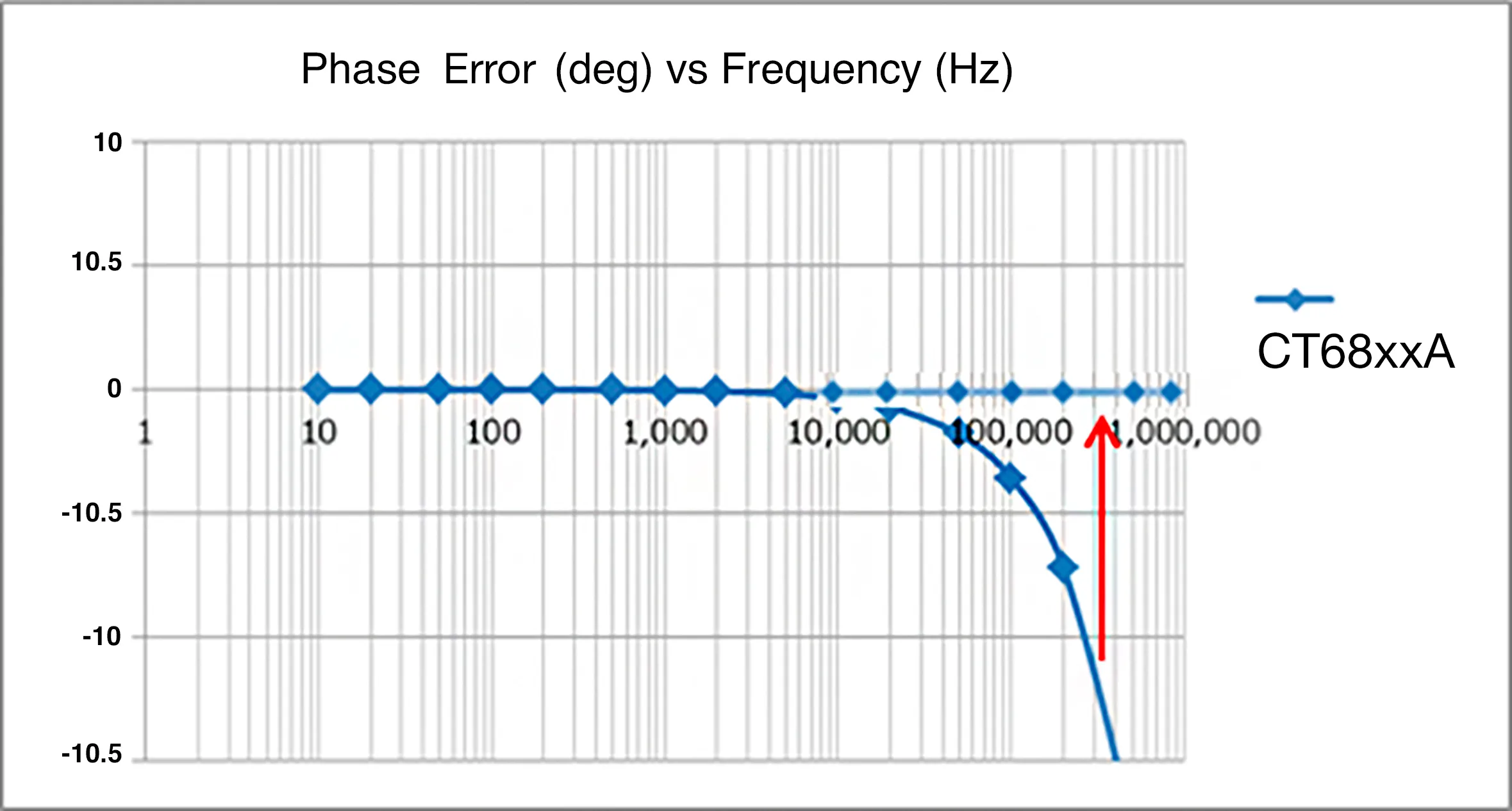
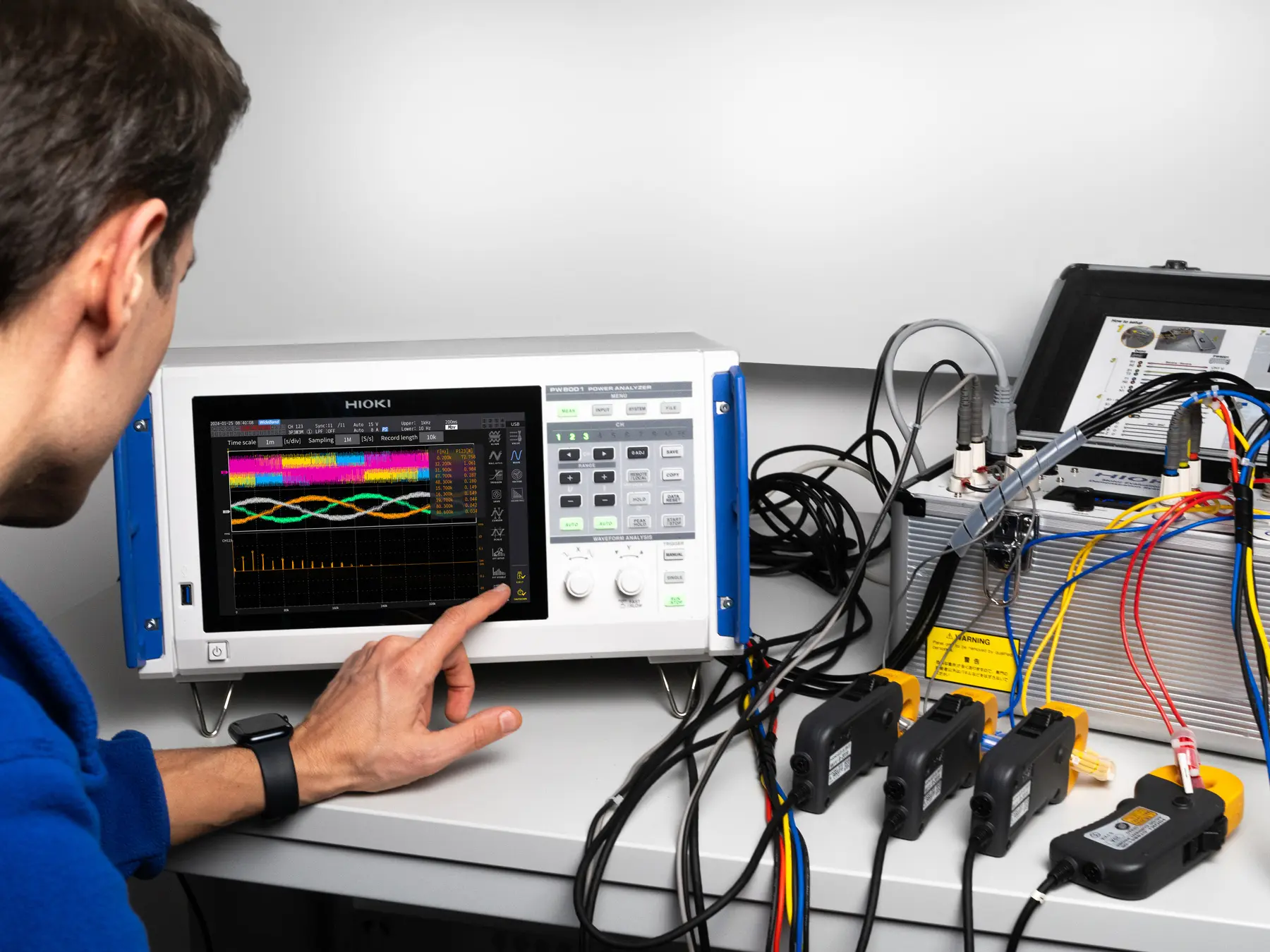
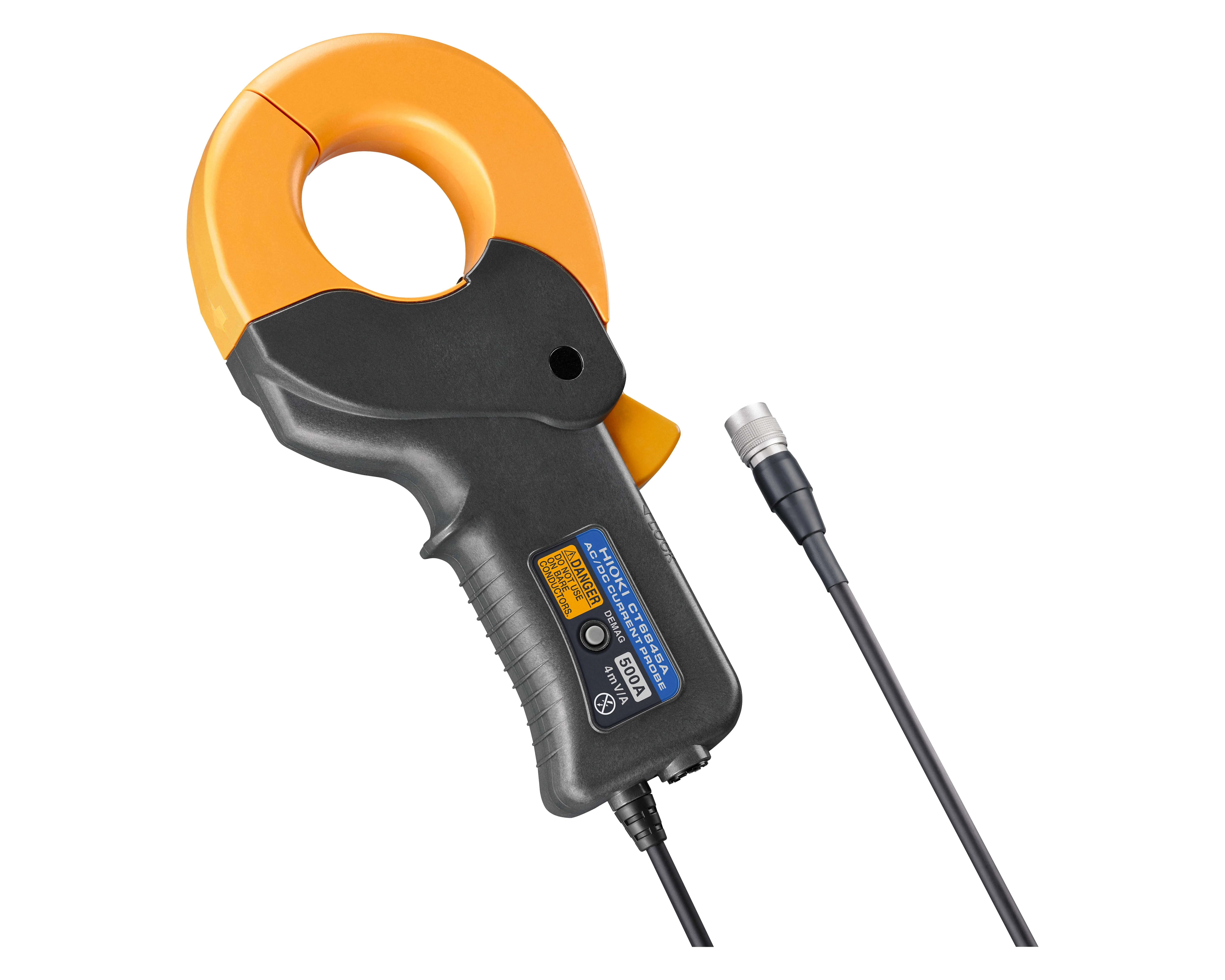
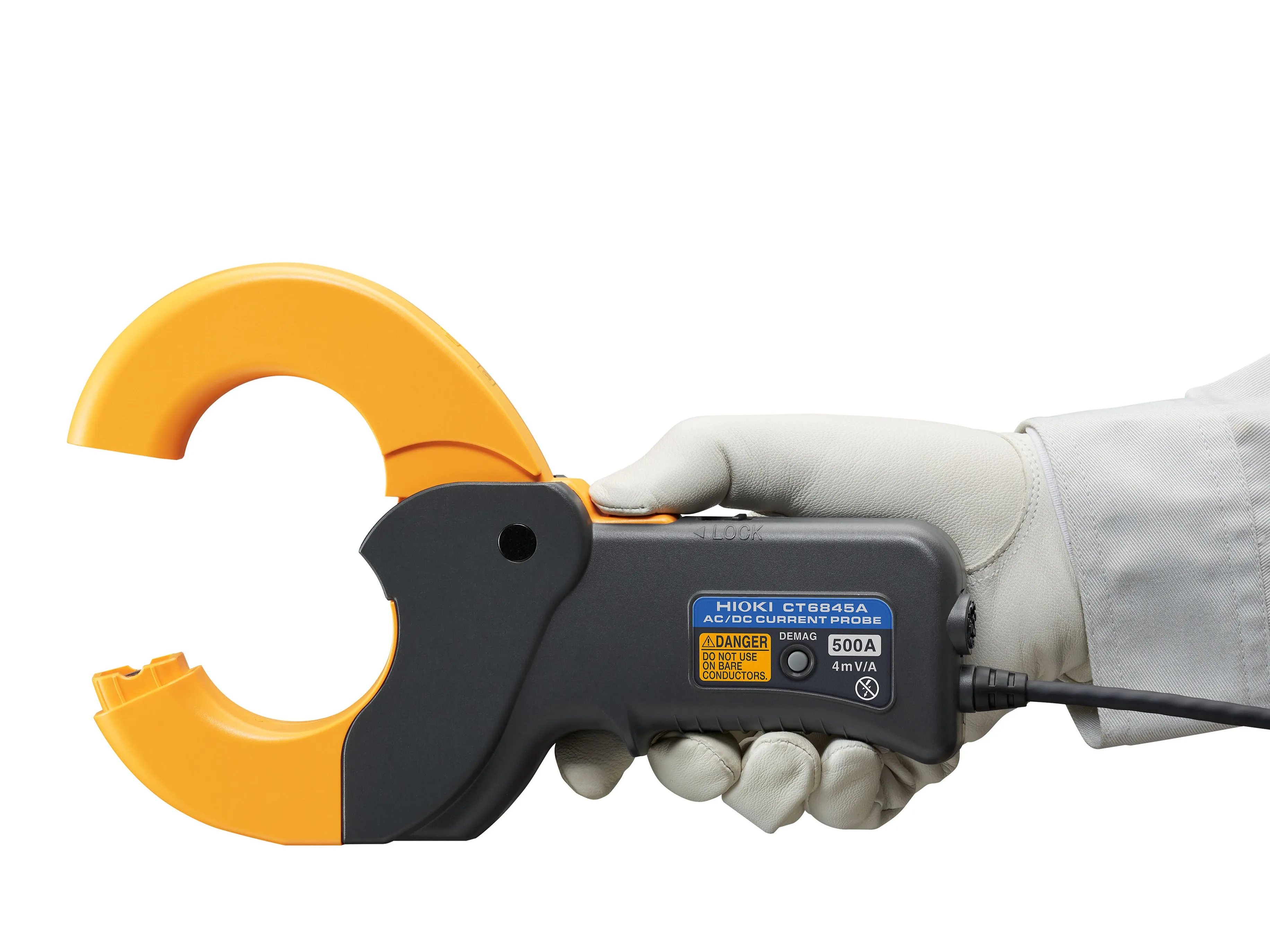
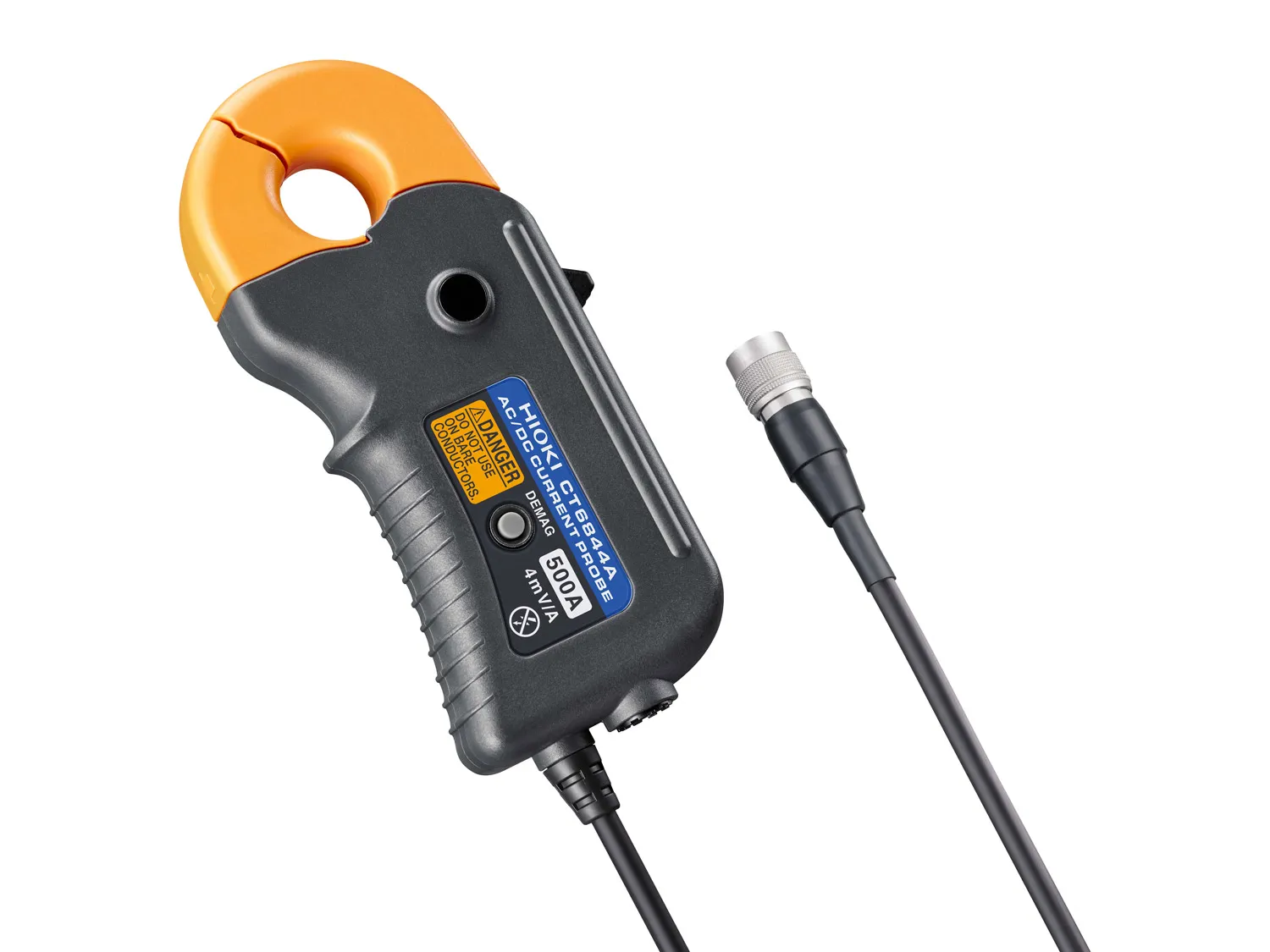
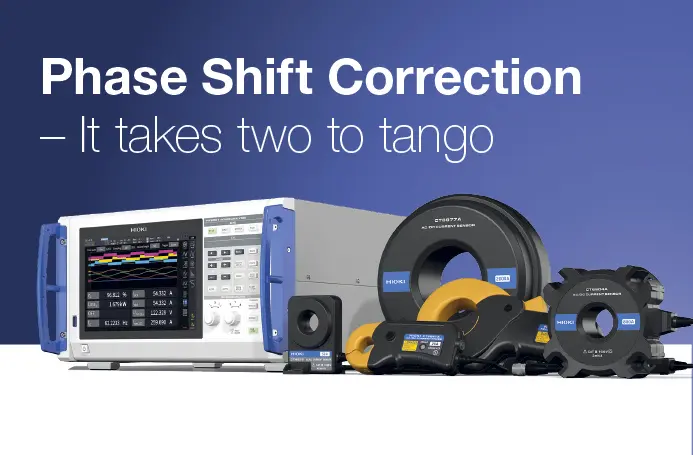
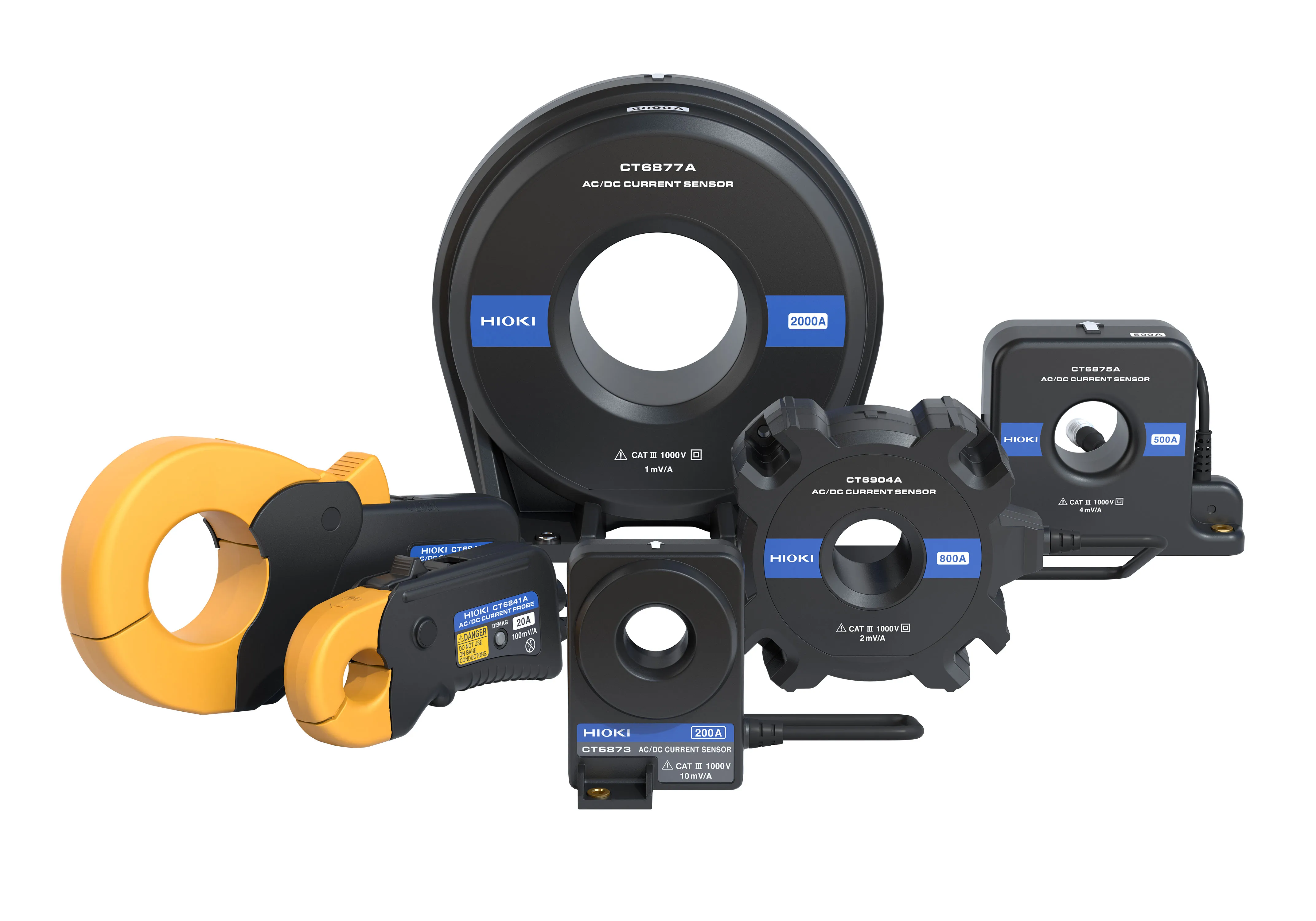
To make things as straight forward as above of course you need a current sensor where the time delay is the same regardless of the frequency. This is the case with HIOKI current sensors of the CT68xxA series. So, like with the deskew function you only need to connect the current sensor to the PW8001 Power Analyzer and the phase error will be compensated automatically.
This is one of the aspects that makes HIOKI sensors unique – compared to other current sensors currently available on the market, for which the time delay over the frequency band would look like this:
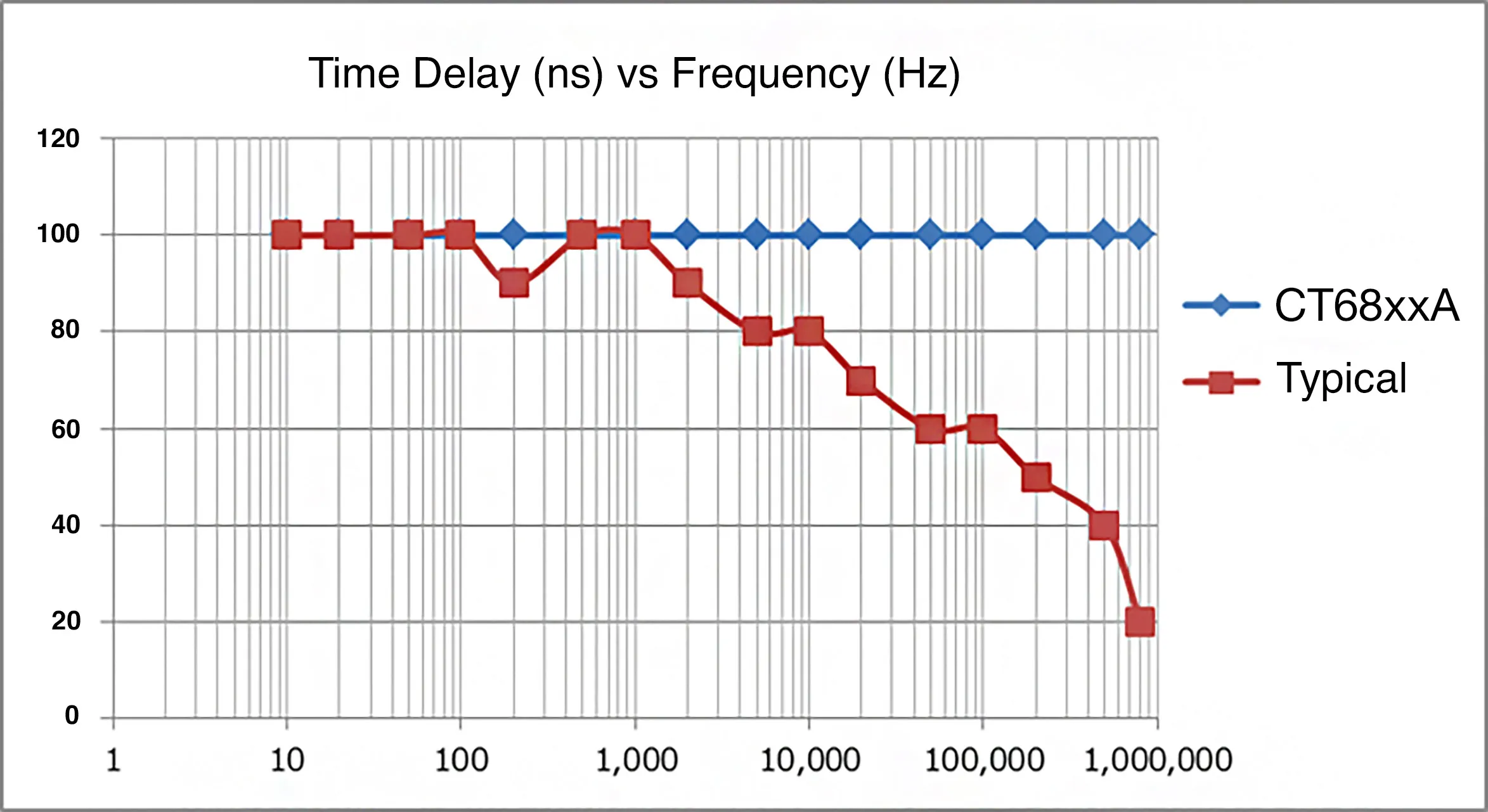
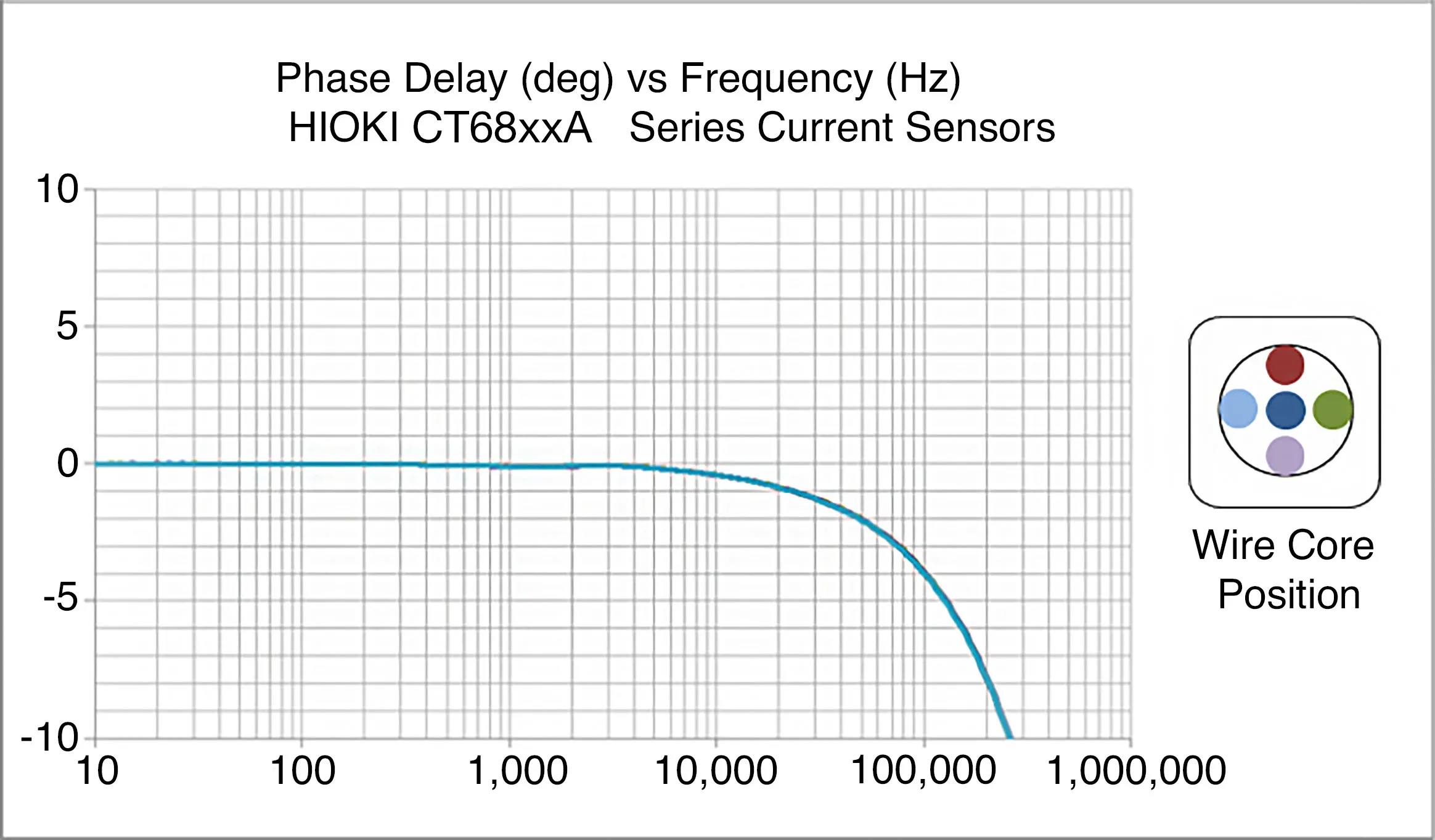
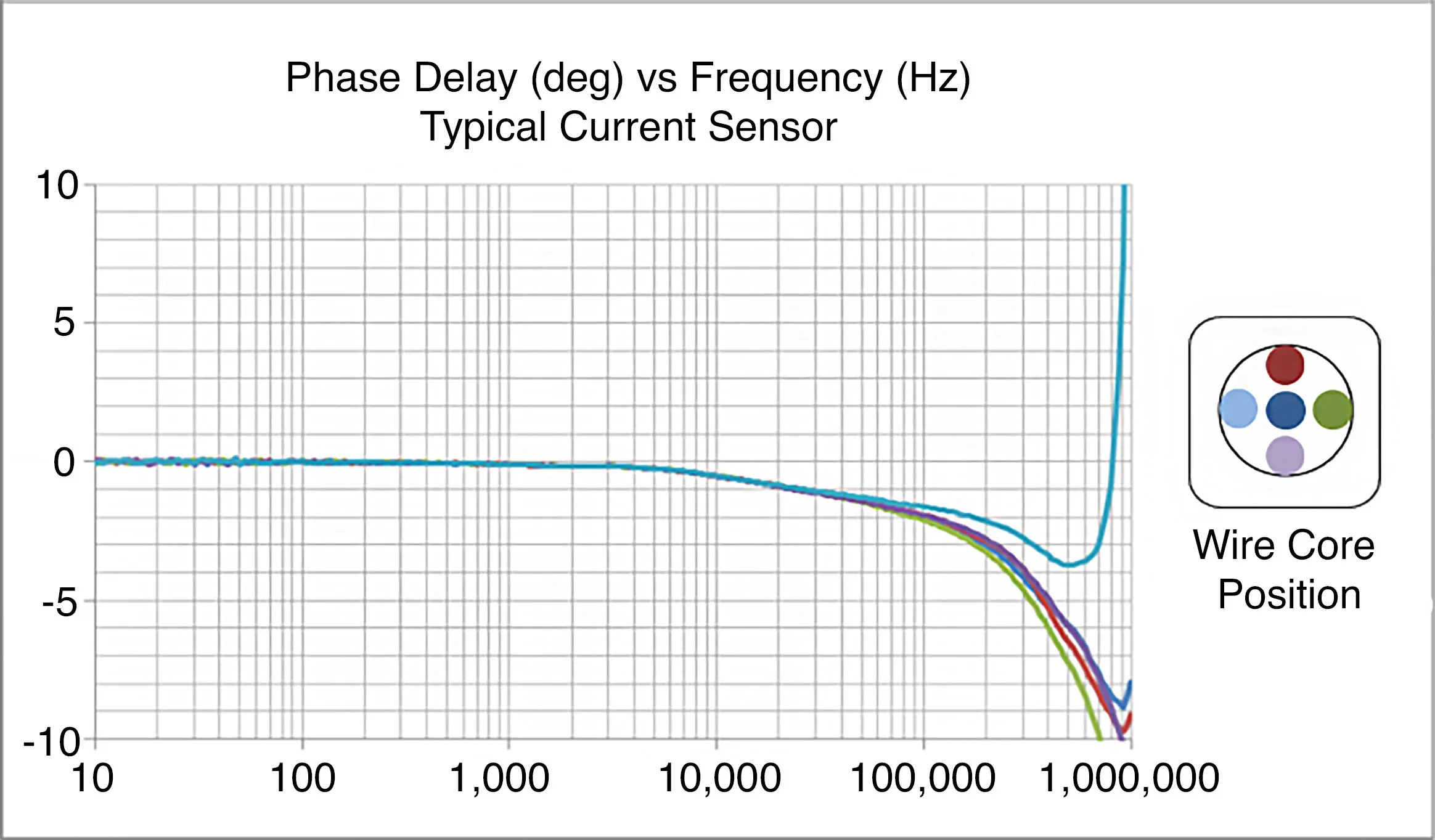
As you can see there is no phase shift compensation without a power analyzer to support the feature. But as you can also see, only the combination of power analyzer and suitable current sensor allows you to perform a proper phase shift compensation in your measurements.
HIOKI has been concentrating on making sensors for power measurement for many years so time delay characteristics have always been a focus point for HIOKI’s engineers. At the same time sensors from other manufacturers are typically only designed for accurate (DC) current sensing where phase delay characteristics are less important.

Therefore, HIOKI power analyzers together with HIOKI current sensors are the perfect combination for your wide-band power analysis applications from DC to high frequency. Because like with a tango it takes two.
Do you want to know more about current sensors – read our article: Current Sensors: How much is the drift?
Find out more about our Current Sensors