Auxiliary Electrodes on Concrete: No Hammer required
For earth measurements, earth spikes are usually inserted into the ground. But what happens when the surface is concrete? A short detour involving an earth nets and the question of what an old school weaving frame and silkworms have to do with all of this.
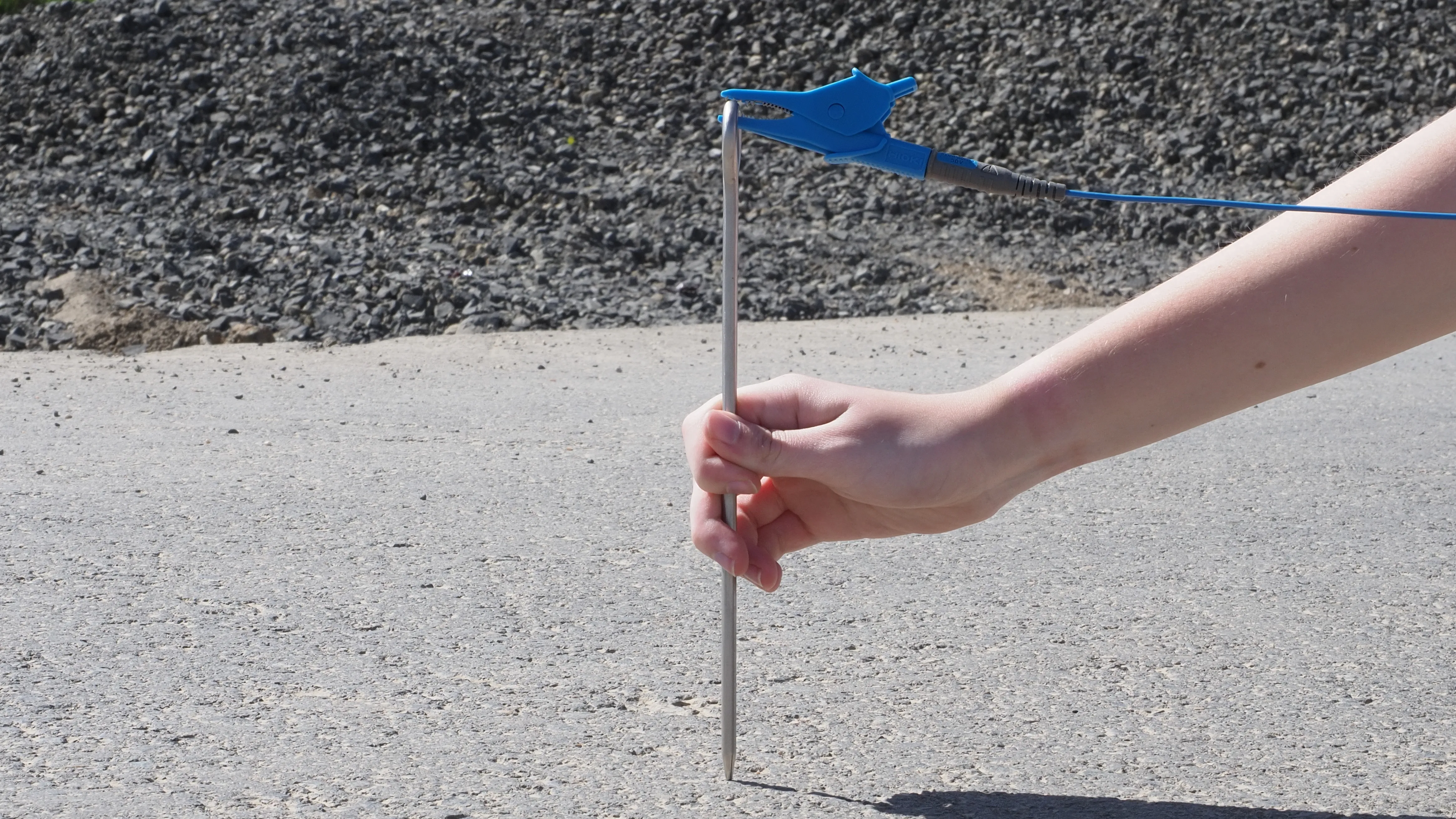
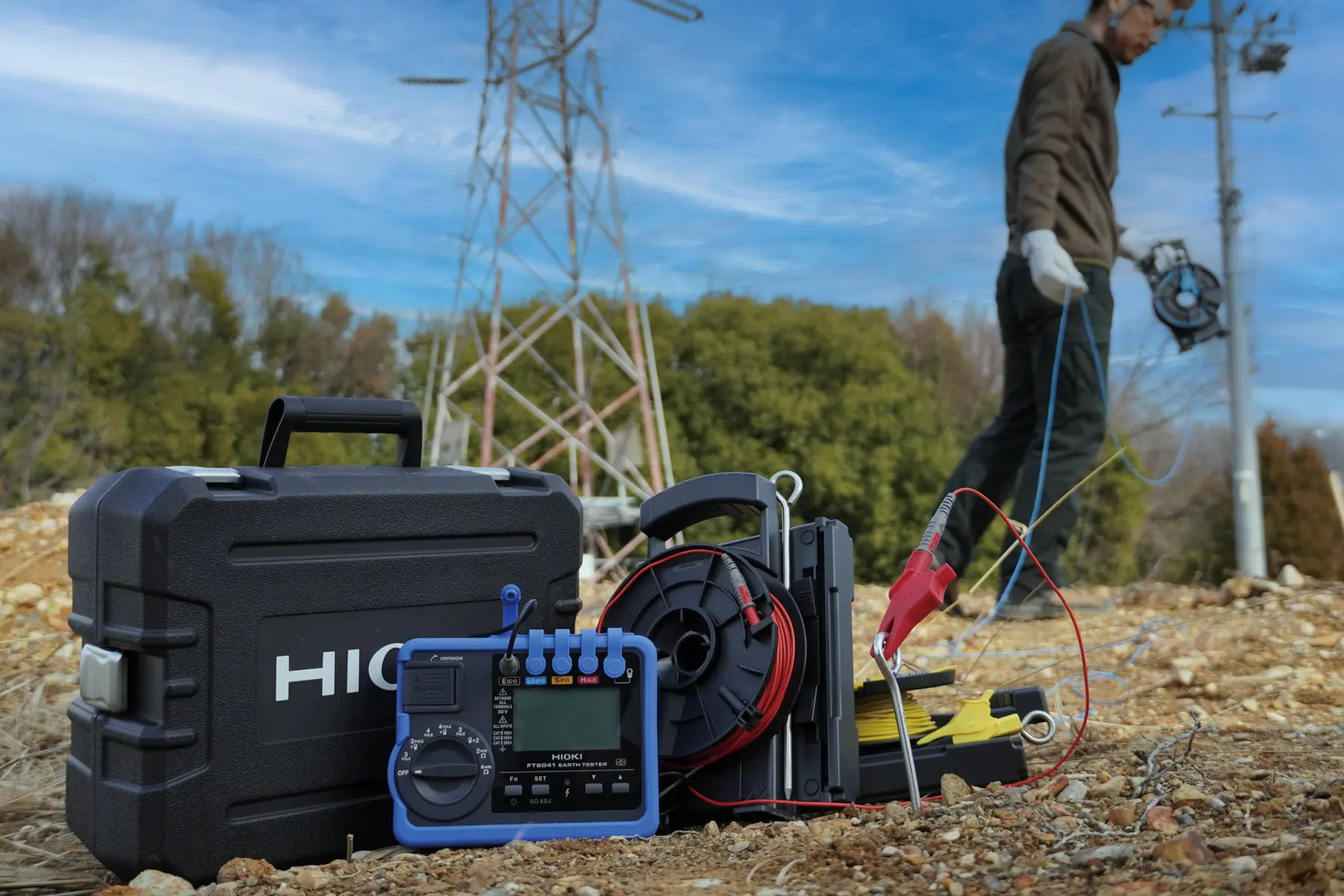
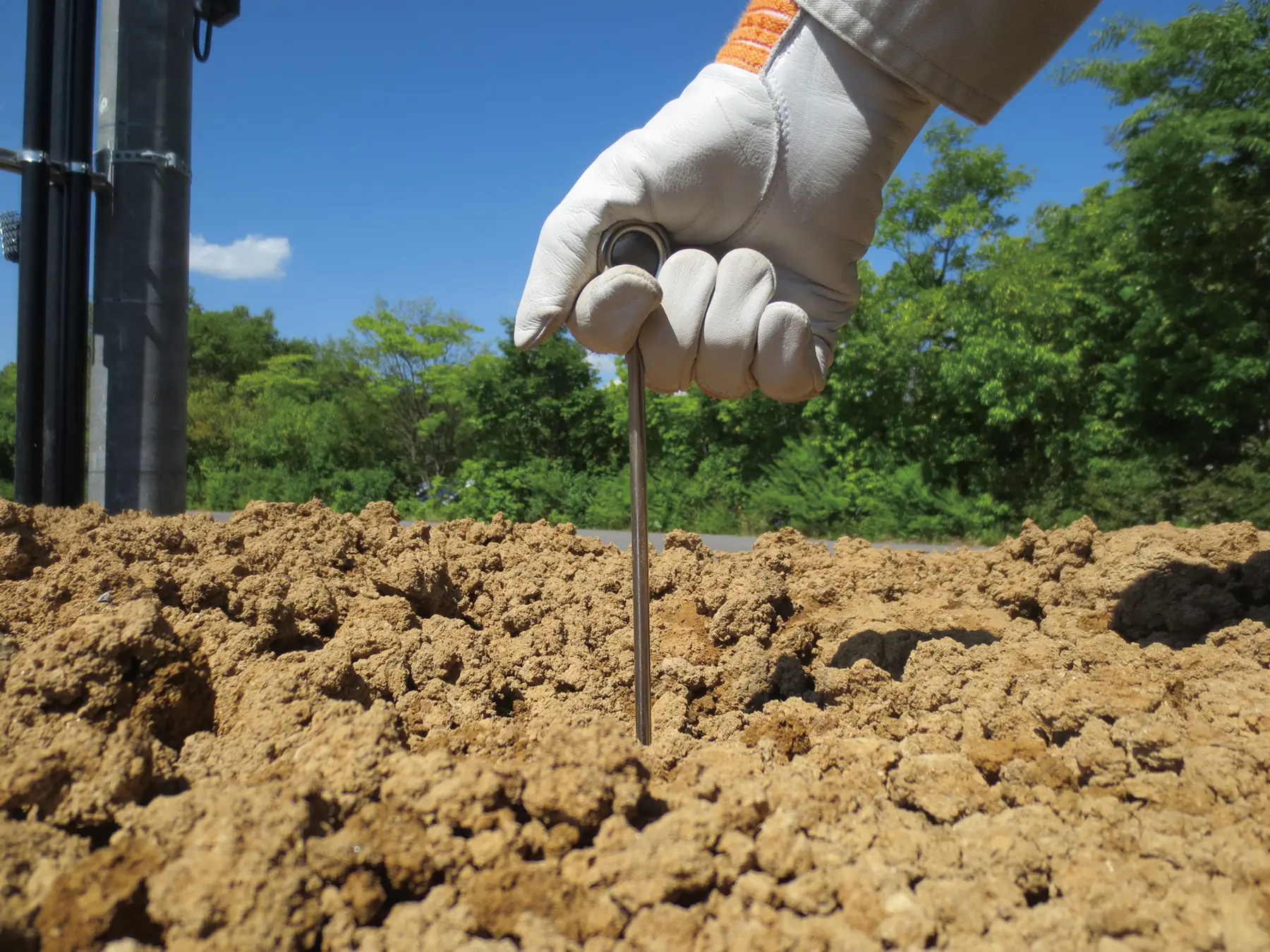
In earth testing, earth spikes are usually used as auxiliary electrodes. They are used either to measure the earth resistance of an existing electrode or to determine soil resistivity when preparing the design of an earthing system.
When the surface is concrete, however, driving an earth spike into the ground is obviously no longer an option. HIOKI offers a solution for exactly that situation. Spoiler alert: it is not a hammer. Instead, an earth net is laid out on the concrete and moistened with water. The earth spike is then placed on top, and the measurement is carried out as if the spike were actually in the ground.
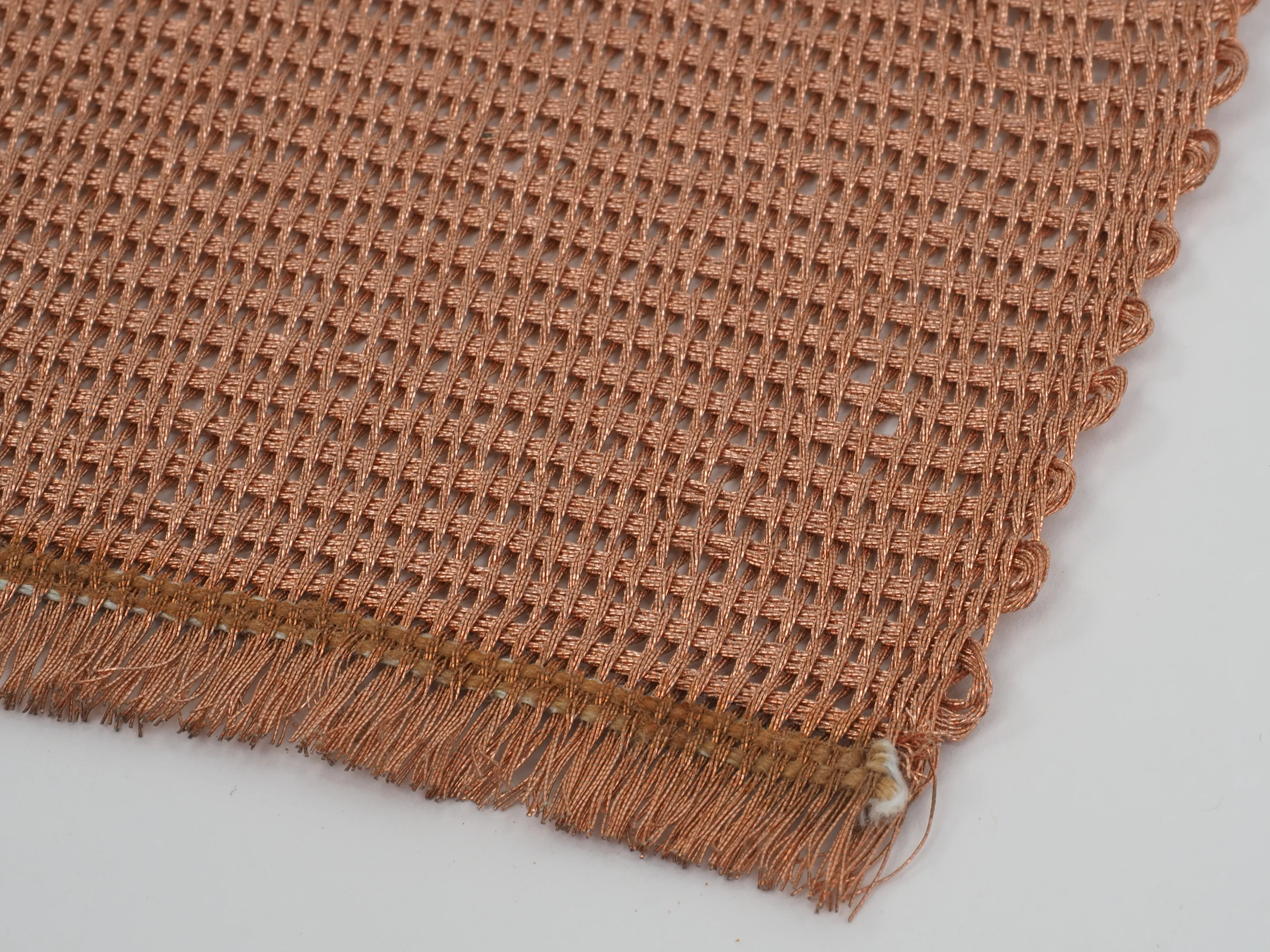
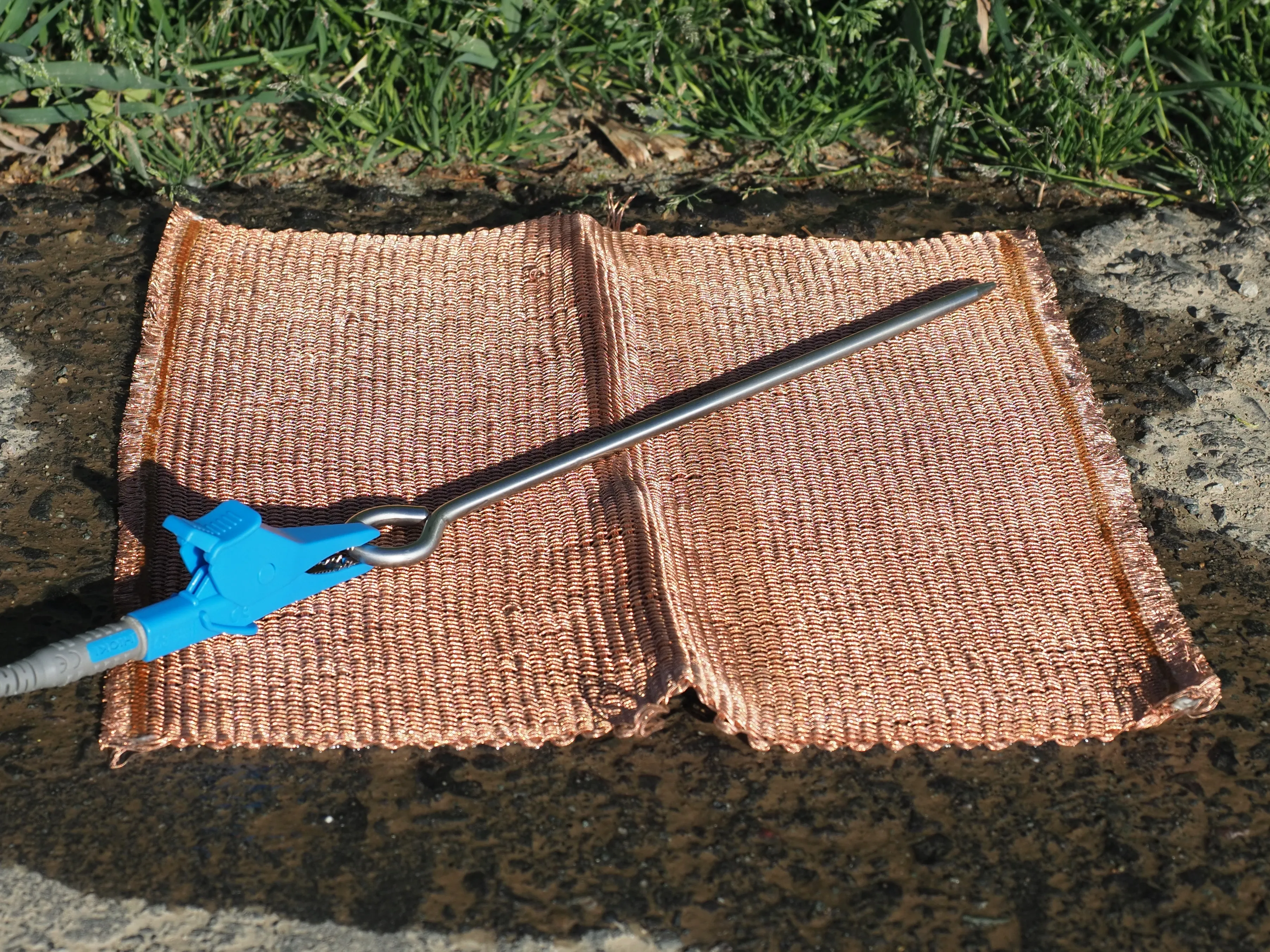
“Yes … so what?!” an expert might say at this point. I was honestly sceptical. On top of that, I had struggled for quite a while to find a good way to describe what these nets actually look like. Then I remembered my old school weaving frame from the early 1980s, which has somehow survived in its original box to this day. The HIOKI Earth Nets 9050 have a structure similar to the small woven mat from my school weaving frame kit – except that they are woven from copper wire.
Because that is exactly what these earth nets are made of: woven copper wire.

A bit of trivia: woven copper wire is not the kind of standard product you can simply order from any supplier. HIOKI initially tried to develop the idea in house, but without success. Then again, giving up is not exactly a Japanese trait. Since HIOKI is based in Ueda, in Nagano Prefecture, a region with a long tradition of sericulture and weaving, one of HIOKI’s engineers learned the technique required to weave these copper nets from a local silk weaving workshop.
And for anyone who was lucky enough to miss out on textile classes at school, here is a close up of the earth net. You can clearly see the woven structure of the copper wire. And just in case anyone is wondering: the net shown in the photo is not brand new, but comes from the HIOKI Europe demo pool.
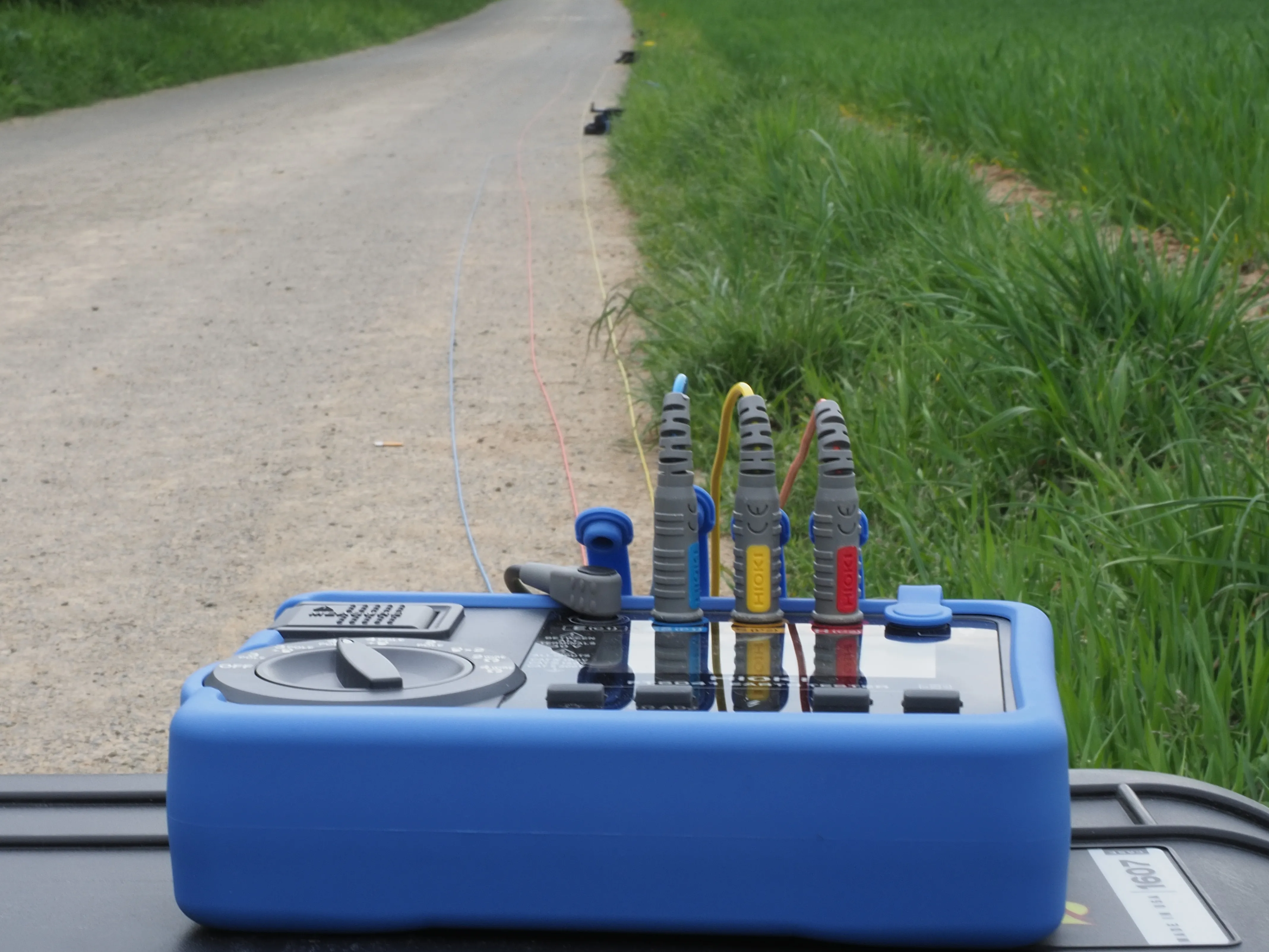
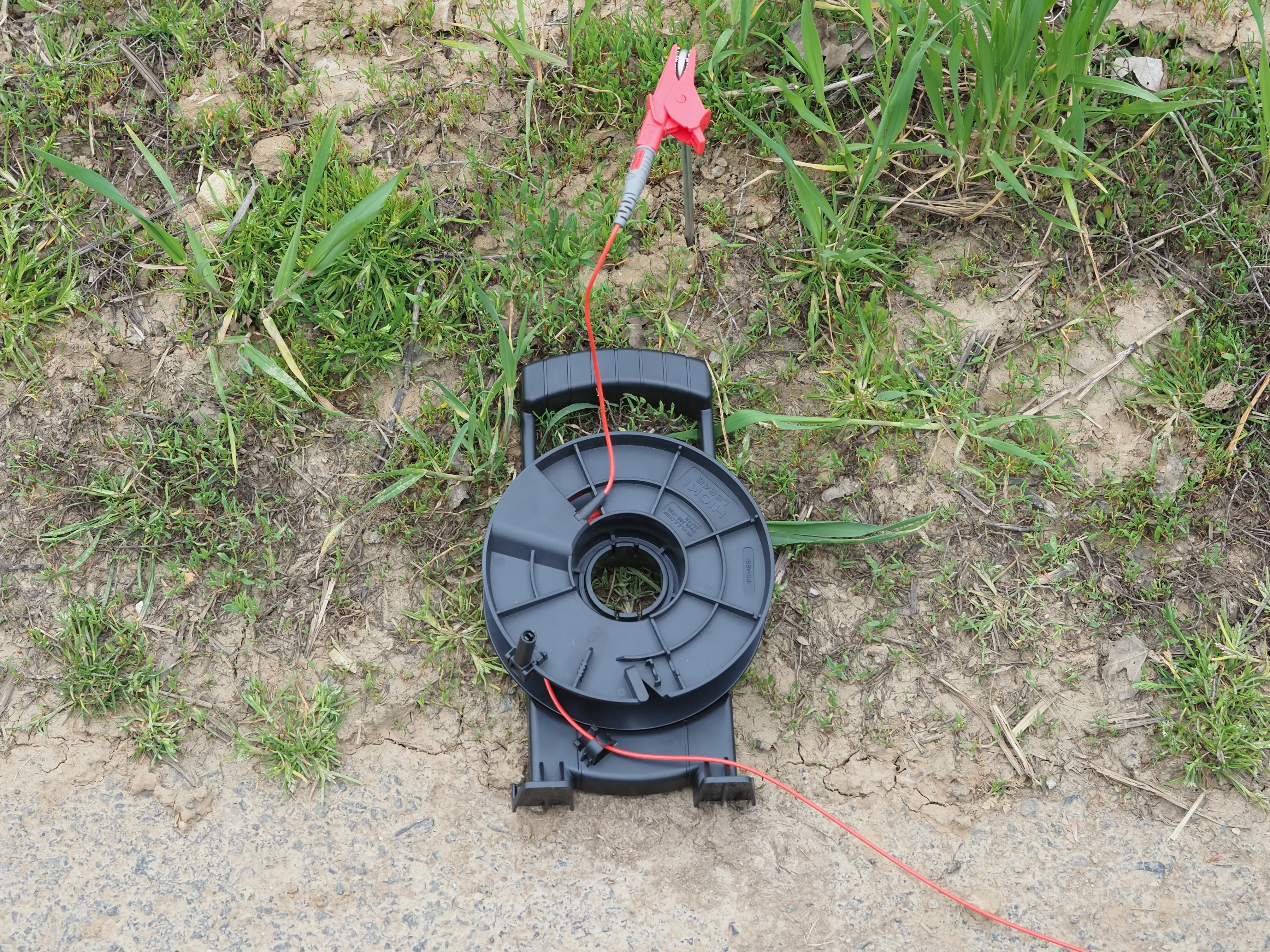
There is a simple reason why the red lead is the longest: it is normally used to inject the test current into the ground, and that connection is the farthest from the instrument.
The next photo deliberately shows the measured resistance value rather than the calculated soil resistivity. For this comparison, that was the more useful number because it made it easier to see what changed when switching from earth spikes to earth nets. The FT6041 is Bluetooth enabled, so I could just as easily have sent the reading straight to the GENNECT Cross App. But somehow, a photo of the display just feels like part of a field test like this. Or, to be completely honest, I had left my phone with the GENNECT Cross App at home.
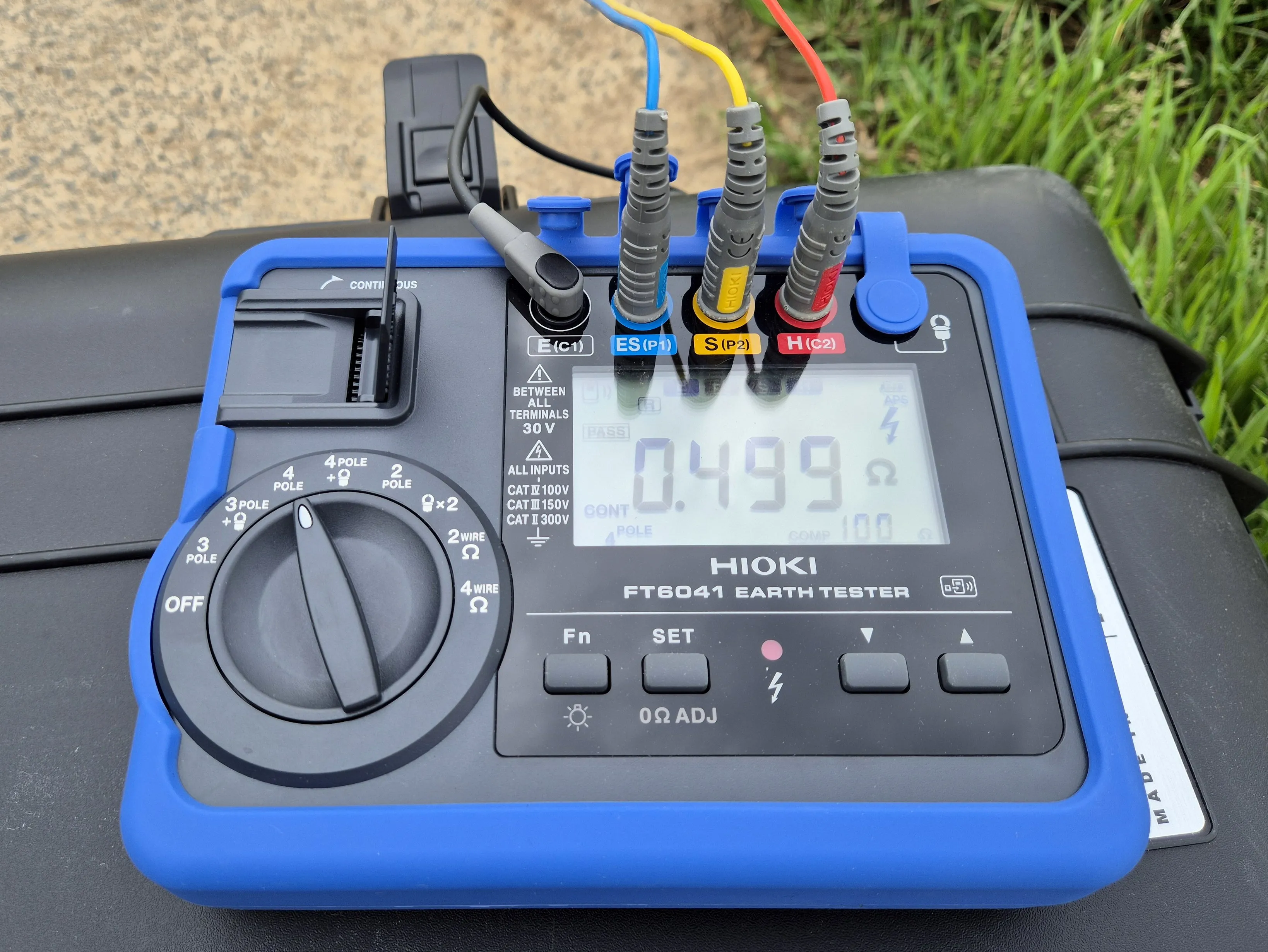
As you can see from the display, I ran the measurements in Continuous Mode, which is activated by flipping up the trigger button. The readings consistently fell between 420 mΩ and 580 mΩ, with an average very close to the value shown on the display at around 500 mΩ.
The next step was to replace the two middle spikes, in other words the potential probes, with Earth Nets 9050 and compare the readings. Naturally, the earth nets were not placed in the clay soil itself, but on the concrete surface of the farm track right next to it.
I have to admit, the result with the earth nets took me by surprise. On average, the readings were again around 500 mΩ. The main difference compared with the reference setup using earth spikes was a slightly wider spread, with values ranging from 400 mΩ to 600 mΩ. Honestly, I had not expected the measurements with earth nets to come out this close to the readings taken with earth spikes.
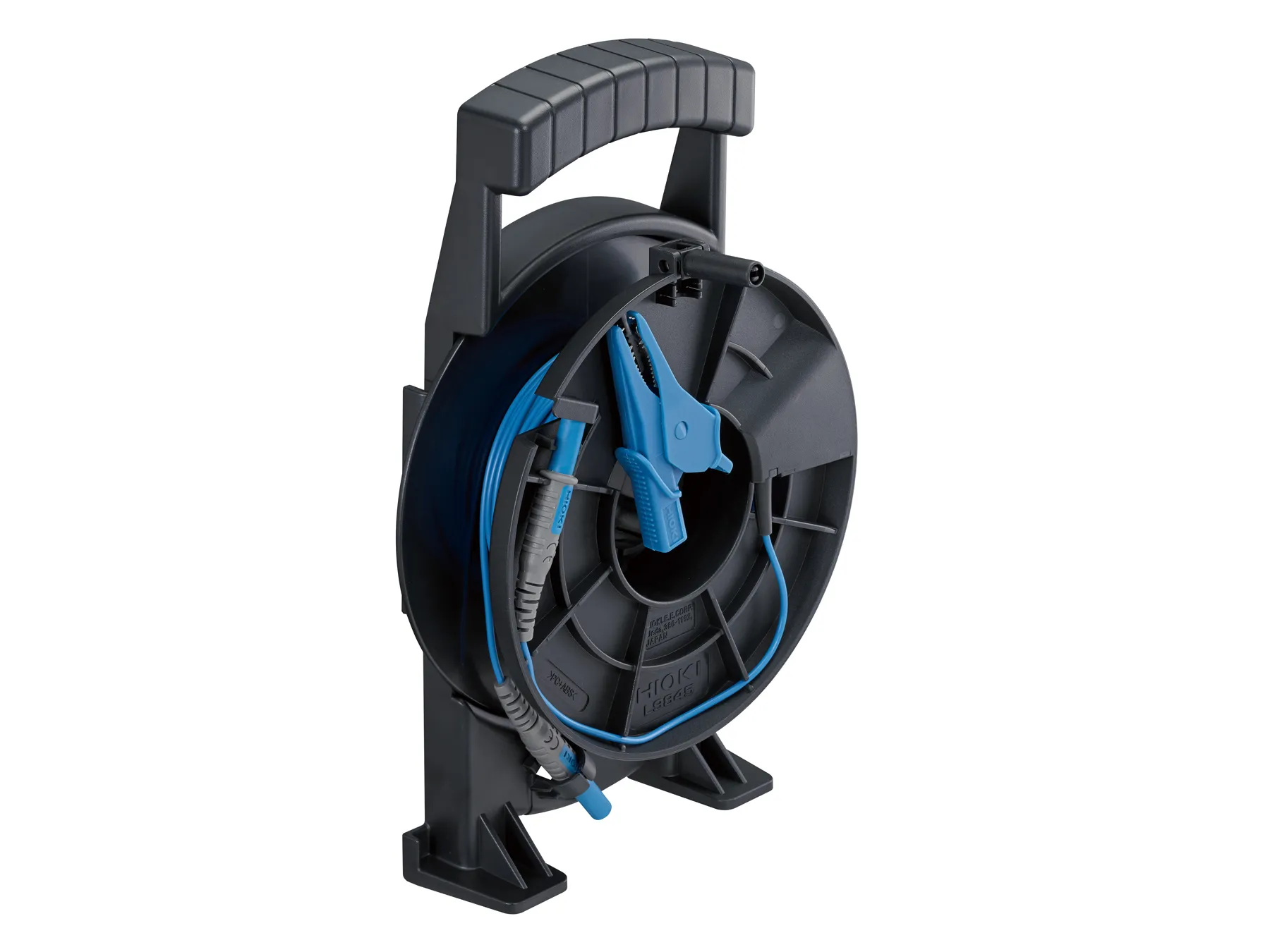
Once I saw how close the results with the earth nets were to those obtained with earth spikes, I naturally wanted to try the L9846 Earth Nets Modules as well. They were introduced together with the FT6041 and are probably best described as the logical next step from the original earth nets.
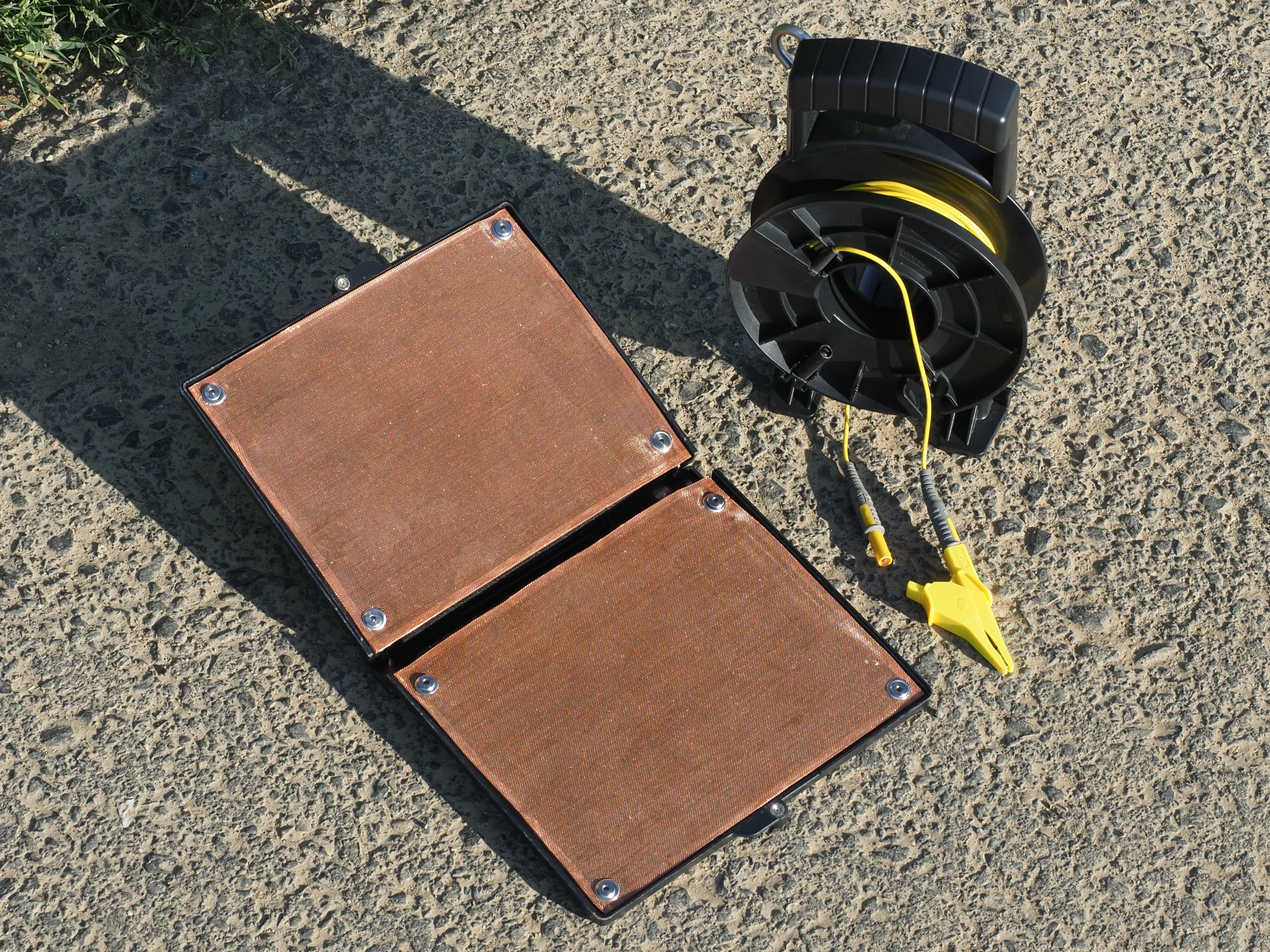
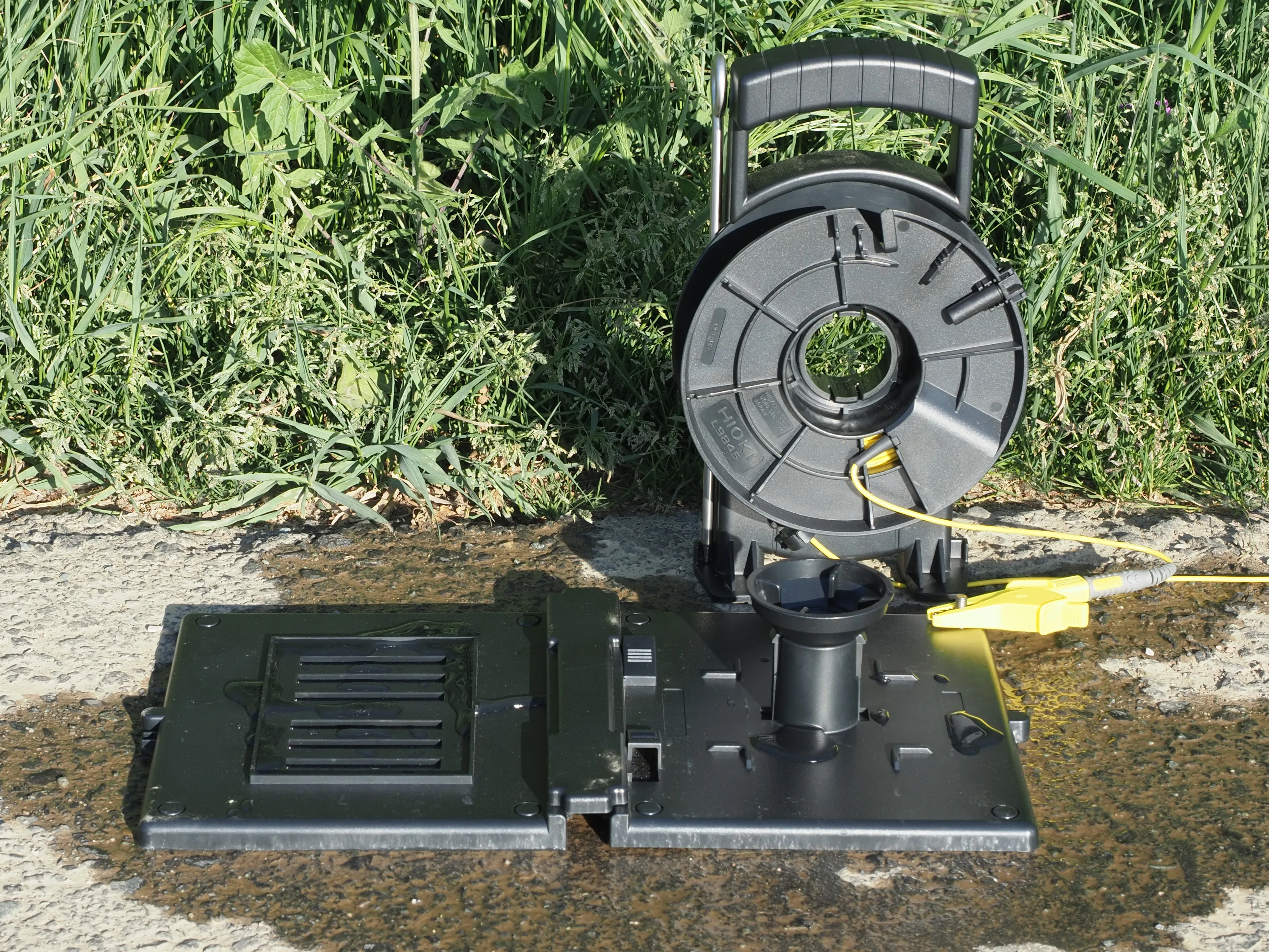
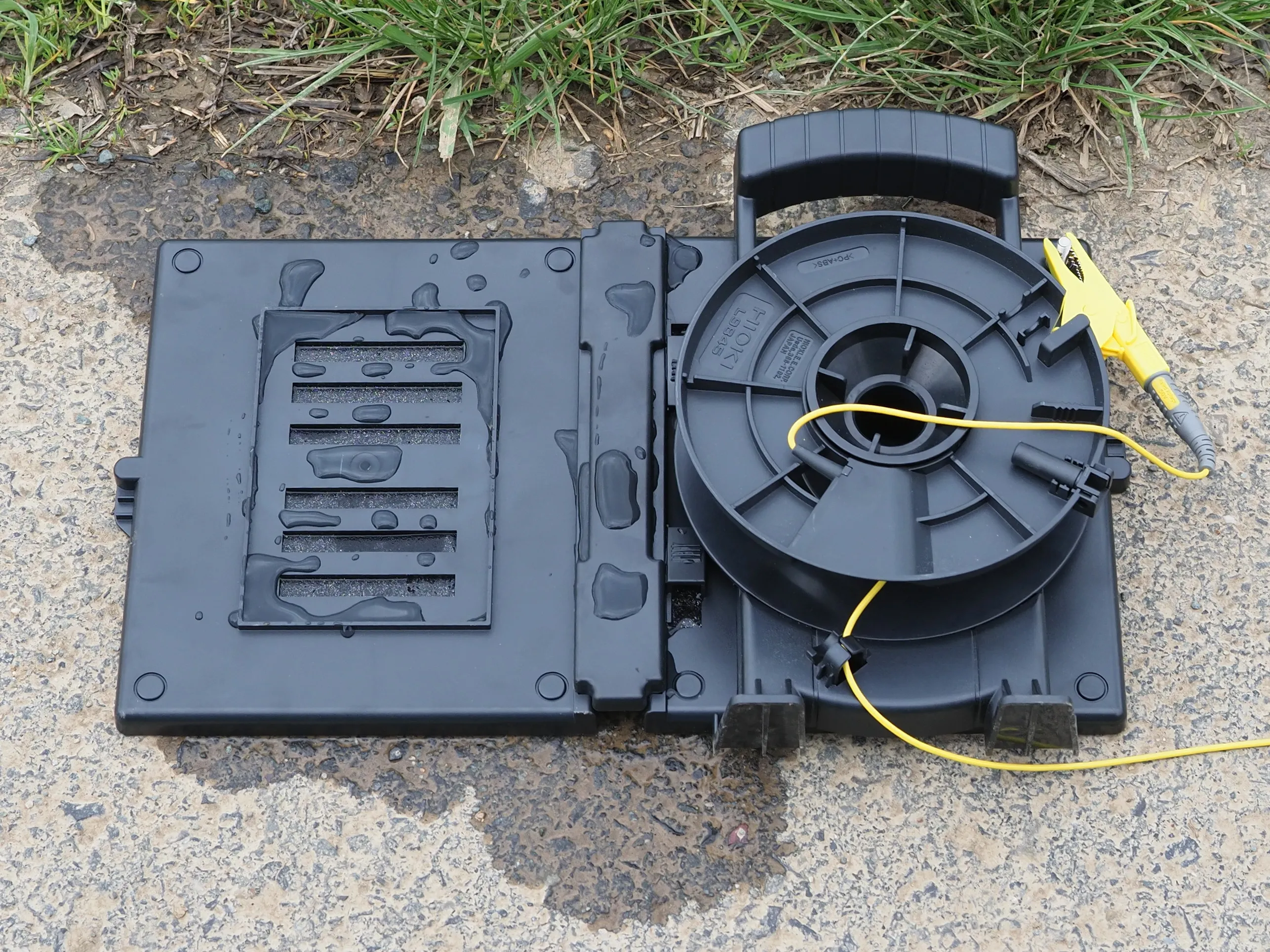
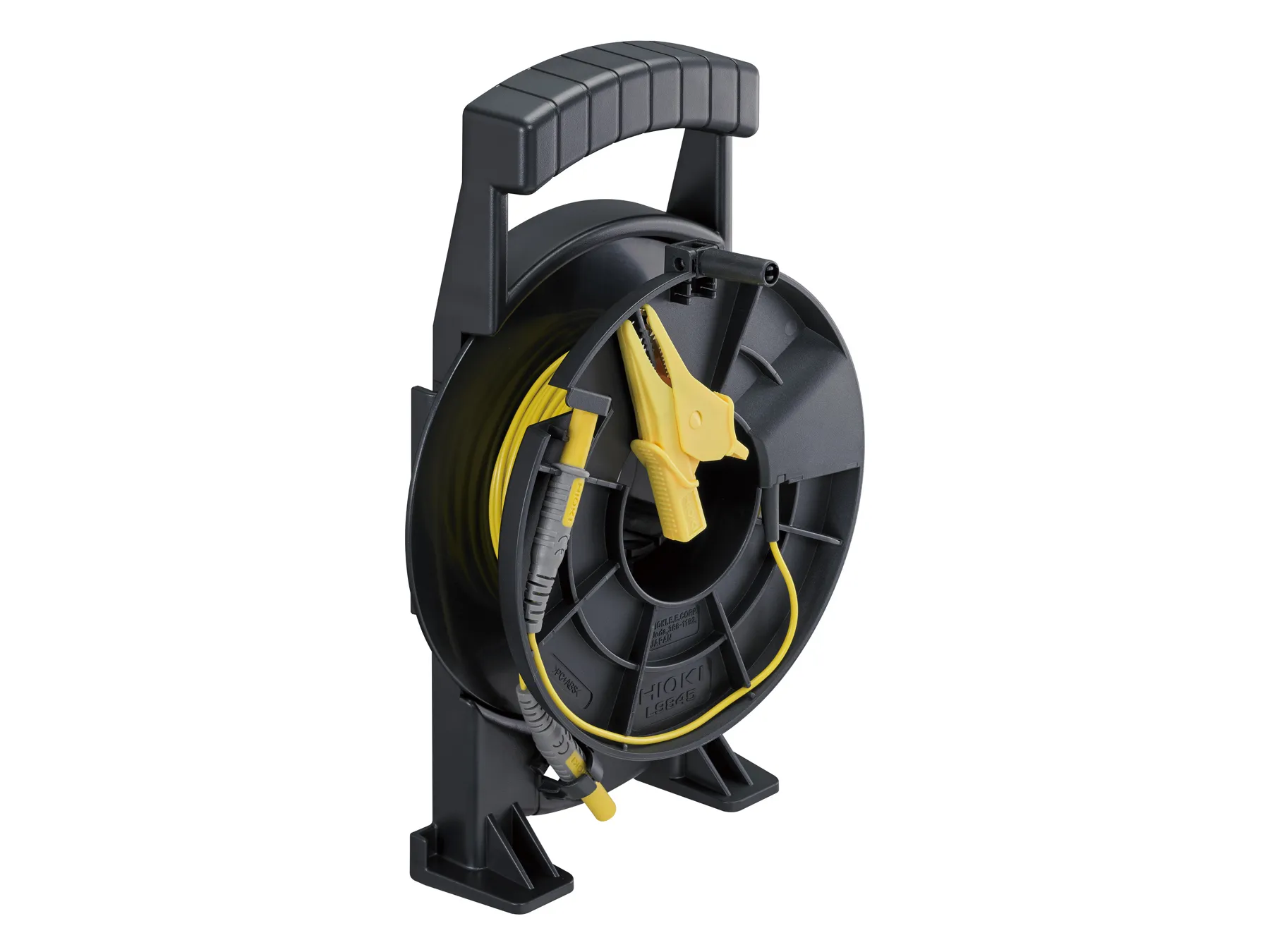
You could probably already guess it from the previous photo: the earth nets module can be clipped onto the cable reel, turning the two into a single unit. The FT6041 comes with two earth nets modules, and for my test I attached them to the two cable reels used for the potential measurement.
The readings with the earth nets modules came out even a little closer to those taken with earth spikes. But honestly, the differences in measured resistance between earth spikes, Earth Nets 9050 and L9846 Earth Nets Modules were so small that they were really more academic than anything else.
After these measurements, I am definitely convinced that this is a valid alternative to traditional earth spikes. And even though the development story behind the original earth nets is undoubtedly the better one, the handling advantages of the L9846 Earth Nets Modules are so obvious that I would choose them over the Earth Nets 9050 any day.