From Cell Research to MW-Scale Electrolyzers: The Future of Hydrogen Production
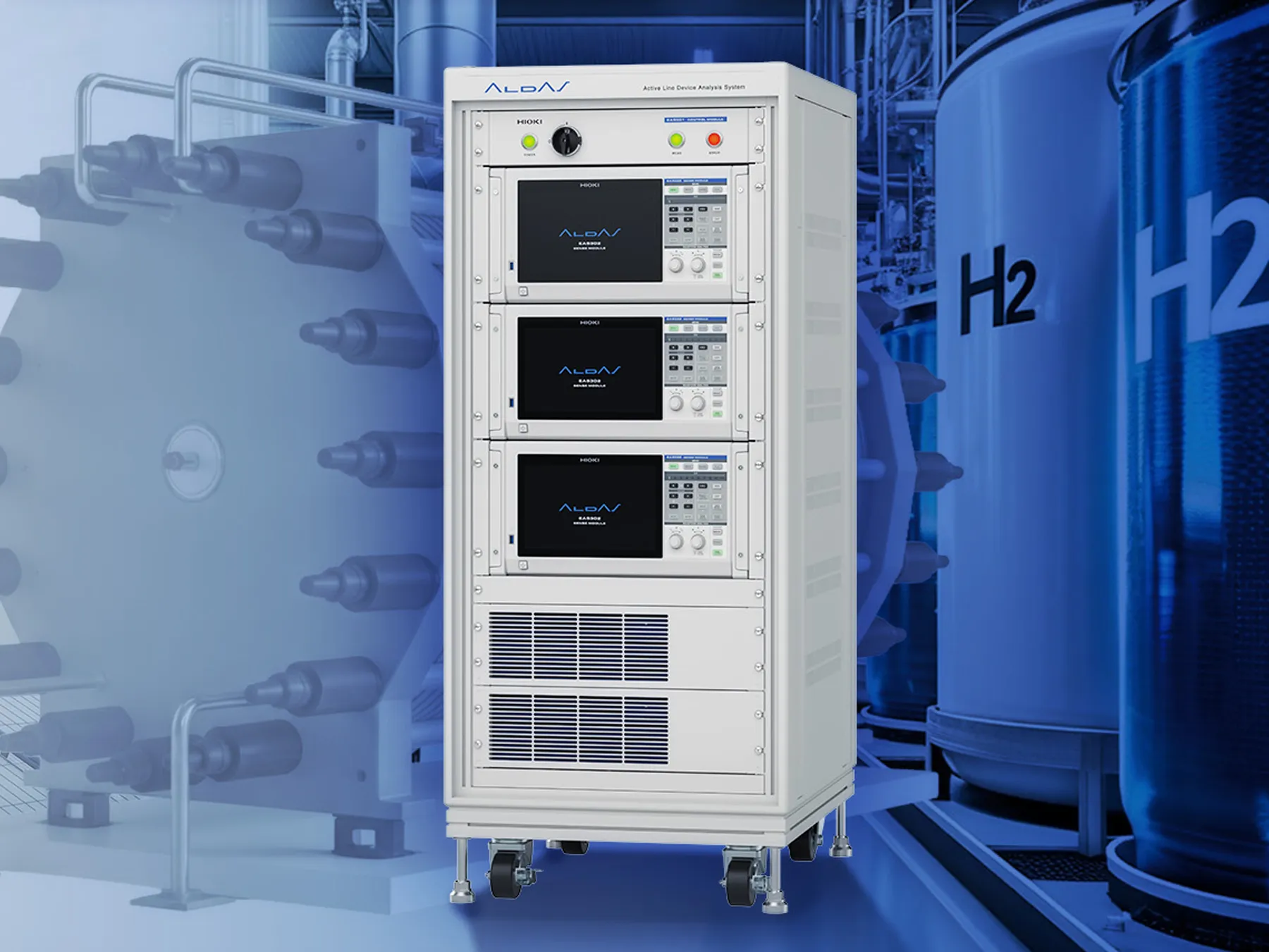
As hydrogen technologies move from research labs to commercial production, deeper electrochemical insight is becoming essential. HIOKI’s Active Line Device Analysis Systems (ALDAS) family help developers, manufacturers, and plant operators understand electrolyzer performance, scale up with from data, not assumptions, and turn hydrogen technology into commercial success.
Electrochemical Diagnostics for Hydrogen Development
Green hydrogen is widely regarded as a key enabler to realize the energy transition. It offers a pathway to decarbonize sectors that are difficult to electrify directly, including steel production, chemicals, refining, heavy transport, and long-duration energy storage. Hydrogen can also help balance renewable energy generation by storing excess electricity from wind and solar power and making it available when needed. To make large-scale hydrogen production economically viable, electrolyzers must become more efficient, reliable, and durable. Achieving these improvements effectively requires a detailed understanding of the electrochemical processes taking place inside cells and stacks under real operating conditions.
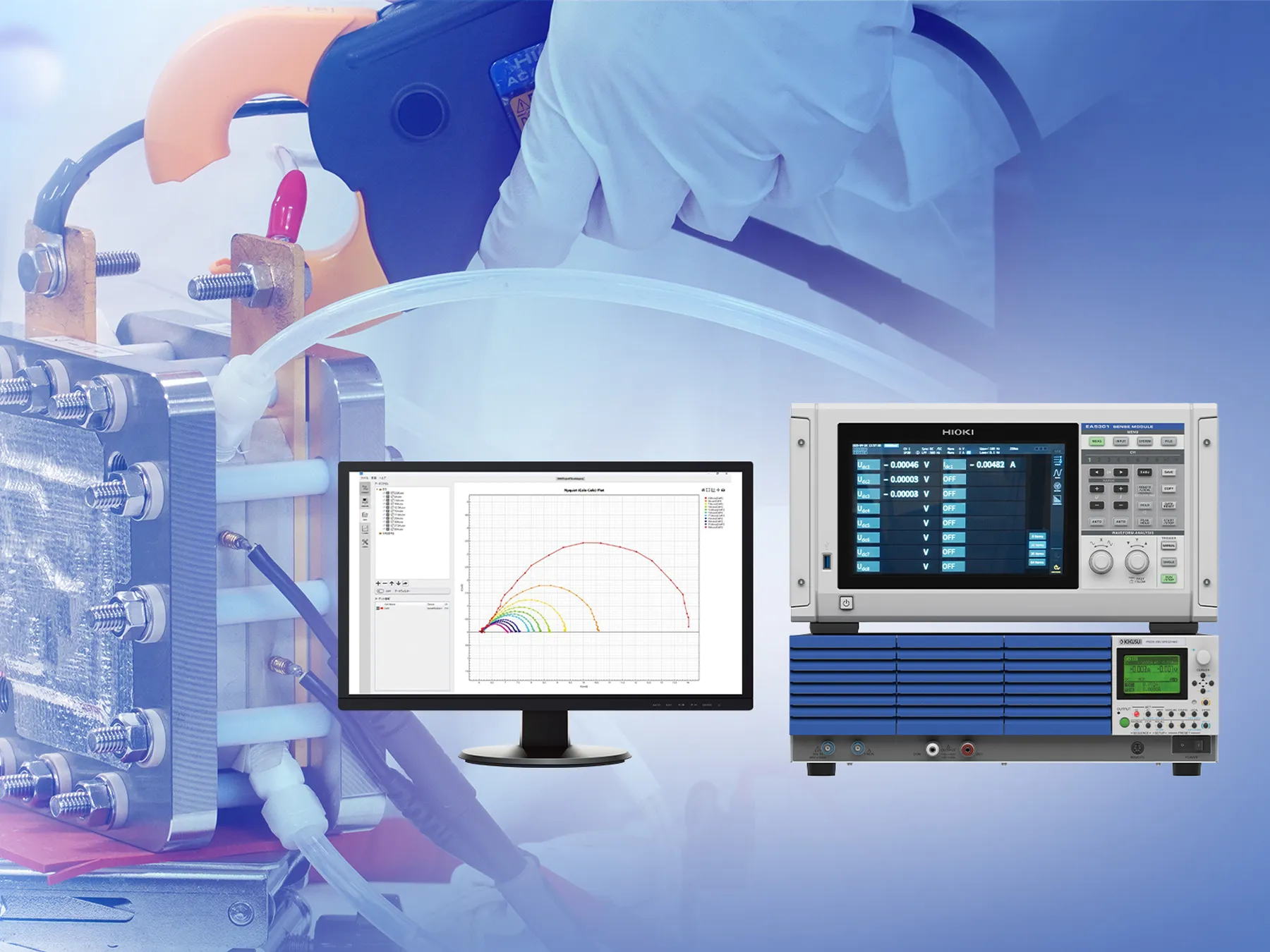
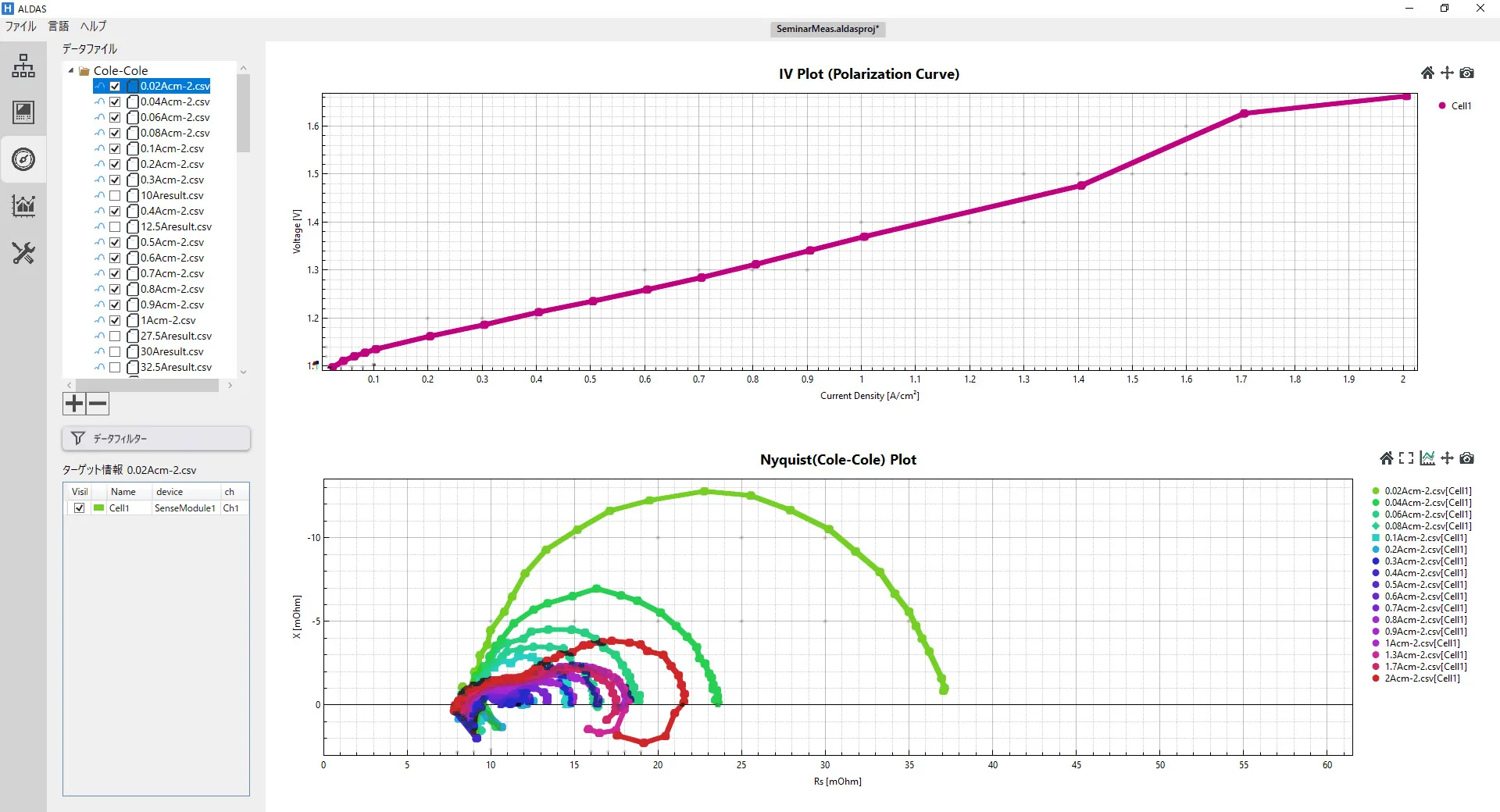
Electrochemical Impedance Spectroscopy (EIS) has become one of the most powerful diagnostic methods for this purpose. It provides valuable insight into internal resistance, charge transfer processes, mass transport limitations, membrane performance, and degradation mechanisms, helping engineers optimize electrolyzer designs and accelerate development.
| System | ALDAS-α | ALDAS-Mini | ALDAS-E |
|---|---|---|---|
| Feature: Positioning | ALDAS-α: Lab / R&D | ALDAS-Mini: Pilot / Stack | ALDAS-E: Industrial / MW-scale |
| Feature: Typical Use Case | ALDAS-α: Single cells, small test setups | ALDAS-Mini: Cell scale up, small stacks, demonstration systems | ALDAS-E: Large electrolyzers, industrial plants |
| Feature: Application Area | ALDAS-α: Universities, research institutes, R&D labs | ALDAS-Mini: System developers, pilot projects, integrators | ALDAS-E: OEMs, hydrogen producers, industrial operators |
| Feature: Main Benefit | ALDAS-α: Fast R&D and material evaluation | ALDAS-Mini: Parallel cell and stack diagnostics and scaling | ALDAS-E: Full system monitoring and optimization |
What Makes ALDAS Different?
While EIS provides insight into electrochemical devices and systems, common EIS applications are often limited to laboratory environments and small test cells, making it difficult to evaluate electrolyzers under realistic operating conditions.
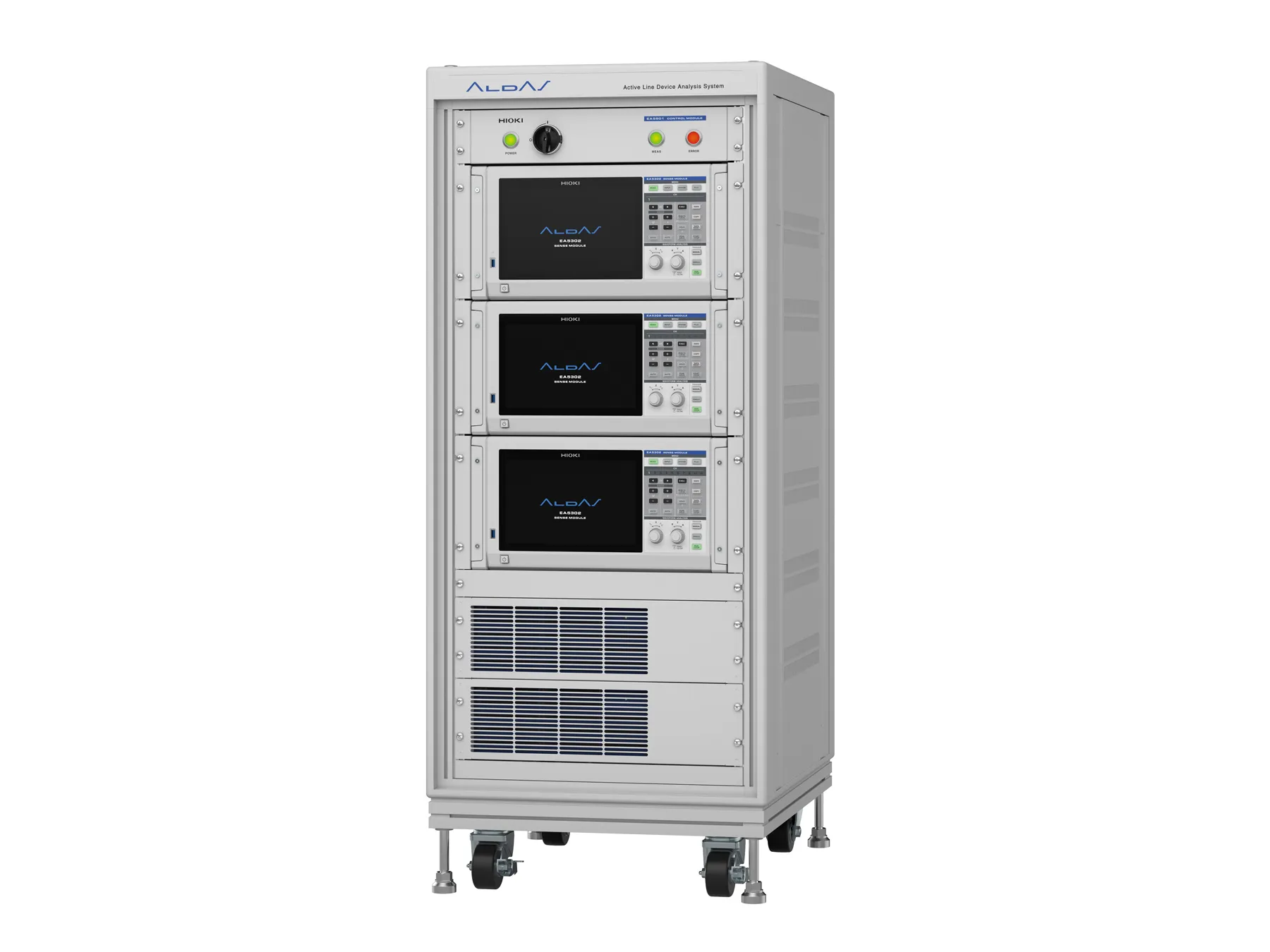
The HIOKI ALDAS product family was developed to overcome these limitations. Unlike traditional EIS solutions, ALDAS enables impedance measurements on operating electrolyzers ranging from single research cells to MW-scale industrial systems. This allows engineers to investigate performance, efficiency, and degradation mechanisms under the conditions that matter most: actual operating conditions.
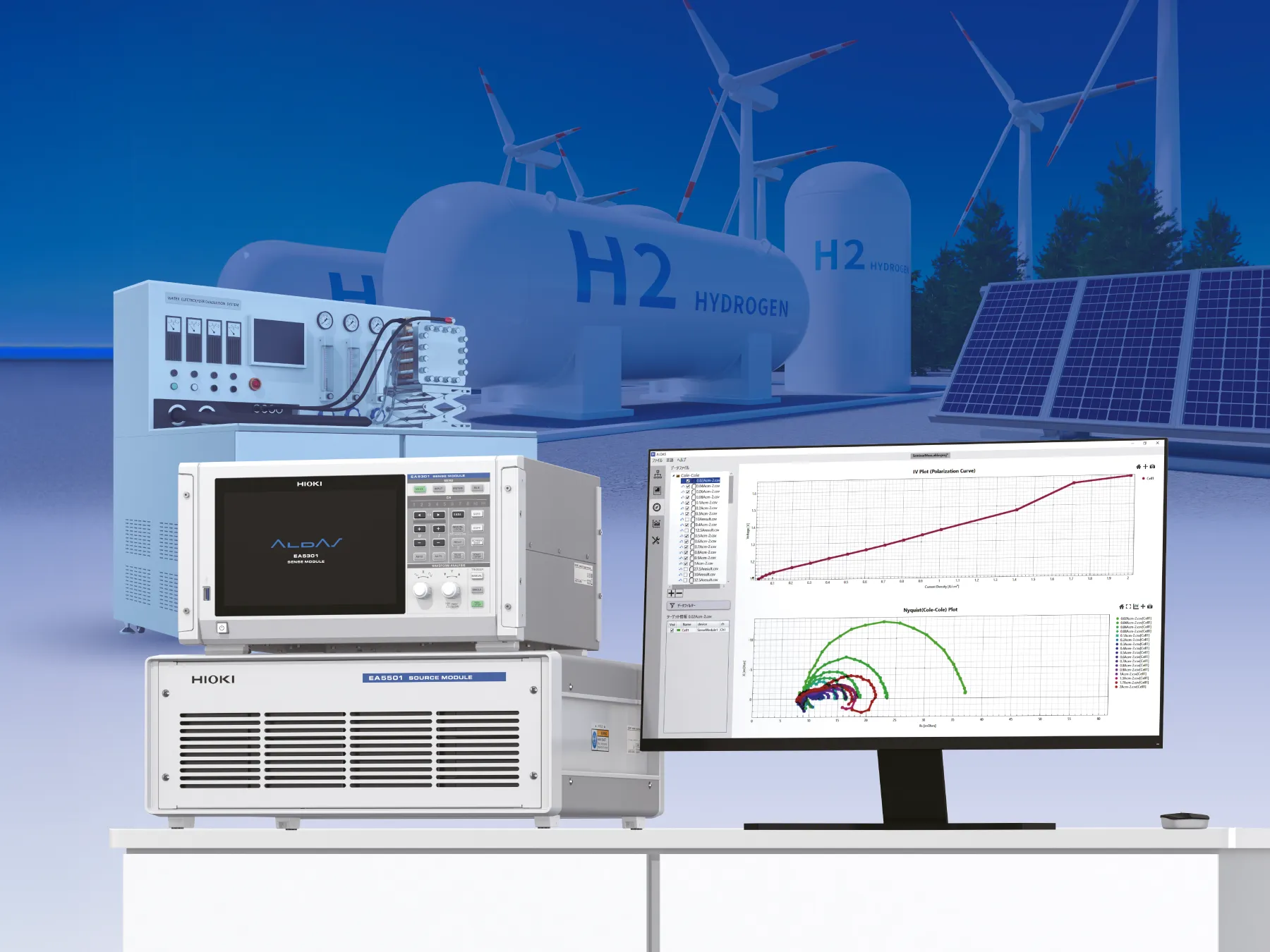
Another key advantage is flexibility. ALDAS systems can be easily connected to existing electrolyzer test benches whenever advanced impedance analysis is required. Instead of investing in dedicated EIS instrumentation for every test station, test labs can share a single ALDAS system across multiple projects and test environments, maximizing equipment utilization while reducing investment costs. The three ALDAS solutions are designed to address these needs at each stage of development, from single-cell research and stack validation to MW-scale industrial operation.
ALDAS-α: Optimized for Cell and Material Development
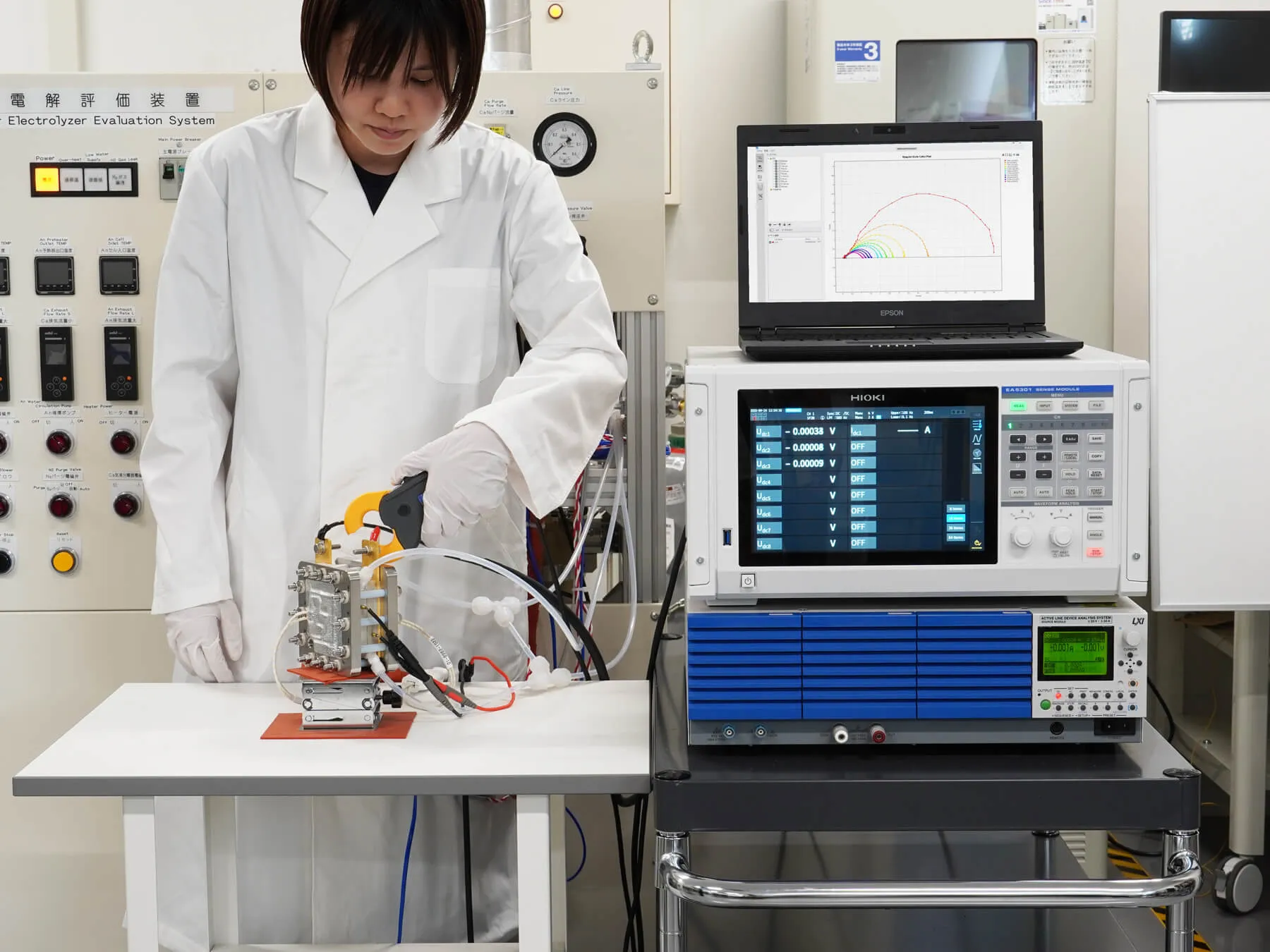
ALDAS-α is designed for early-stage hydrogen R&D, where the focus is on understanding the electrochemical behavior of materials, components, and single cells.
Researchers developing catalysts, membranes, membrane electrode assemblies (MEAs), and electrode structures require insight into reaction kinetics, charge transfer processes, and degradation mechanisms. ALDAS-α helps researchers understand these processes through fast, accurate impedance measurements that help shorten development cycles and accelerate innovation.
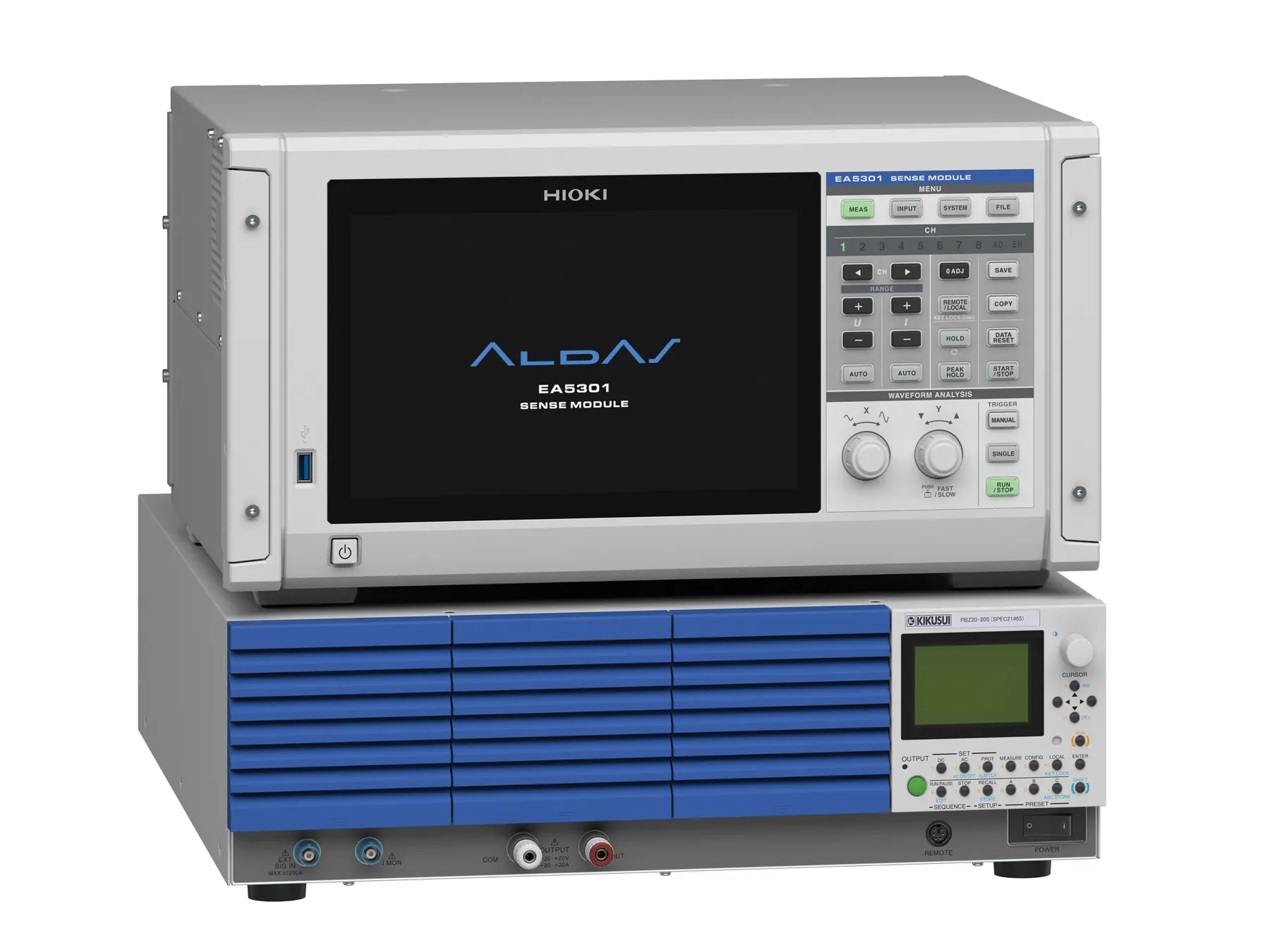
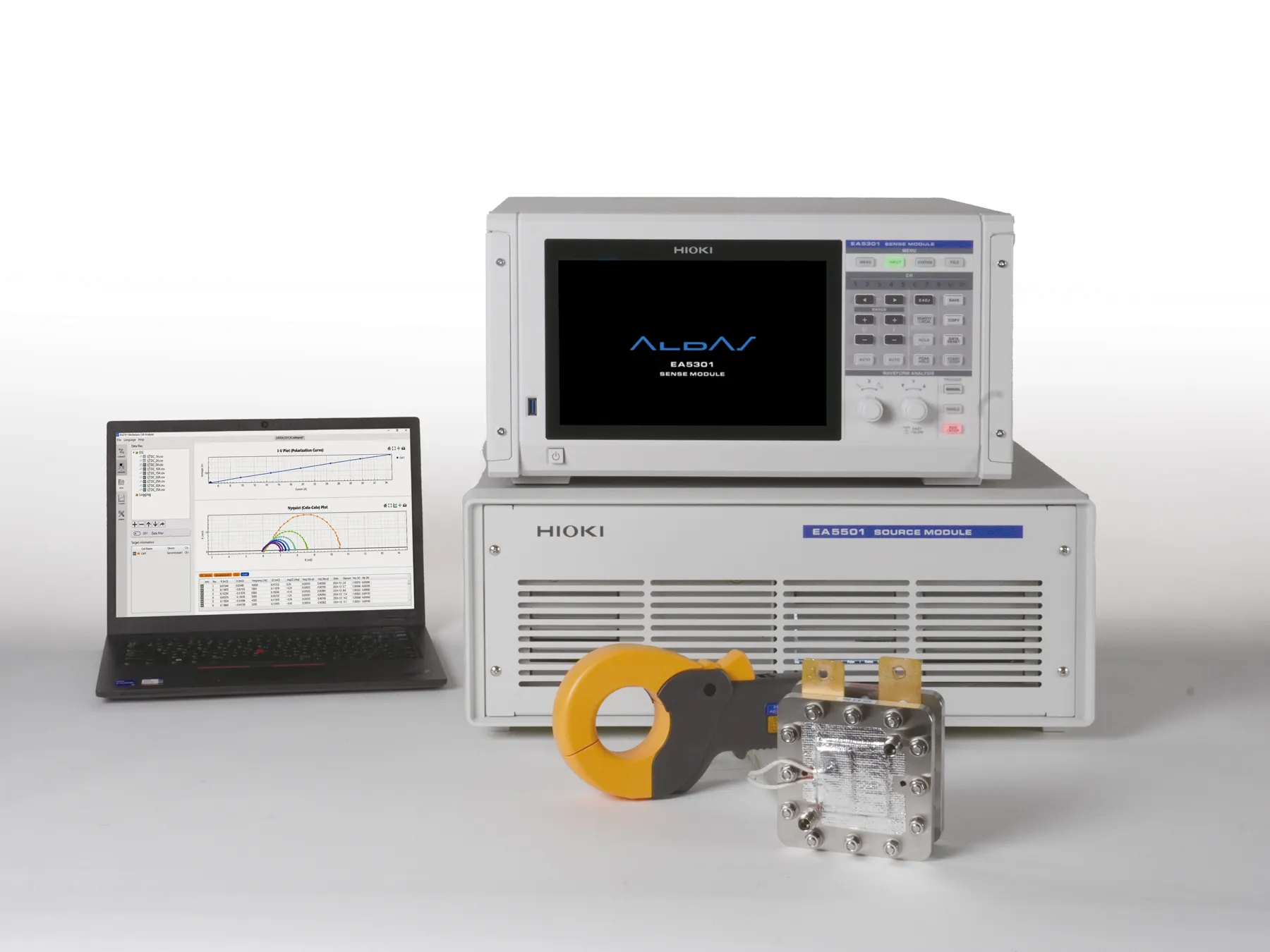
A key advantage of ALDAS-α is its ability to perform high-speed EIS measurements while supplying DC current of max. 20 A directly from the main unit. This simplifies the test setup and allows researchers to focus on generating meaningful electrochemical data rather than managing complex instrumentation.
For material screening, catalyst development, membrane optimization, and single-cell characterization, ALDAS-α provides the insights needed to make informed design decisions and advance promising technologies toward commercial application.
ALDAS-Mini: Bridging Cell Research and Industrial Stack Development
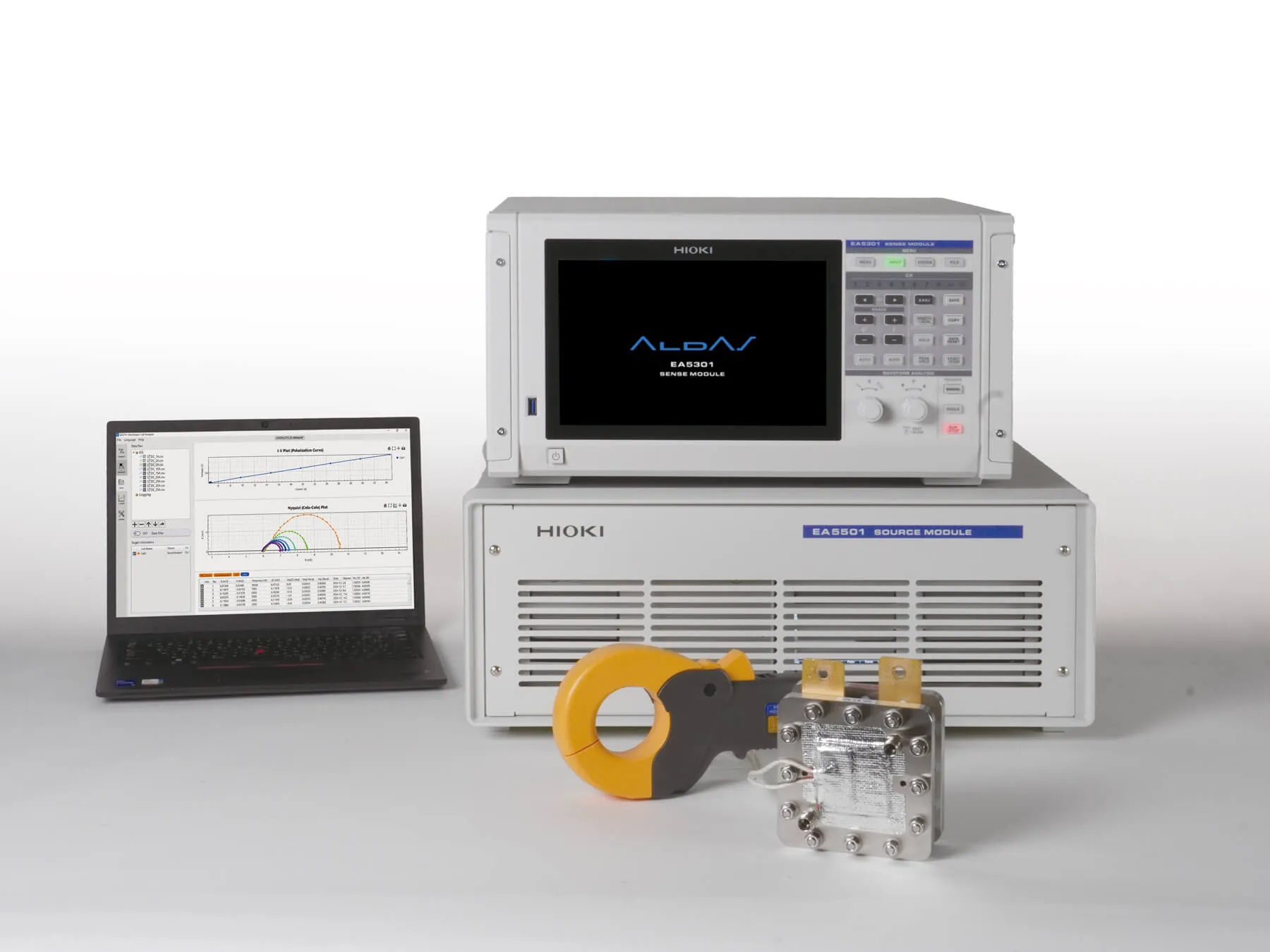
As electrolyzer development moves from single cells to larger cells and short stacks, operating currents increase and system behavior becomes more complex. ALDAS-Mini is designed for this transition stage, where laboratory research must be validated under conditions closer to industrial hydrogen production.
The system enables EIS analysis of large-area cells and short stacks operating at very high currents. This is important because effects such as water management, gas transport limitations, thermal behavior, and localized losses often become visible only at higher current densities.
By supporting measurements up to 2000 A, and enabling fast, reliable EIS analysis, ALDAS-Mini helps engineers identify performance limitations, optimize operating conditions, and detect early signs of degradation before scaling to larger electrolyzer systems.
ALDAS-Mini consequently bridges the gap between cell research and commercial electrolyzer development.
ALDAS-E: Advanced Diagnostics for Industrial-Scale Electrolyzers
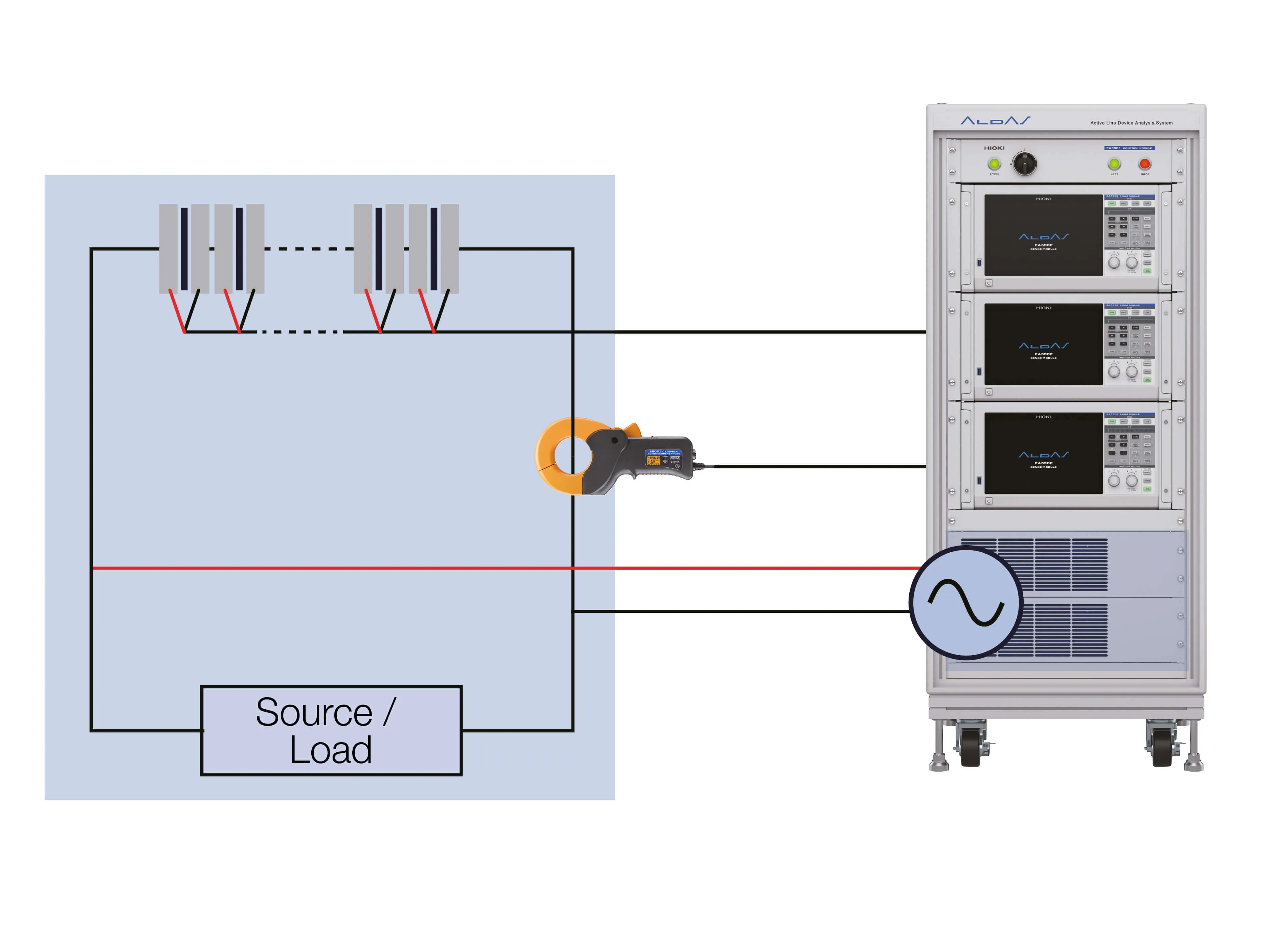
ALDAS-E is designed for EIS measurements on large electrolyzer stacks operating at high voltages and currents, including kW- and MW-scale systems.
A key advantage is its ability to be connected easily to electrolyzers already in operation, enabling advanced impedance diagnostics without modifying existing test infrastructure or interrupting normal development activities. This allows engineers to evaluate stack performance under real operating conditions.
Its multi-channel measurement capability provides insight into behavior at different points within a stack, helping identify imbalances, localized losses, aging effects, and other factors that can impact efficiency and lifetime.
For manufacturers of industrial electrolyzers and operators of hydrogen production plants seeking to maximize efficiency, uptime, and stack lifetime, ALDAS-E supports validation, durability testing, operational optimization, and troubleshooting, helping ensure reliable and efficient operation at commercial scale.
From Cell Research to Commercial Hydrogen Production with ALDAS
Scaling green hydrogen production depends on electrolyzers that are efficient, durable, and ready for industrial operation. The HIOKI ALDAS family supports this journey with scalable and fast EIS diagnostics from early material research to MW-scale electrolyzer systems.
By addressing the specific needs of each development stage, the ALDAS family gives researchers, manufacturers, and plant operators the electrochemical insight needed to advance from early research to commercial hydrogen production.