A current clamp is always a trade-off between, above all, three properties that pull against each other: size, bandwidth and accuracy. Those are the main ones, though not the only ones. More of one inevitably means less of another. A clamp that maximizes all of them at once can't be built, because the three properties limit one another physically. Which trade-off is the right one depends entirely on the measurement task at hand.
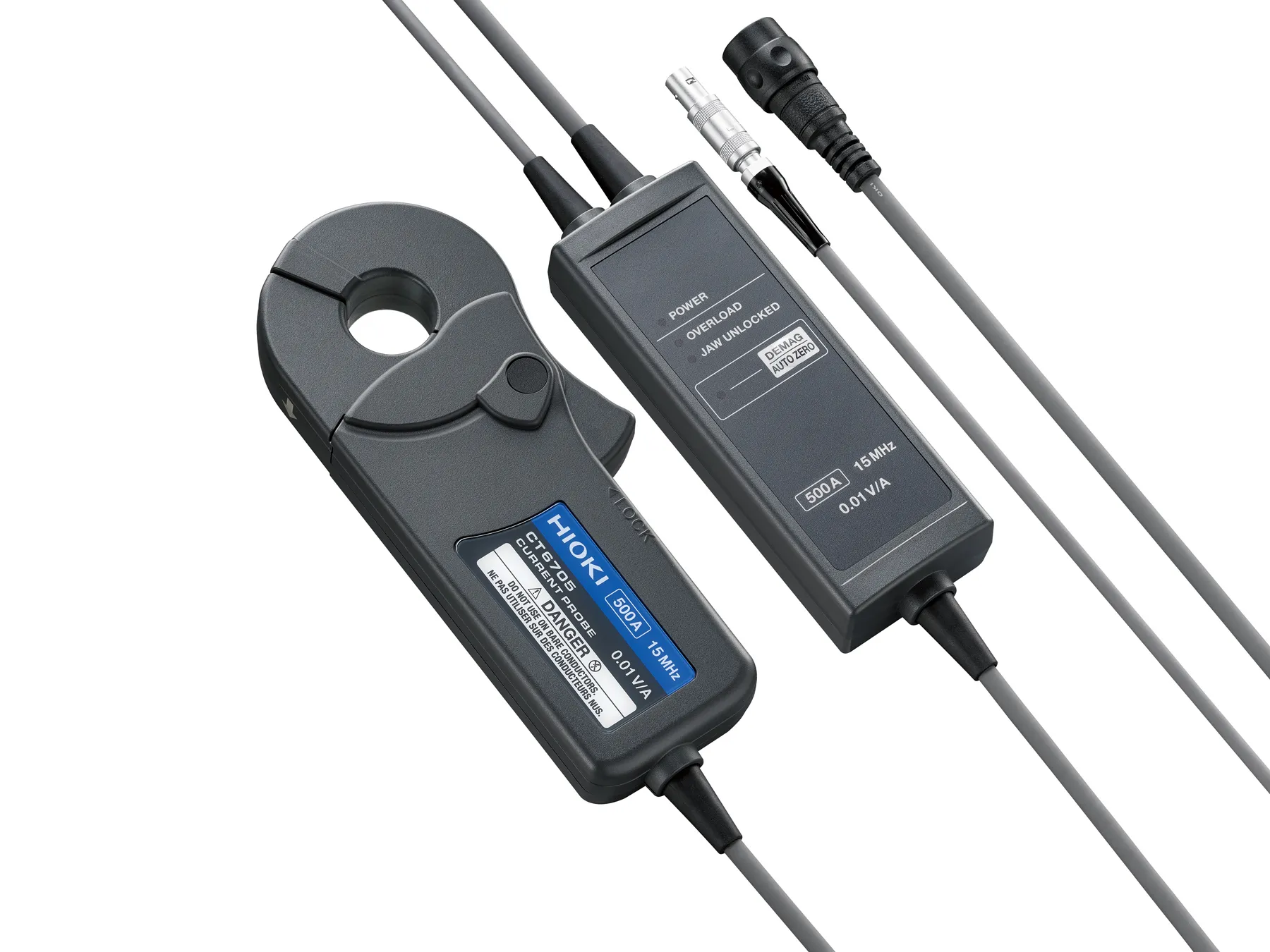
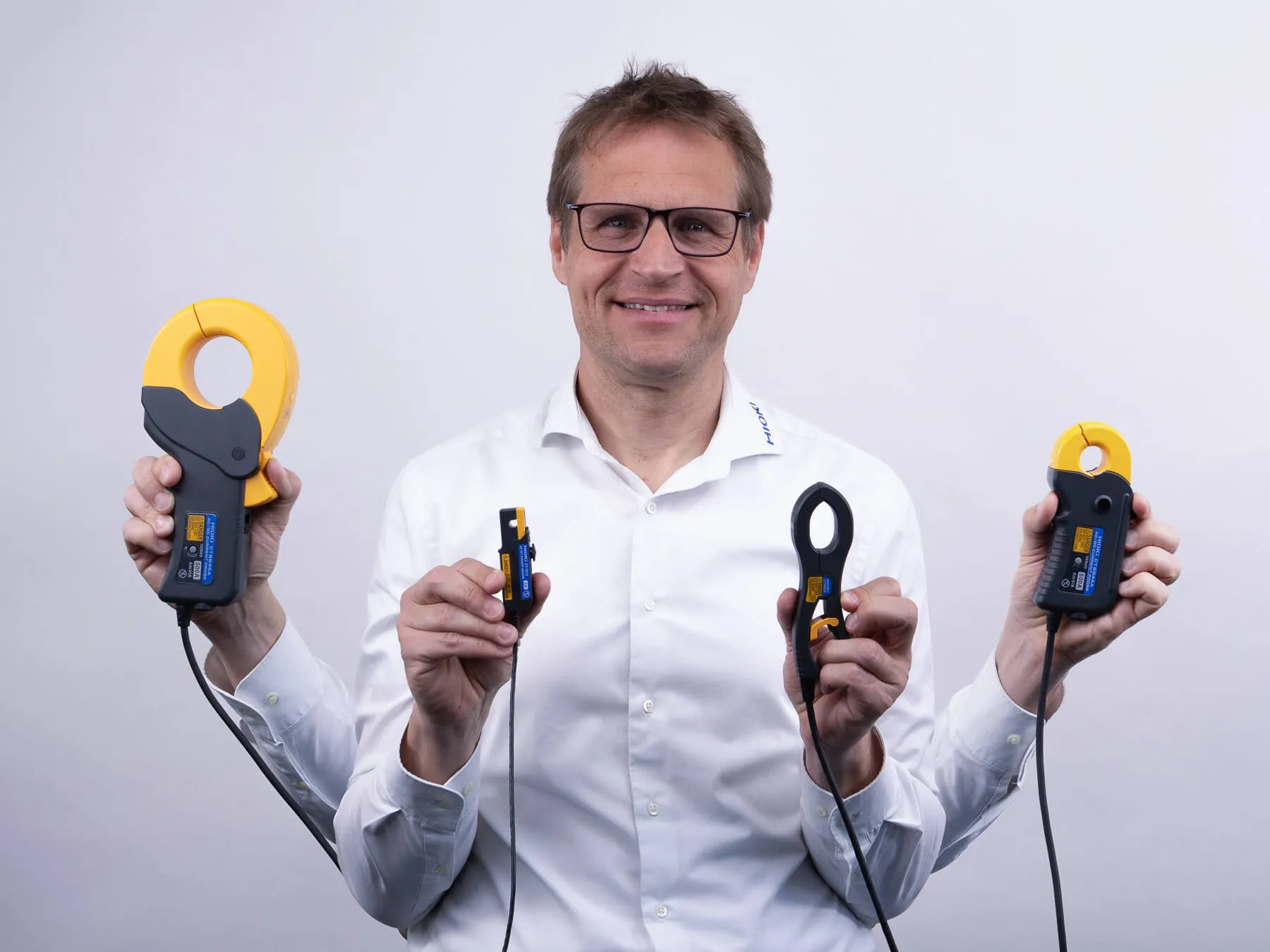
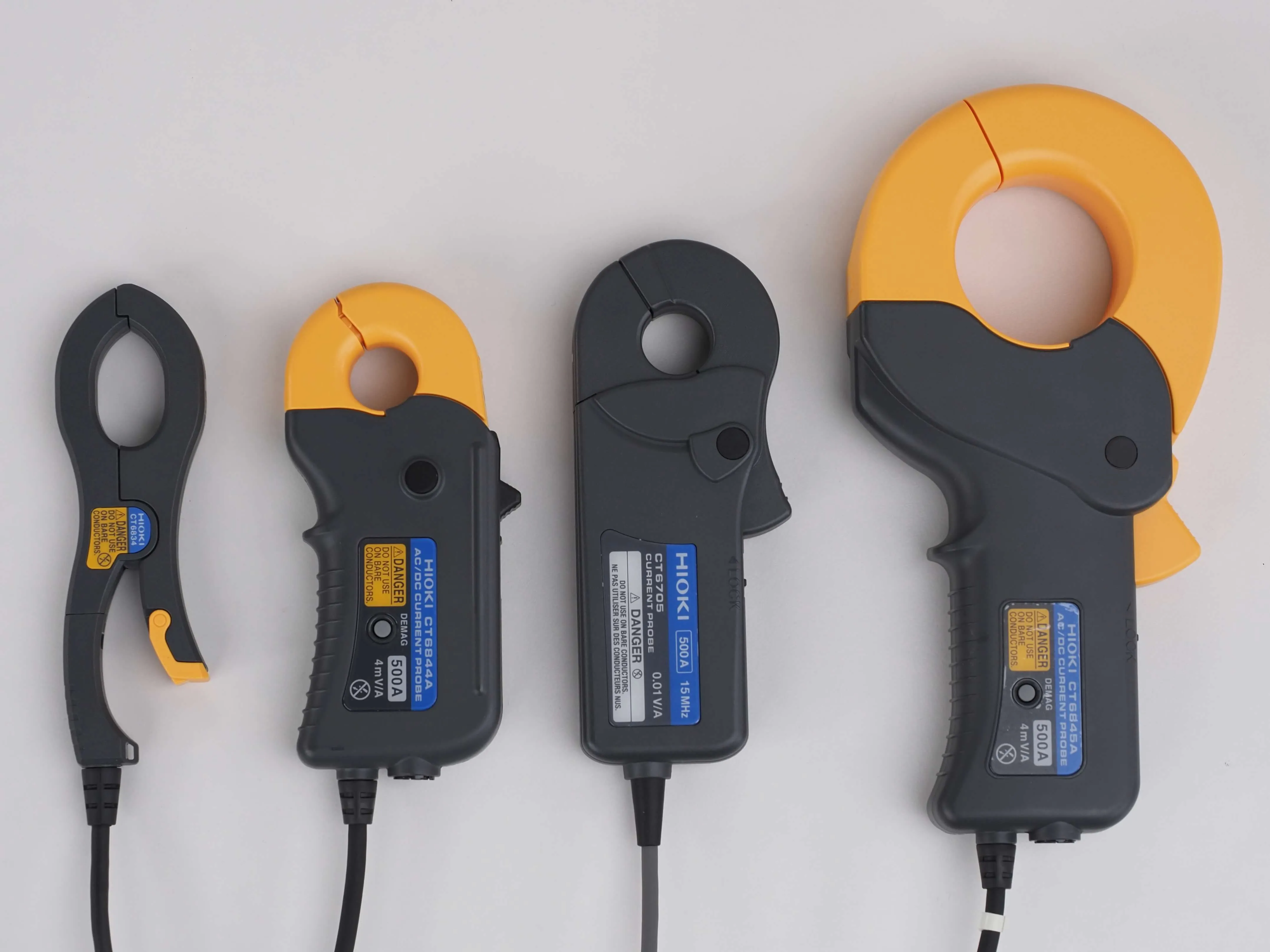
You don't have to look far for proof; our own catalog makes the point. For a rated current of 500 A alone, HIOKI offers more than a dozen different current sensors. Narrow that down to a single type, AC/DC current clamps based on the zero-flux principle with a fluxgate detector, and four still remain: the CT6834, CT6844A, CT6845A and the newest member of the family, the HIOKI CT6705. Same rated current, same sensing principle, and yet four clamps so different that none can really replace another.
The iron triangle
Anyone who has run a project knows the iron triangle: time, cost, quality. You can't have all three at once; something always has to give. Current clamps have an iron triangle of their own, and its corners, with rated current as the baseline, are size, bandwidth and accuracy. The rule is less rigid here than in project management, where it really is two-out-of-three. With a current clamp it's softer: any of the three can be improved, but always at the expense of at least one of the others.
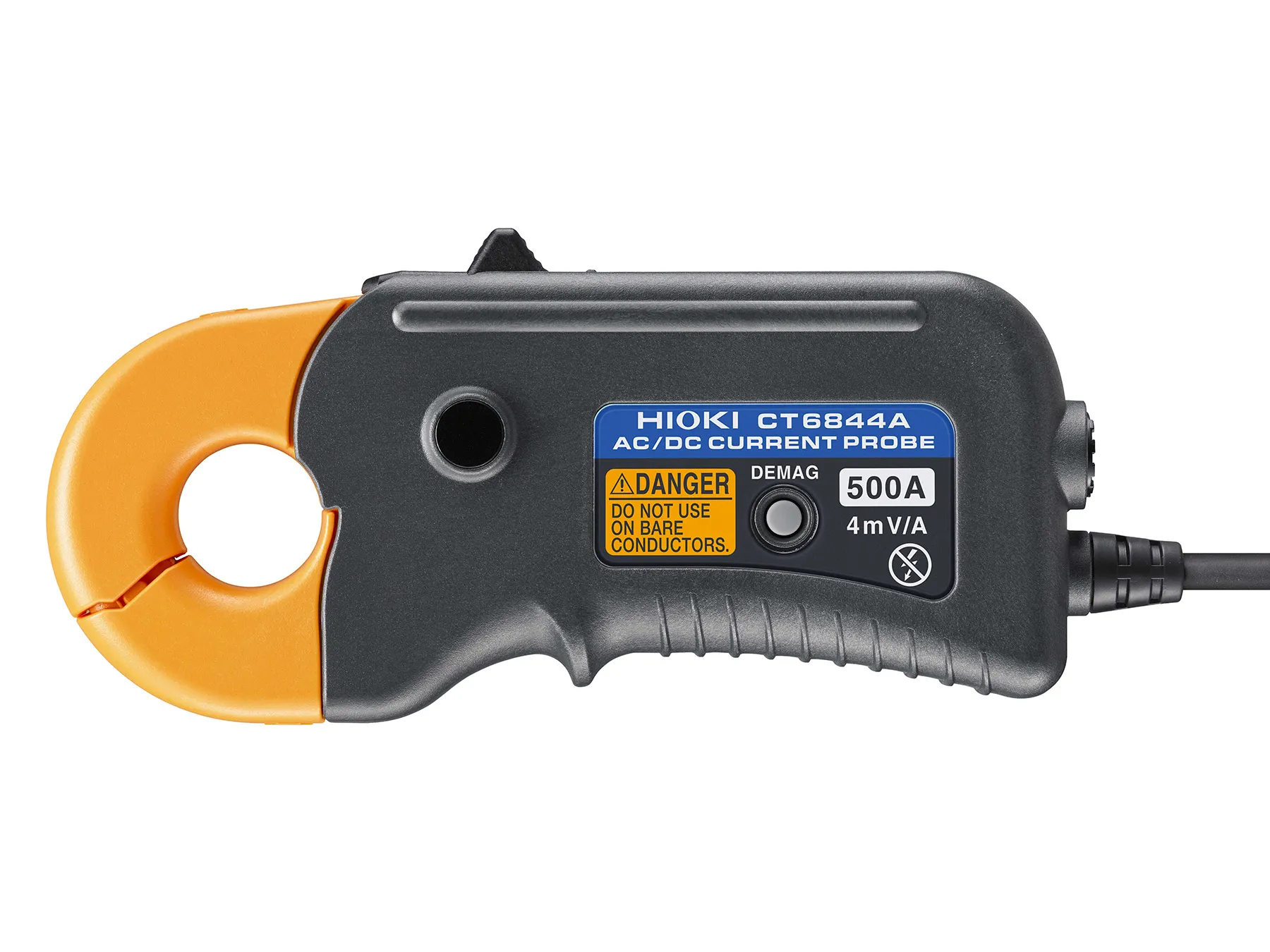
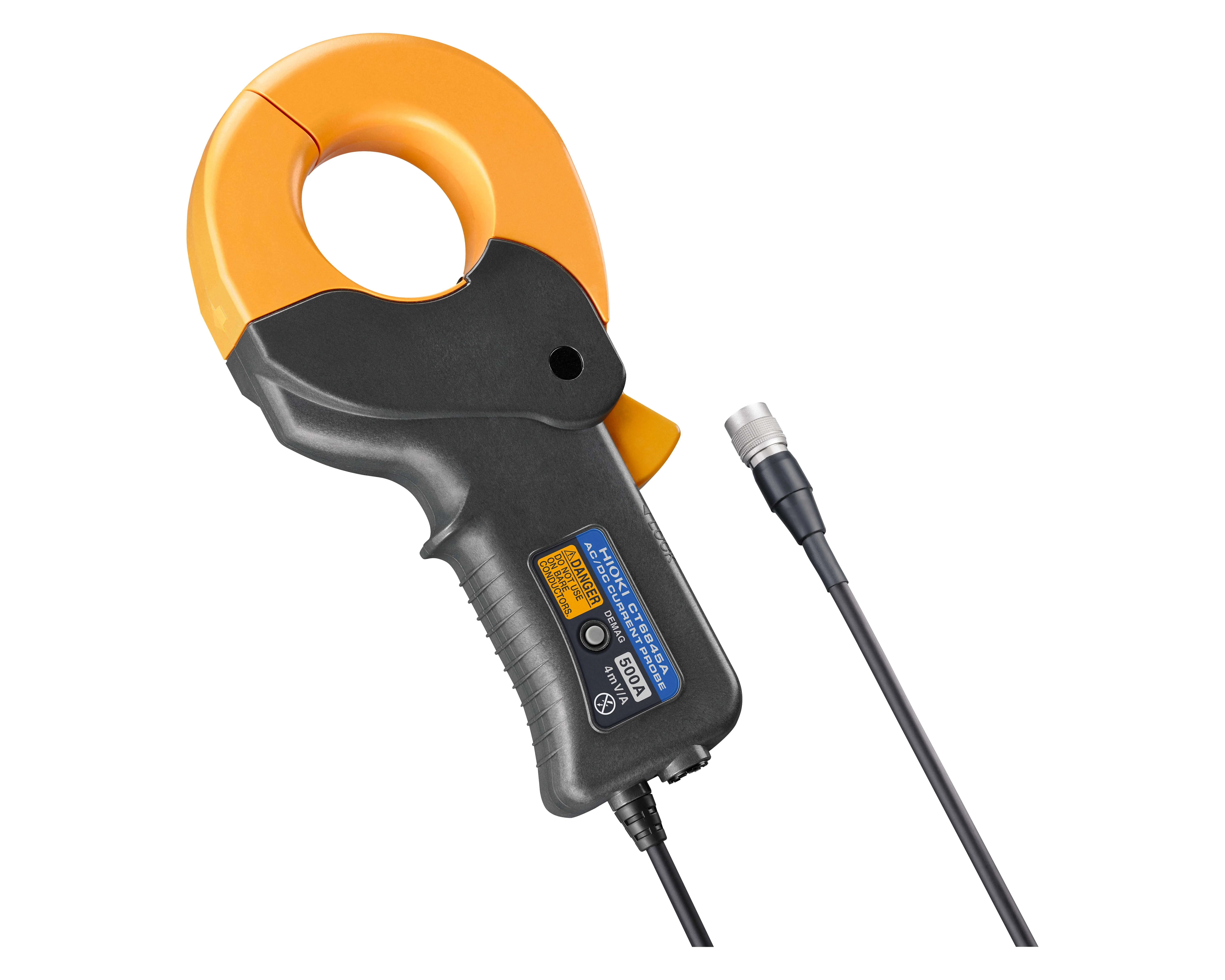
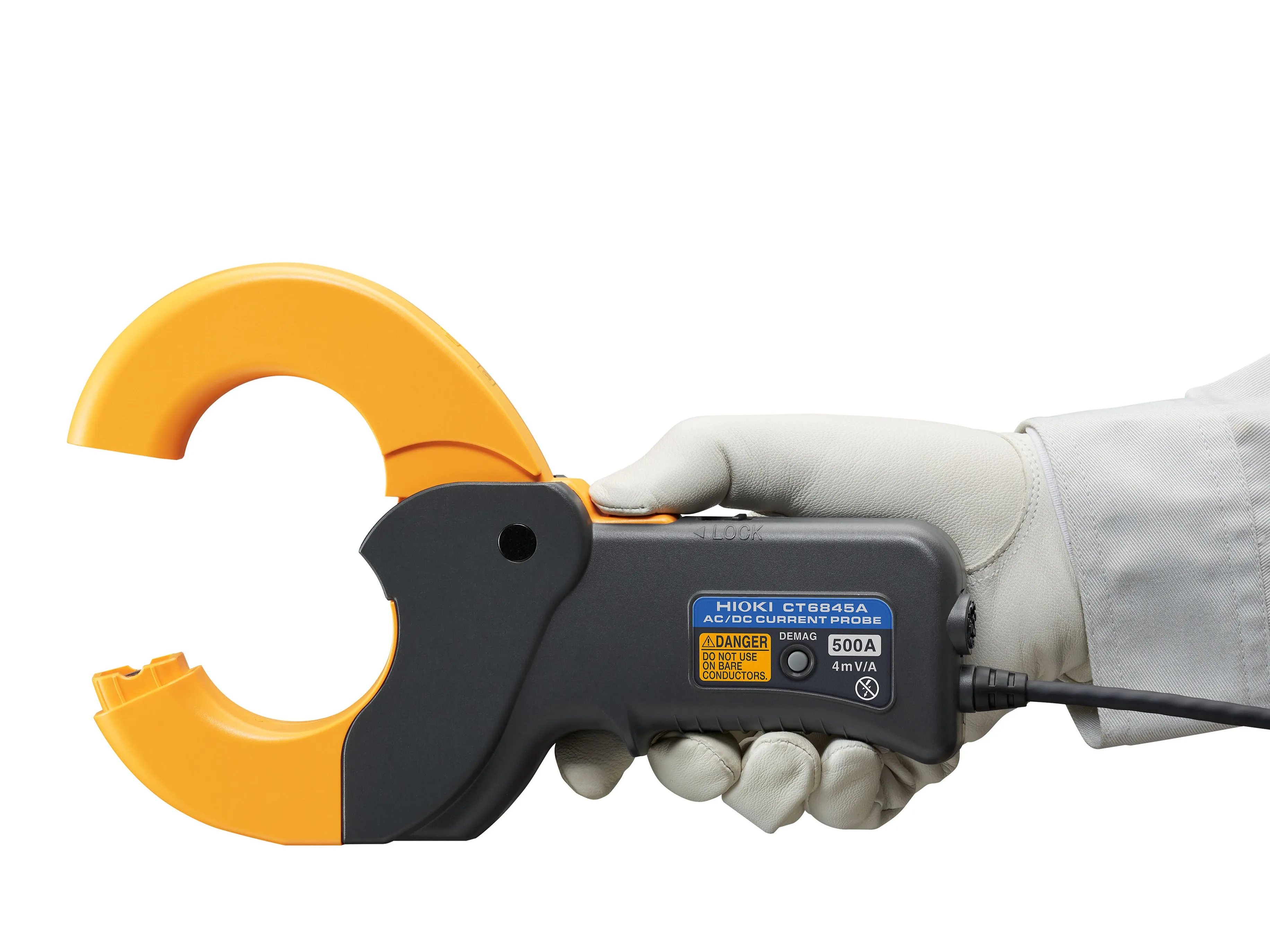
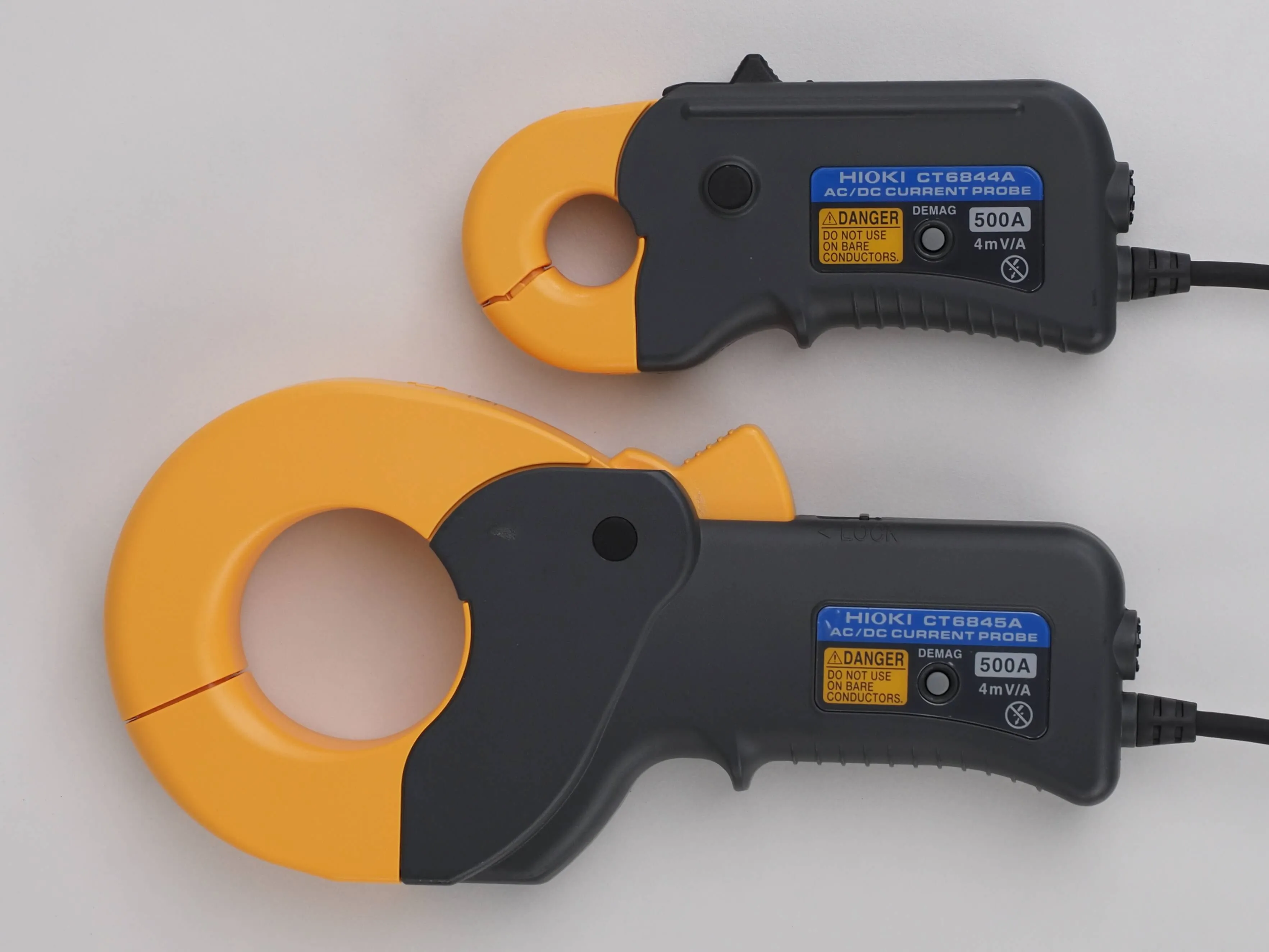
Take the conductor diameter a clamp can accept. Compare the CT6844A with the HIOKI CT6845A, and the link is obvious at once: the larger diameter (φ50 instead of φ20 mm) comes with lower bandwidth (200 instead of 500 kHz). Accuracy and rated current stay the same. The wider jaw comes at a price.
Factor of 30, at practically the same size
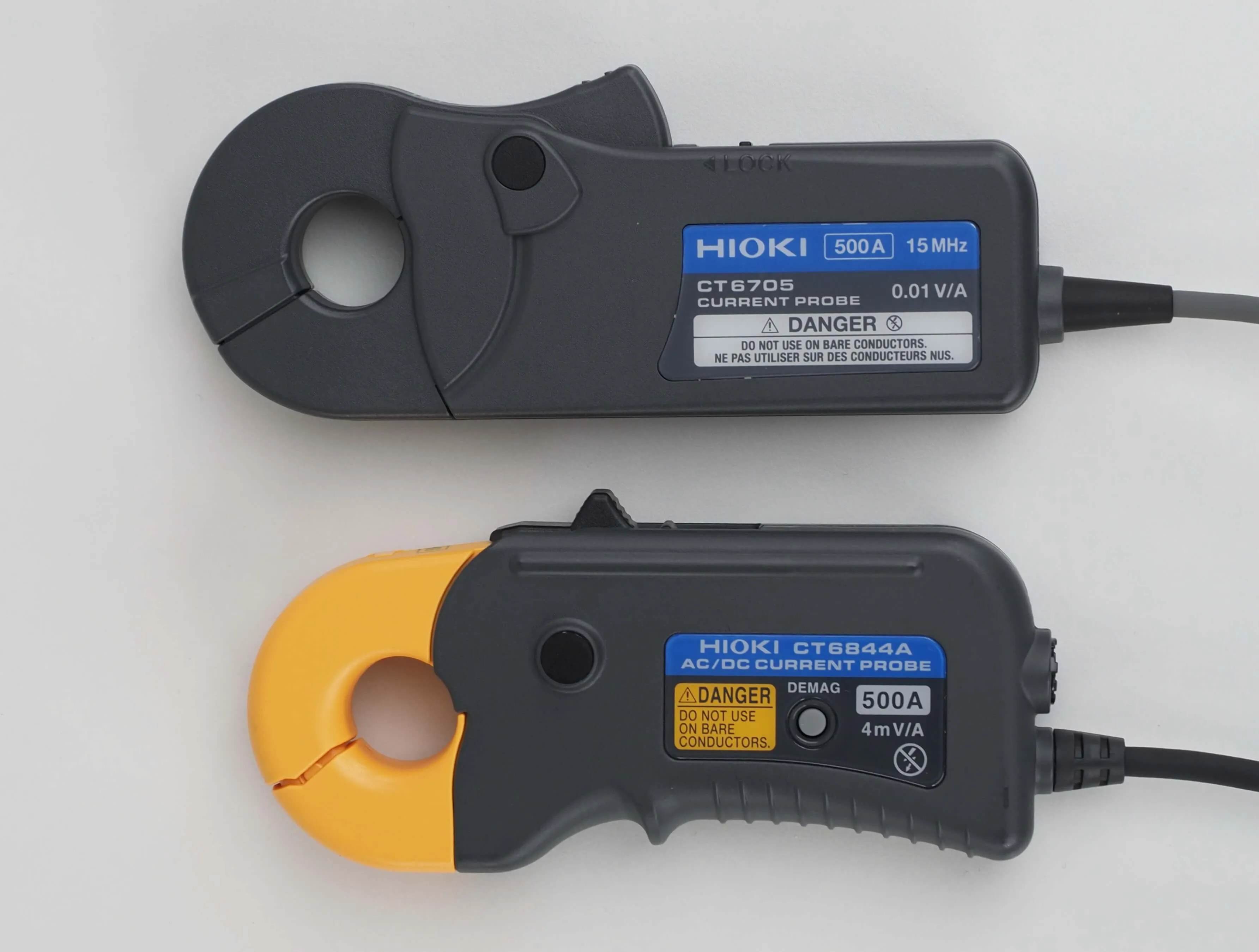
Sometimes comparing two clamps tells you more than any amount of theory. The HIOKI CT6844A and the CT6705 are practically the same size, 153 × 67 × 25 mm one, 163 × 67 × 23 mm the other, with the same conductor diameter (φ20 mm), the same rated current and the same fluxgate principle. Yet the CT6844A reaches 500 kHz and the CT6705 reaches 15 MHz. Thirty times as far. How?
It has nothing to do with size and everything to do with what each one is built for. The CT6844A is a clamp for power measurement. Any current sensor with a magnetic core inevitably introduces a phase shift between the current and the measured signal, and in power measurement (P = U · I · cos φ) that shift skews the result, especially at a low power factor. So the CT6844A is built to keep that phase shift nearly constant in time across a useful frequency range. That lets a HIOKI power analyzer correct it down to practically zero, up to 200 kHz in the case of the CT6844A. (We've explained how this interplay between sensor and analyzer works in a separate post.)
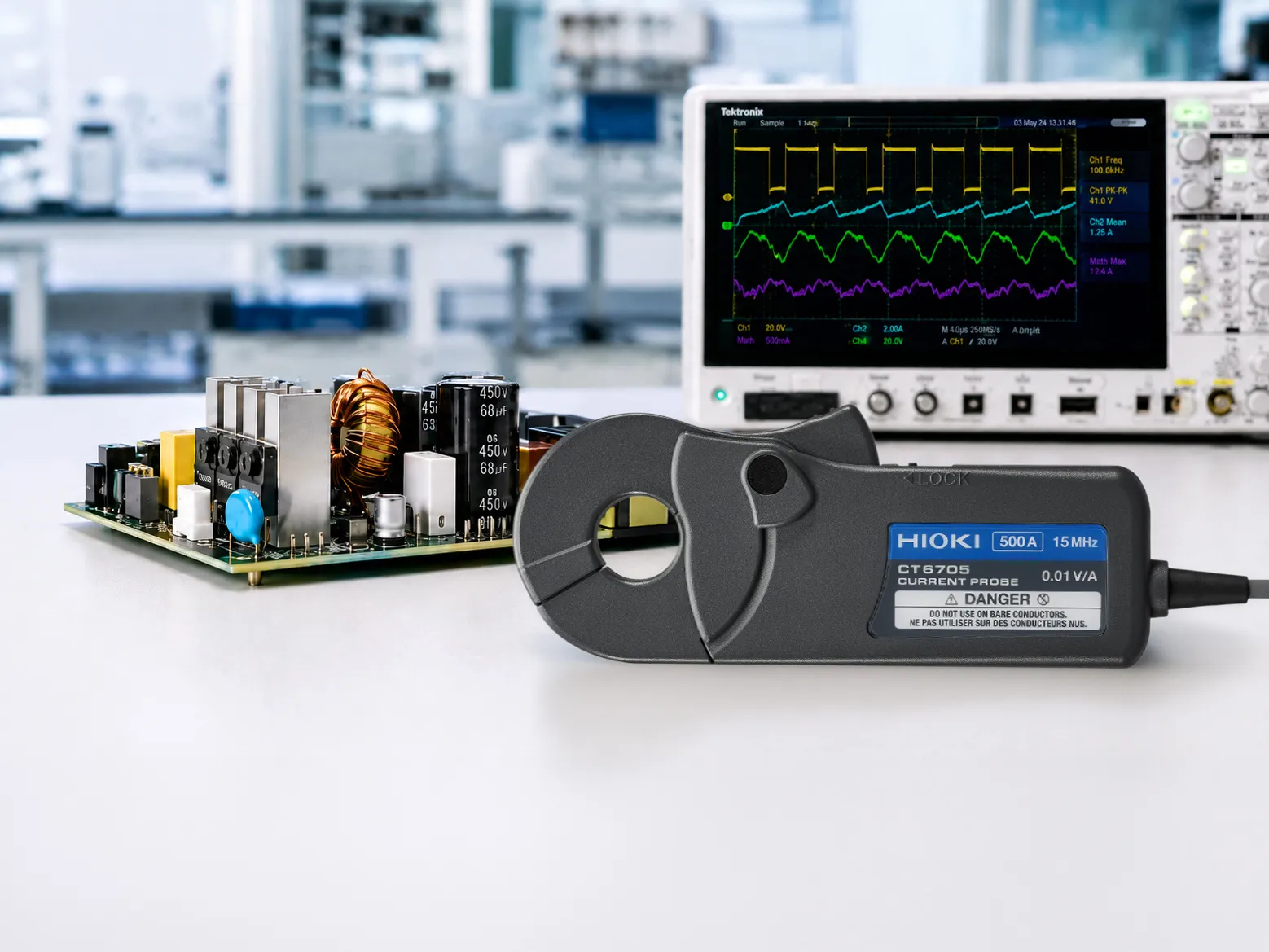
The CT6705 doesn't need any of that. It's built for looking at waveforms on an oscilloscope, say to judge the switching edges of a semiconductor in power-electronics development. There, what matters most is a fast rise time, which follows from the bandwidth, not the phase fidelity that precise power calculation depends on.
When space is the spec
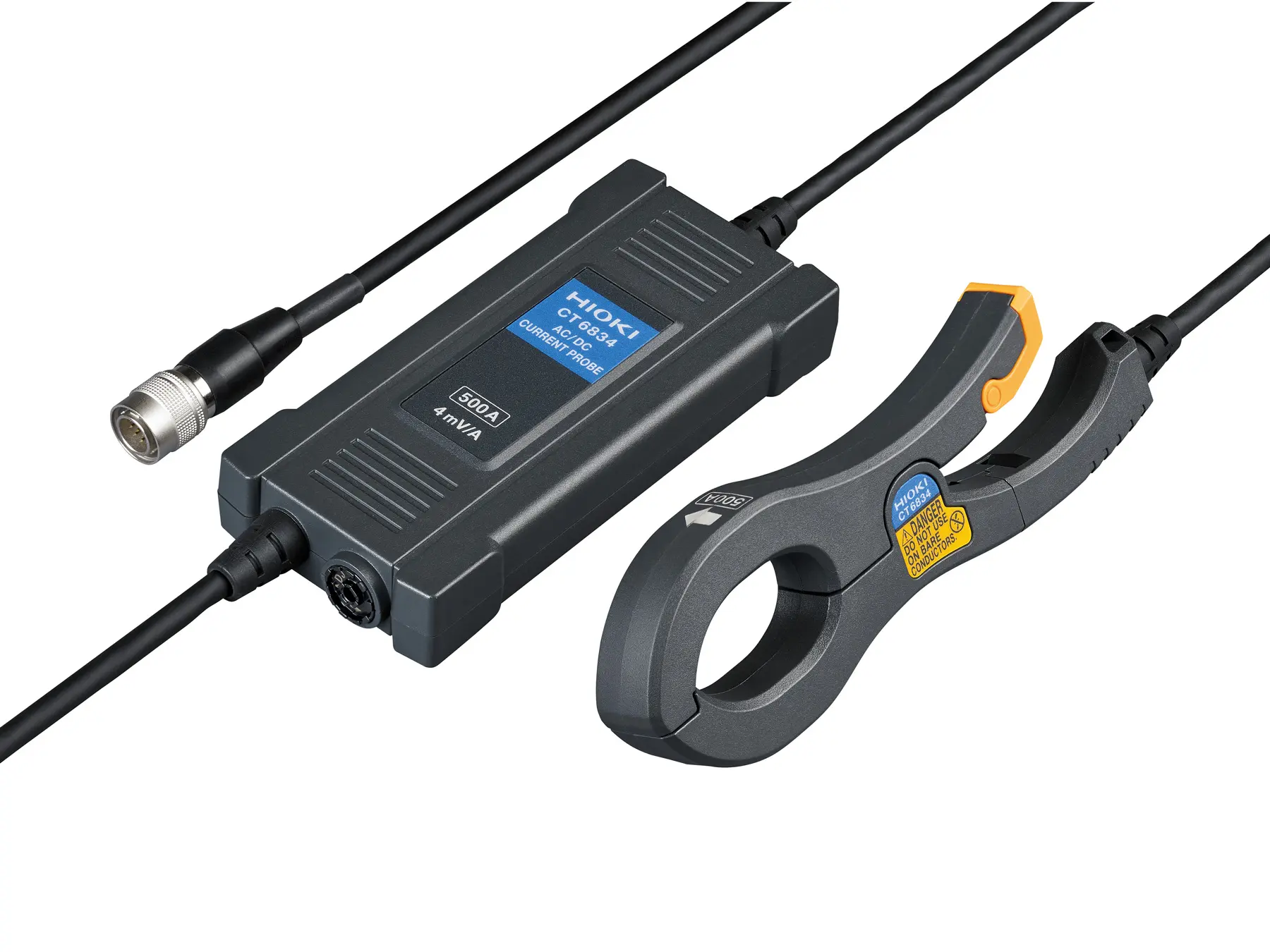
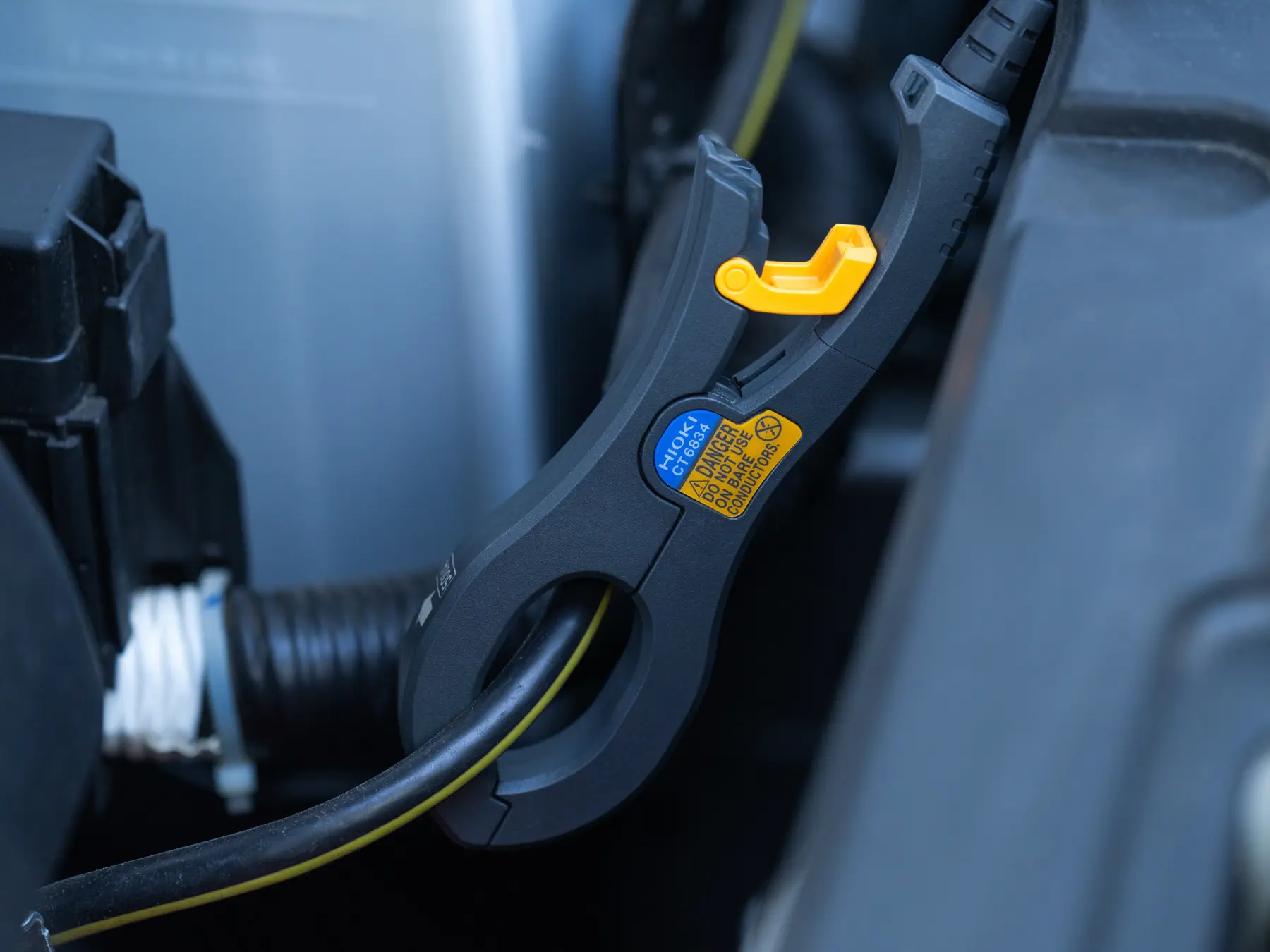
The HIOKI CT6834 owes its existence to a specific problem. Customers in the automotive industry could no longer get the available sensors around the tightly packed conductors, inside the vehicle, on the test bench. The limit here wasn't accuracy or bandwidth; it was space.
The CT6834 is the answer to that: an unusually slim sensor head, just 16.5 mm deep, that still fits where there's no room left for other clamps. As with the CT6705, the electronics sit not in the head but in a separate box along the cable.
Small doesn't mean inaccurate here. At ±0.07 % of reading, the CT6834 is in fact the most accurate of the four, and it brings that precision to bear exactly where high DC accuracy matters: battery charge and discharge testing, for one, where even small measurement errors build up over many cycles. It pays its price at another corner of the triangle, bandwidth, which at 50 kHz is the narrowest of the group. Small and highly accurate at once is possible. Just not wideband as well.
| Model | CT6834 | CT6844A | CT6845A | CT6705 |
|---|---|---|---|---|
| Attribute: Rated current | CT6834: 500 A | CT6844A: 500 A | CT6845A: 500 A | CT6705: 500 A |
| Attribute: Bandwidth | CT6834: DC–50 kHz | CT6844A: DC–500 kHz | CT6845A: DC–200 kHz | CT6705: DC–15 MHz |
| Attribute: Basic accuracy | CT6834: ±0.07 % | CT6844A: ±0.2 % | CT6845A: ±0.2 % | CT6705: ±0.5 % |
| Attribute: Conductor diameter (φ) | CT6834: 20 mm | CT6844A: 20 mm | CT6845A: 50 mm | CT6705: 20 mm |
The bottom line: ask the right question
Four clamps, one rated current, one sensing principle, and in the end four different answers to what makes a good current measurement. The CT6834 is the compact one, carrying its precision into the tightest installation space. The CT6844A and the CT6845A share an accuracy class and part ways on conductor diameter and bandwidth. And the CT6705 leaves the other three far behind on bandwidth, at the cost of exactly the phase fidelity that precise power measurement can't do without.
None of the four is "the best." Each is the best for something.
That's why, at HIOKI, we don't look for the one best current clamp; we build the right one for the job at hand. More than a dozen of them for 500 A alone. So when you're facing your next measurement, the most useful question isn't "which clamp is the best of all?" but "which clamp do I need for my application?" We're glad to help you answer it. Just get in touch.