
Electrochemical Testing Solutions
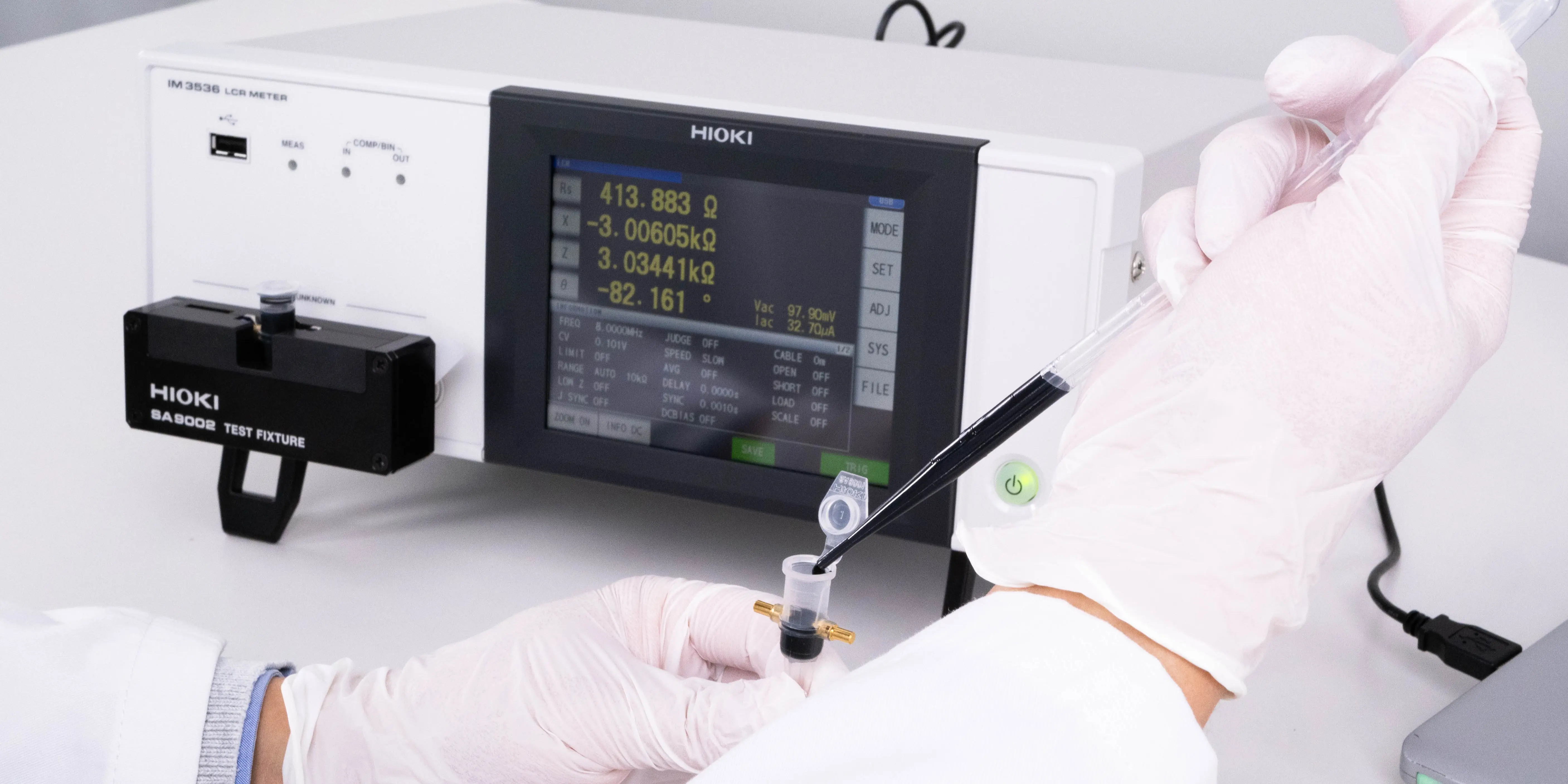
Key to assessing material quality
Electrochemical measurements are essential for understanding and optimizing material properties in batteries, capacitors, fuel cells, and electrolysis systems. HIOKI measurement systems combine precise measurement technology with intelligent software providing quantitative data to assess conductivity, dispersion, interface resistance, and impedance behavior – key factors for performance, quality, and reliability in battery, fuel cell, and electrolysis applications.
- SA2634-KIT Slurry Analysis System: Evaluate slurry conductivity and dispersion before coating.
- RM2610 Electrode Resistance Measurement System: Analyze Li-ion electrode sheets after coating.
- ALDAS Fuel Cell Analyzers : Perform EIS analysis from lab cells to large-scale stacks.
For battery cells and supercapacitors, the IM3590 supports impedance characterization with frequency sweep and equivalent circuit analysis.
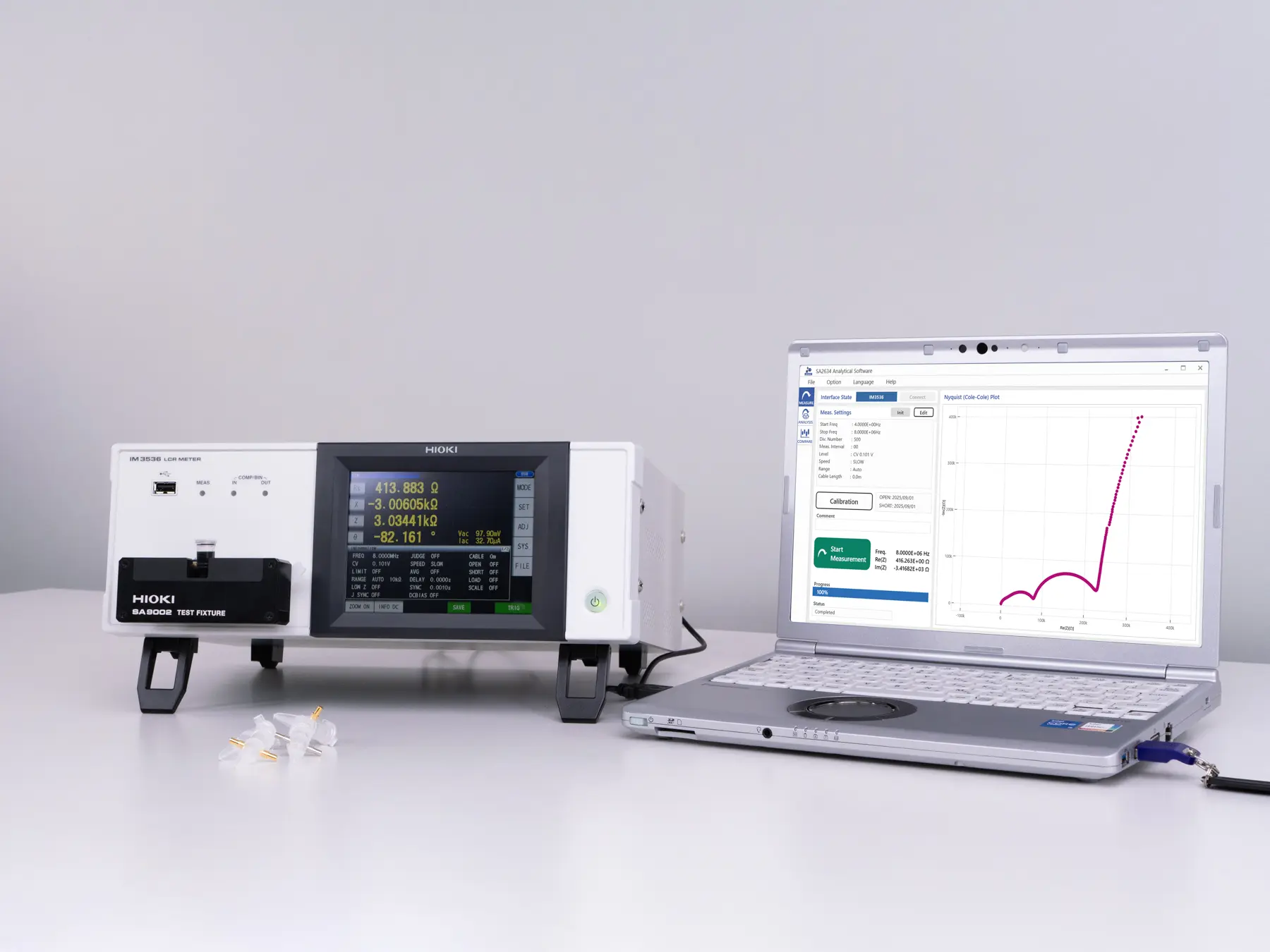
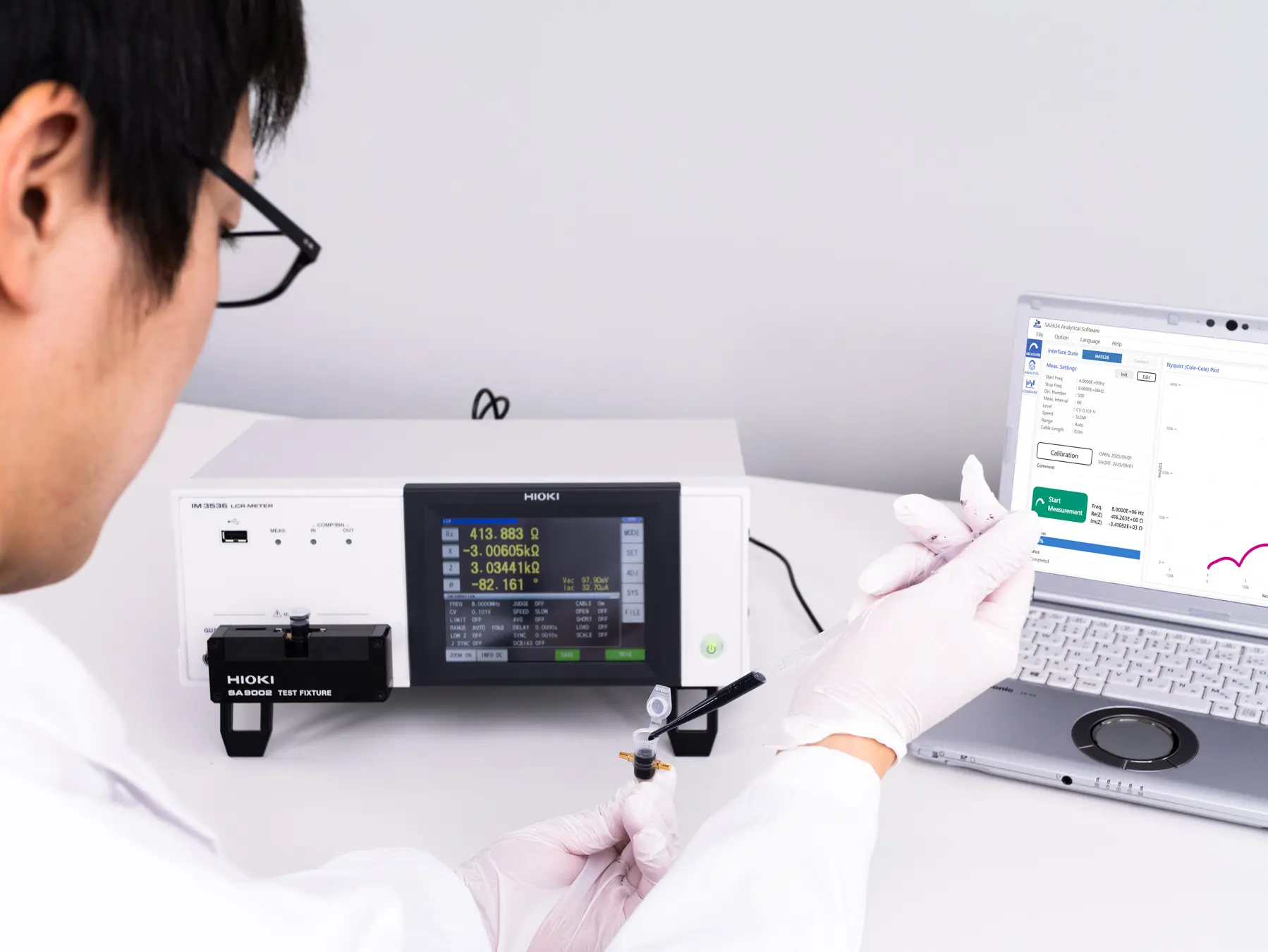
HIOKI SA2634-KIT - Slurry Analysis System for LiB Conductivity Evaluation


HIOKI RM2610 - Measurement System for LIB battery electrode sheets
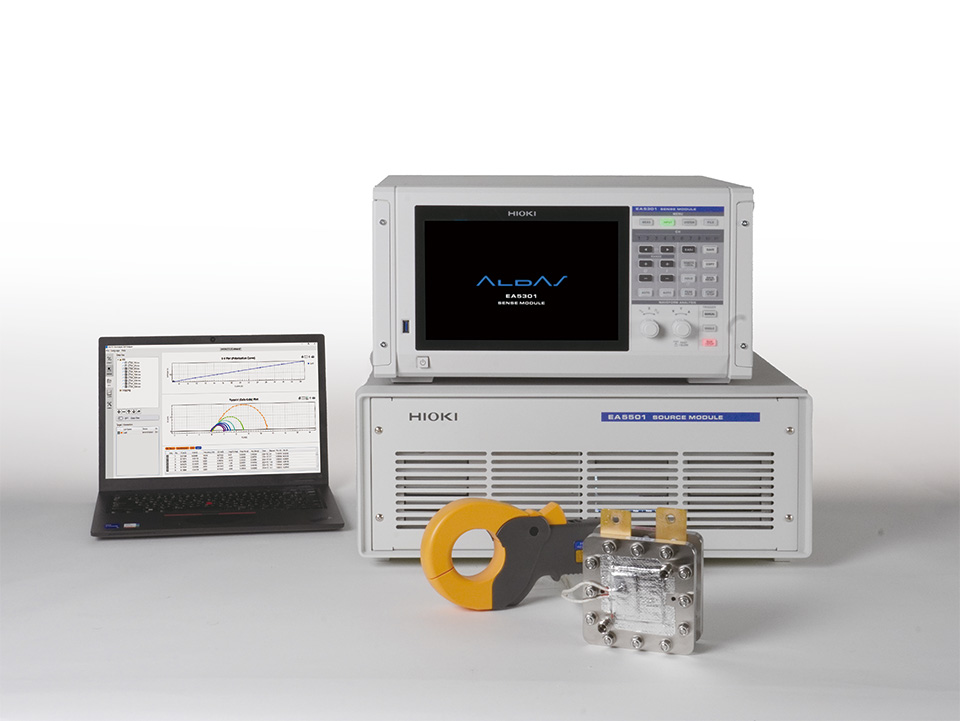
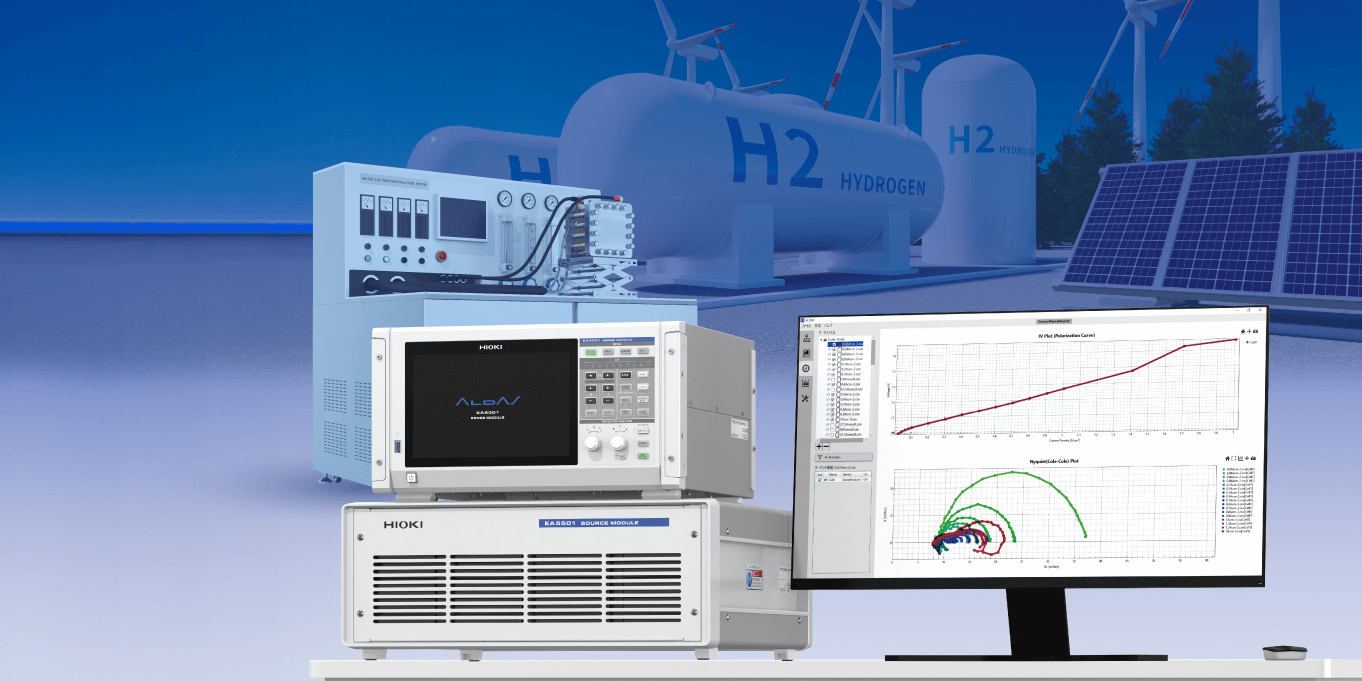
ALDAS-Mini – Compact EIS Analyzer for Electrolysis Cell Development
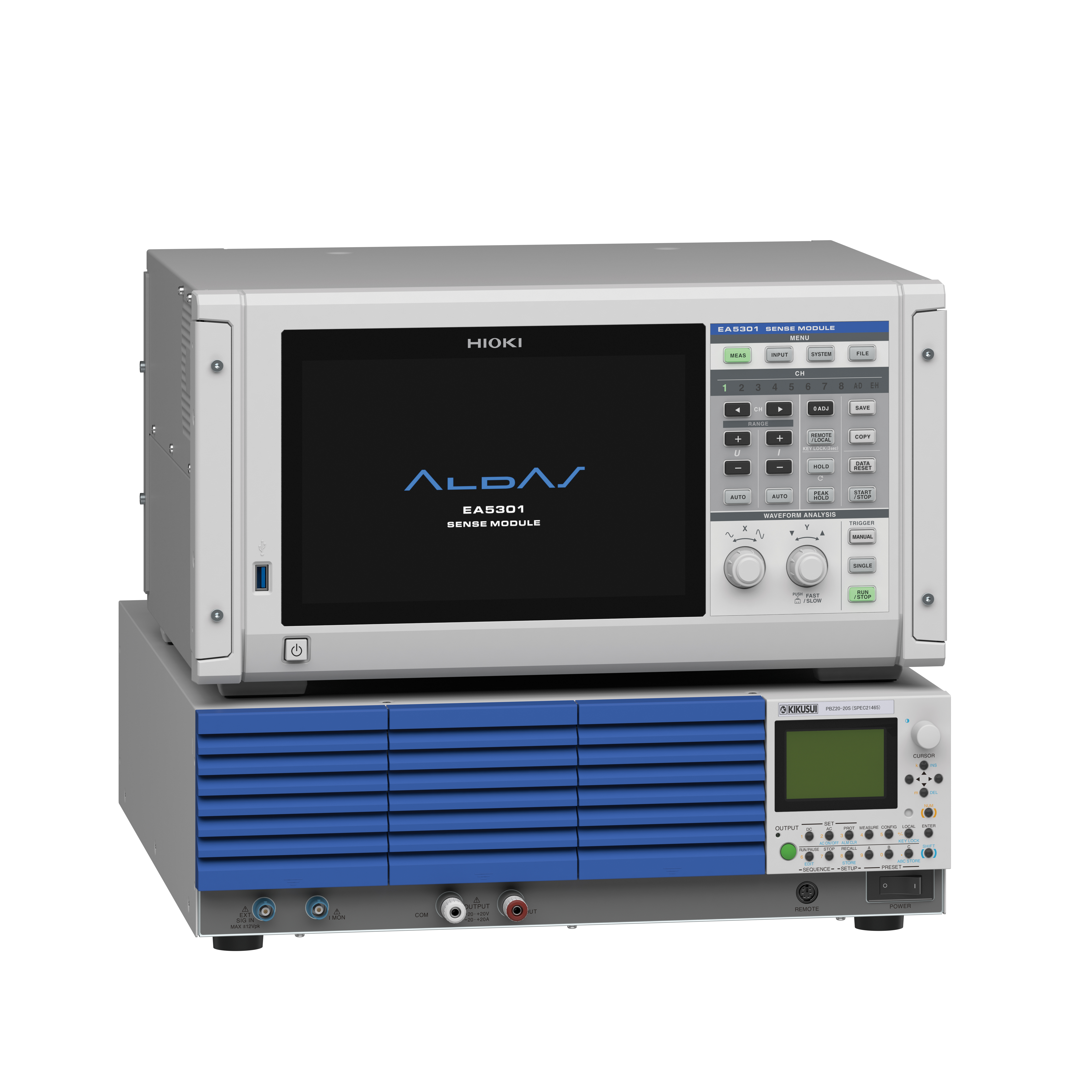
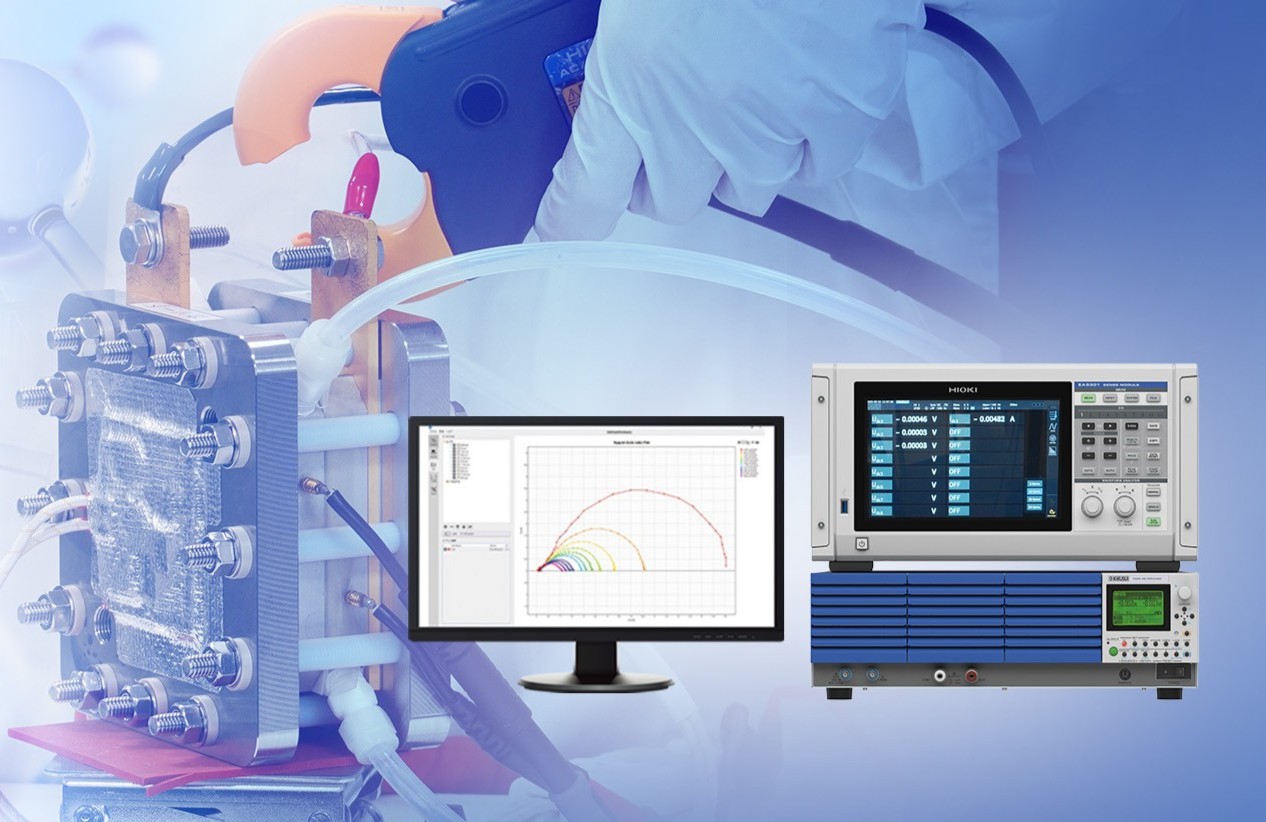
ALDAS-α: High-Speed EIS System for Real-Time Impedance Analysis
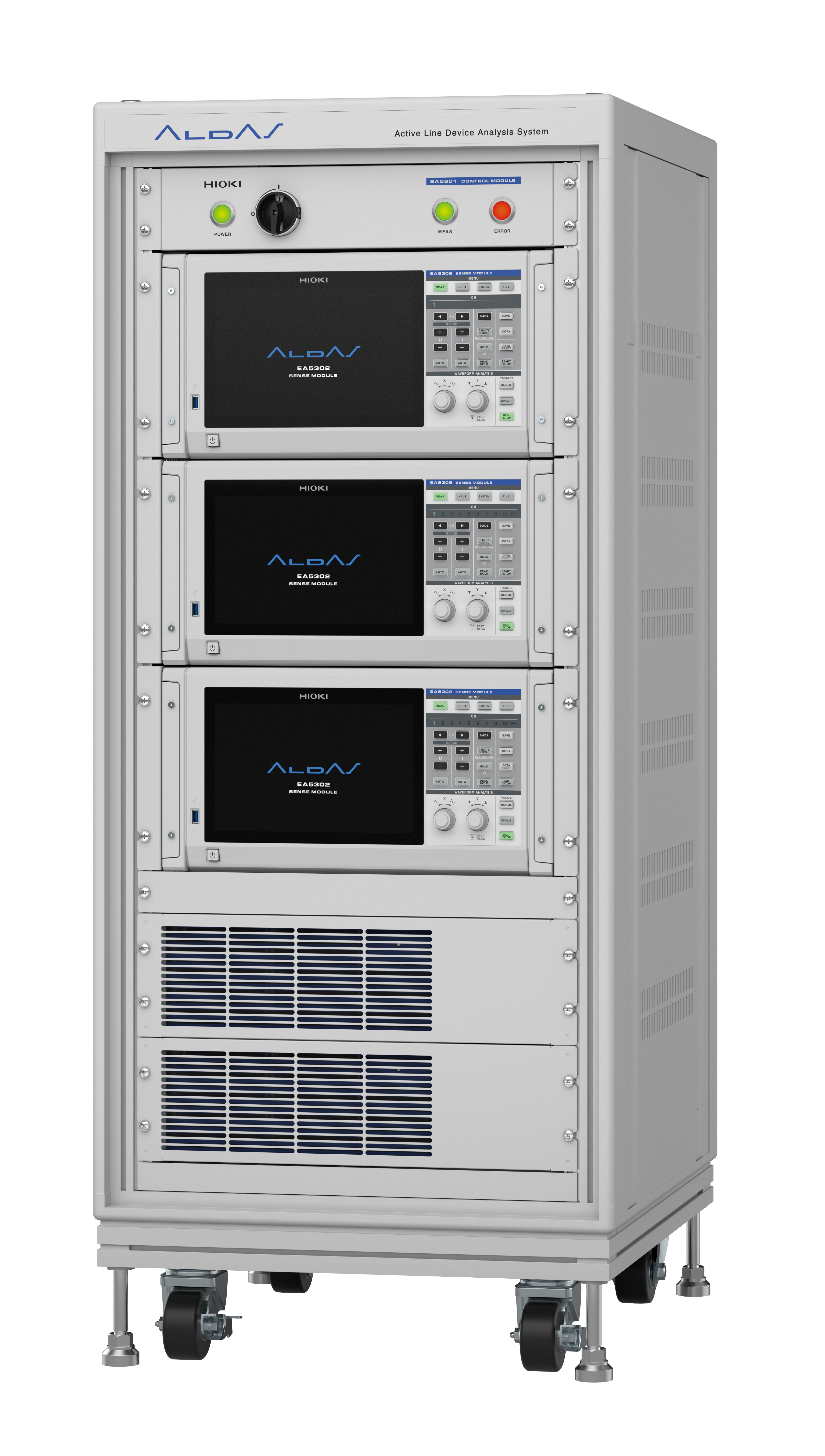
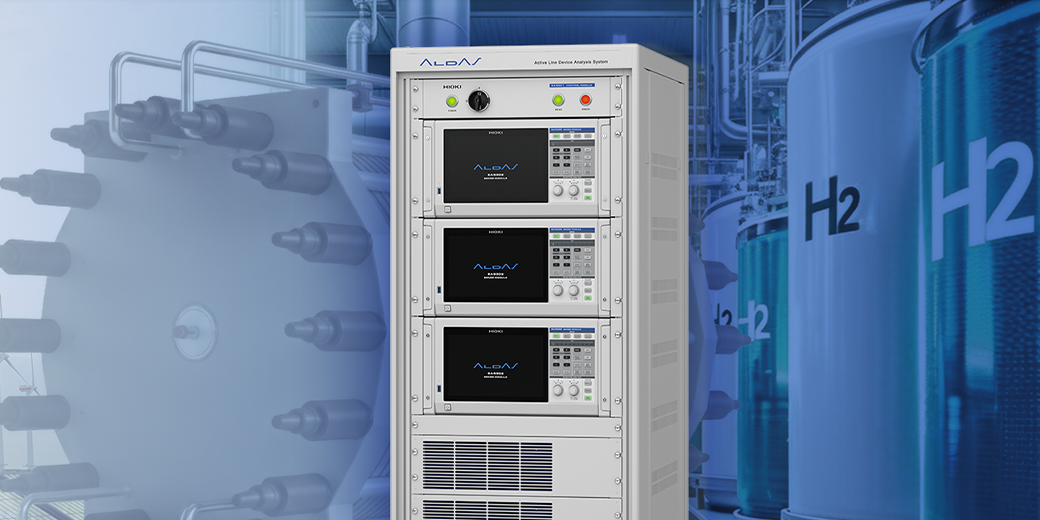
ALDAS-E – EIS Measurement System for kW to MW-Class Electrolysis and Fuel Cell Stacks

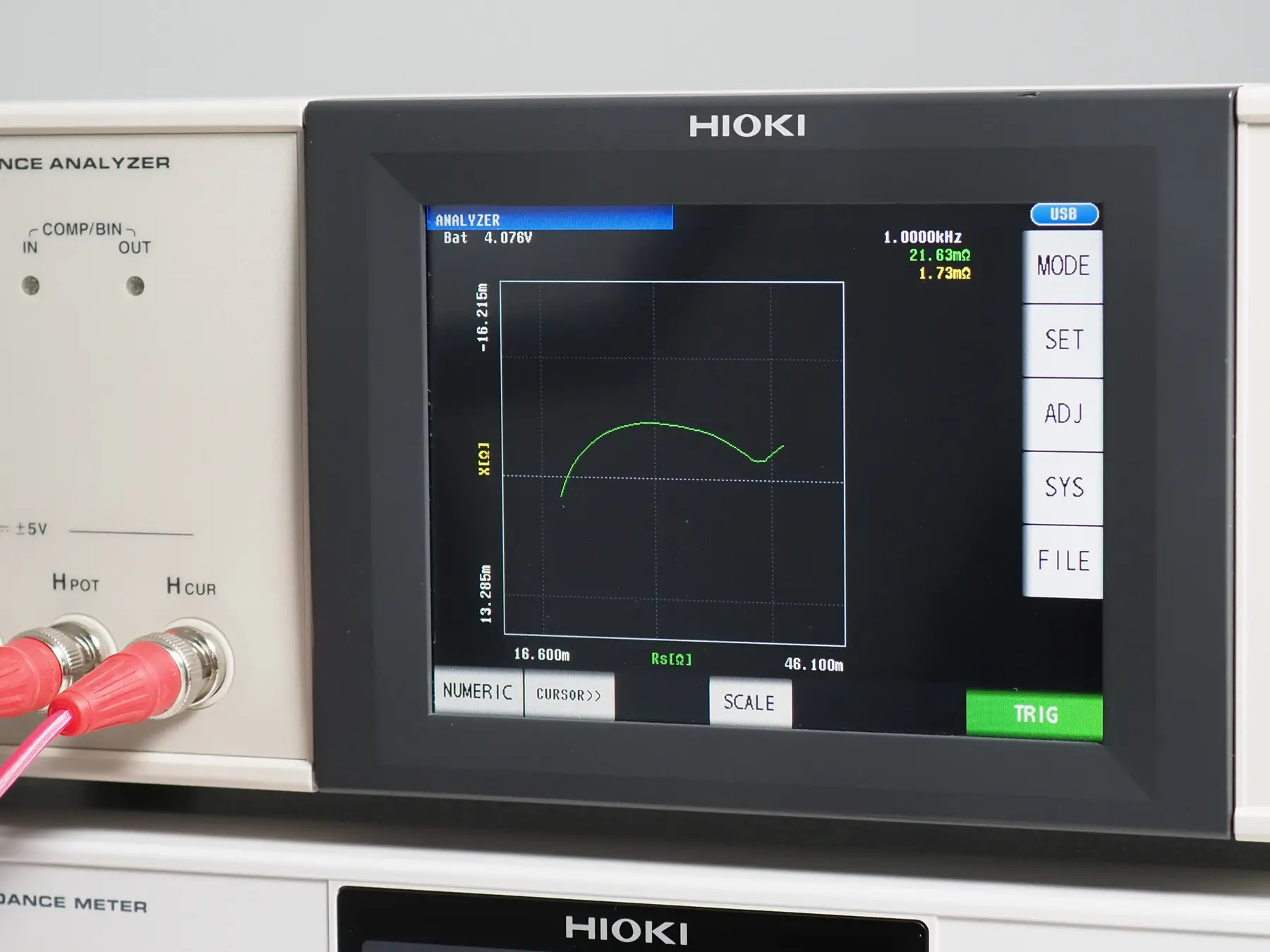
HIOKI IM3590 - Chemical Impedance Analyzer, 1 mHz to 200 kHz


HIOKI RM9004 - Probe Head for RM2610 Electrode Sheet Measurement System
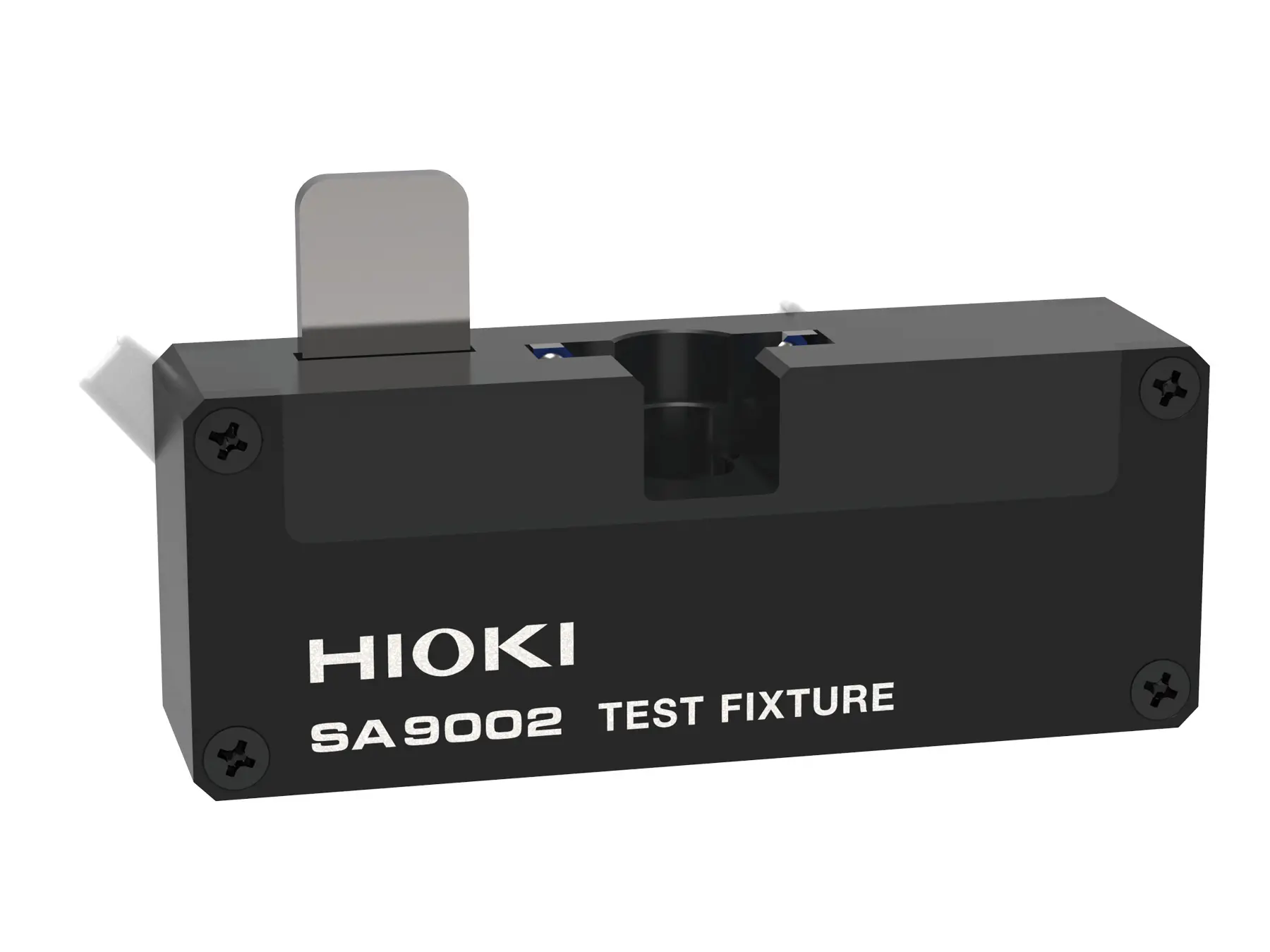
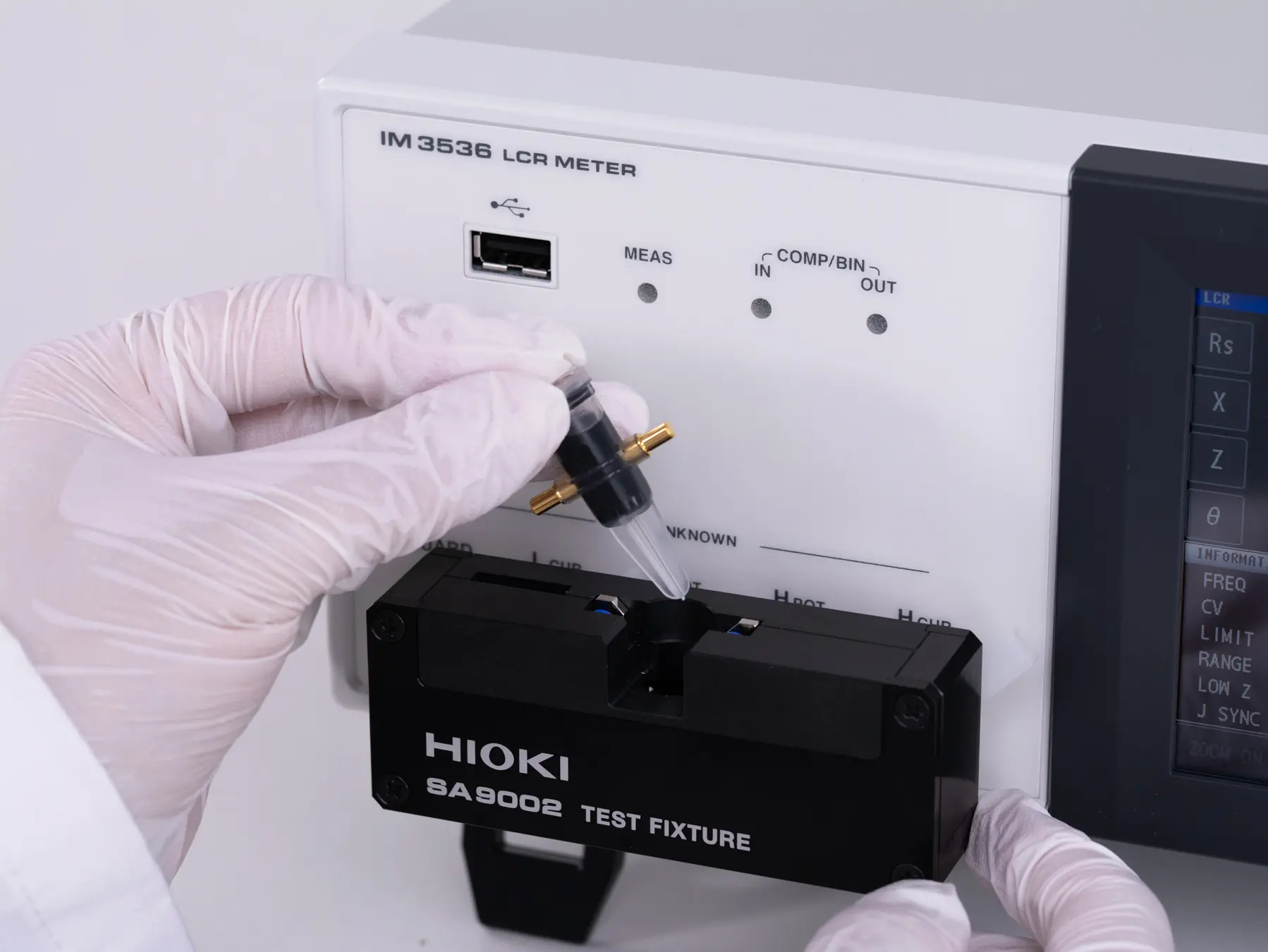
SA9002 - Fixture for slurry measurement with IM3536
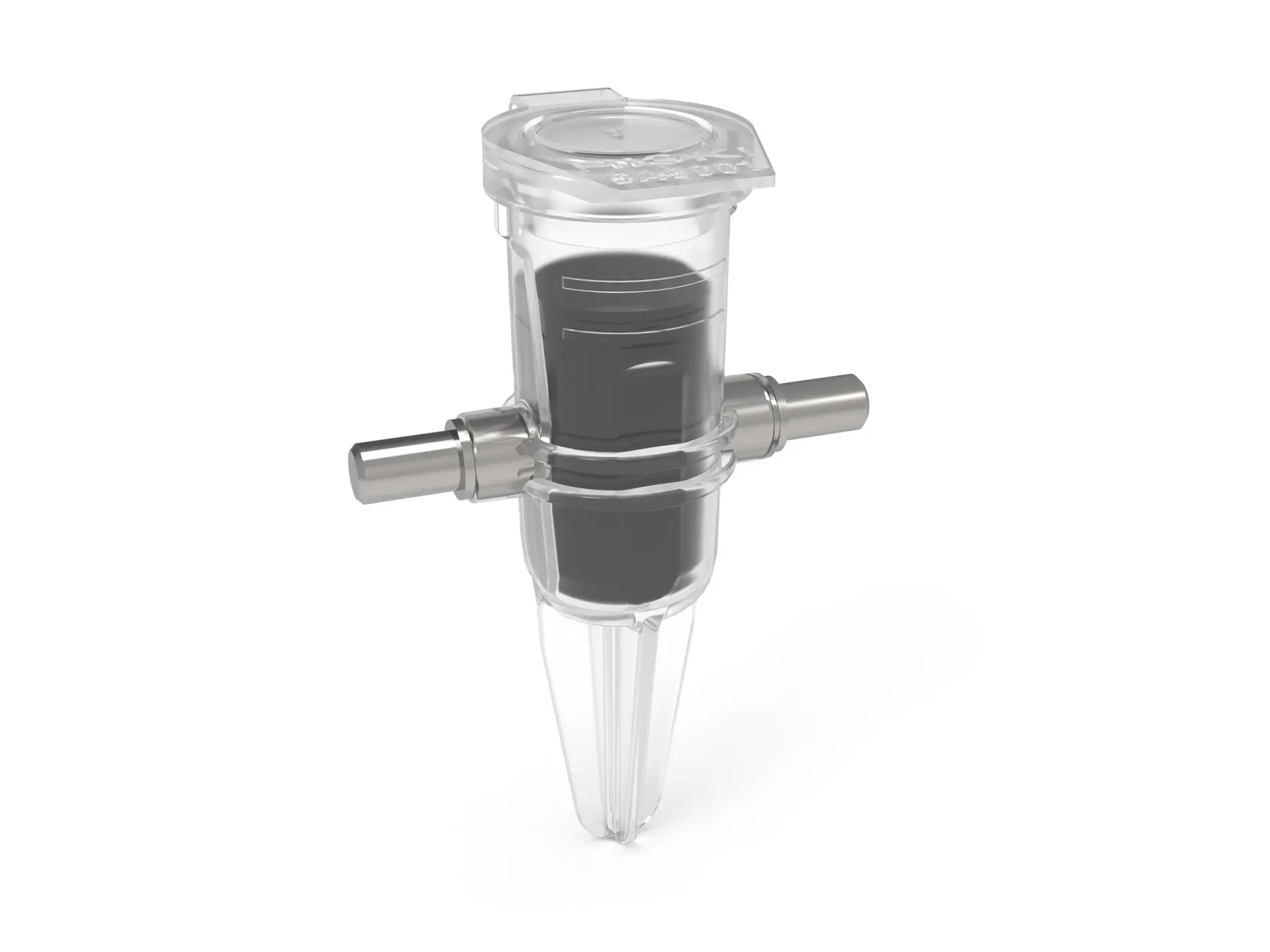
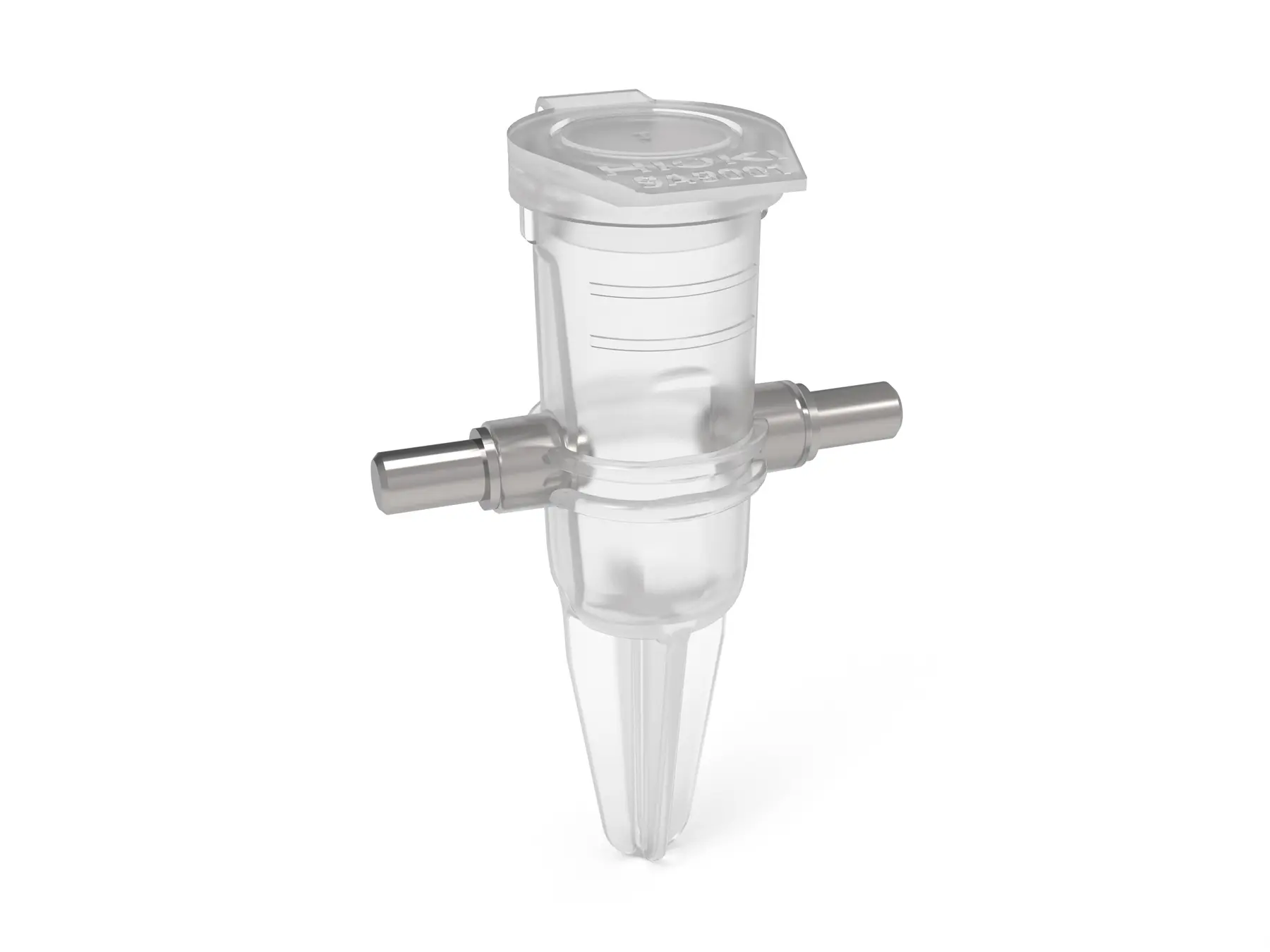
SA9001 - Slurry sample container for NMP-based slurry measurement
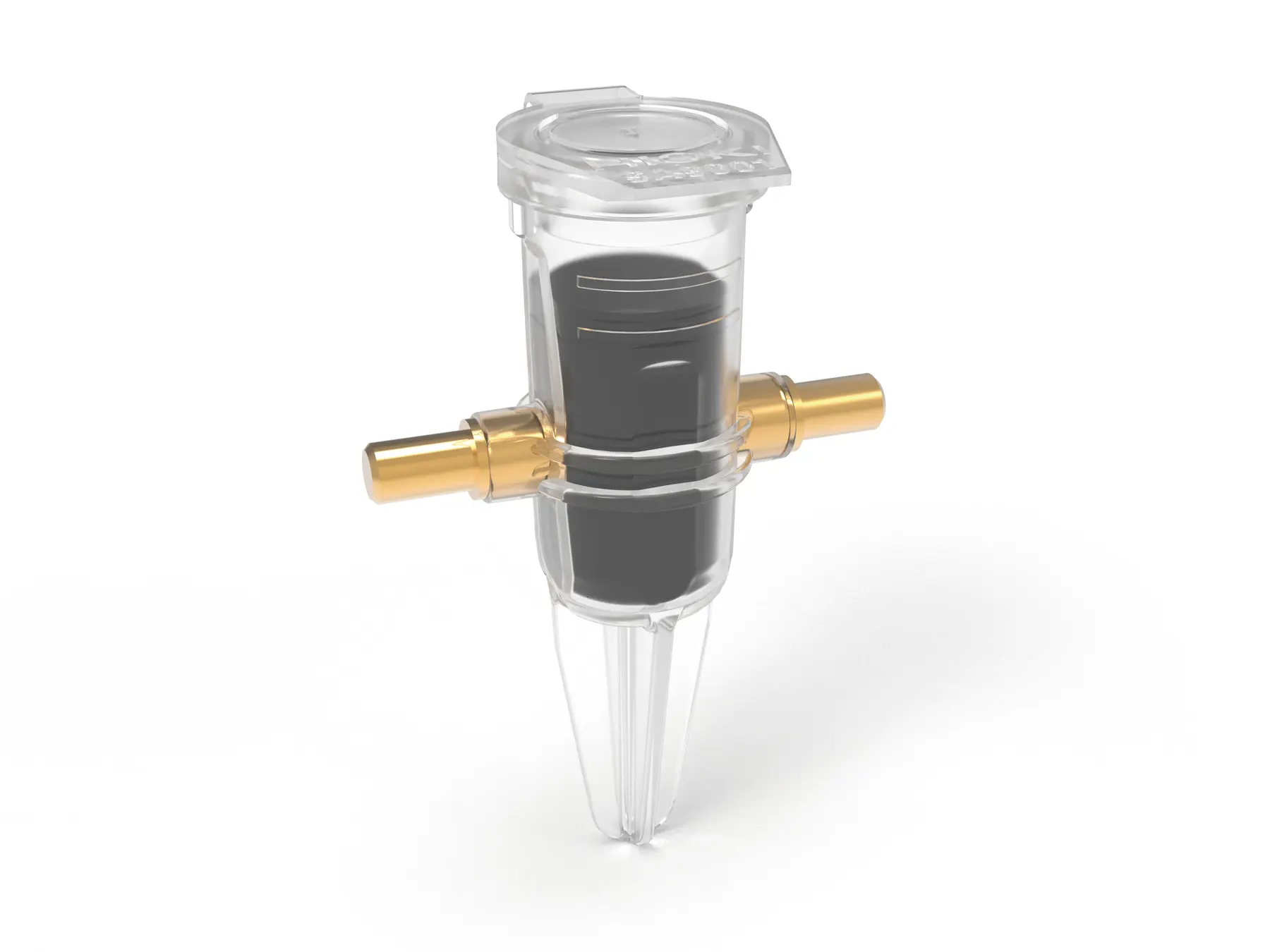
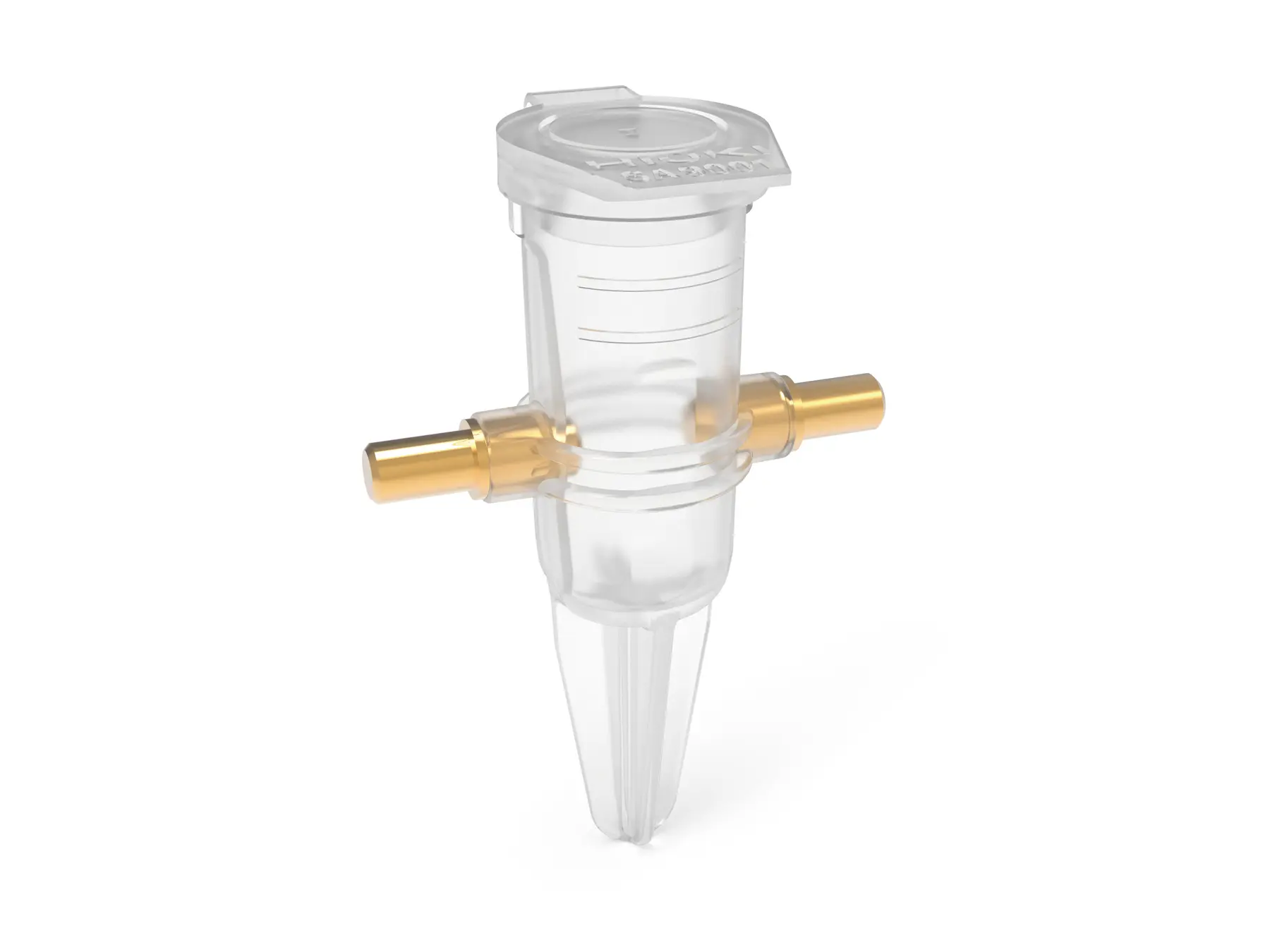
SA9001-01 - Slurry sample container for aqueous slurry measurement
SA2634-KIT: Evaluate slurry conductivity and dispersion before coating
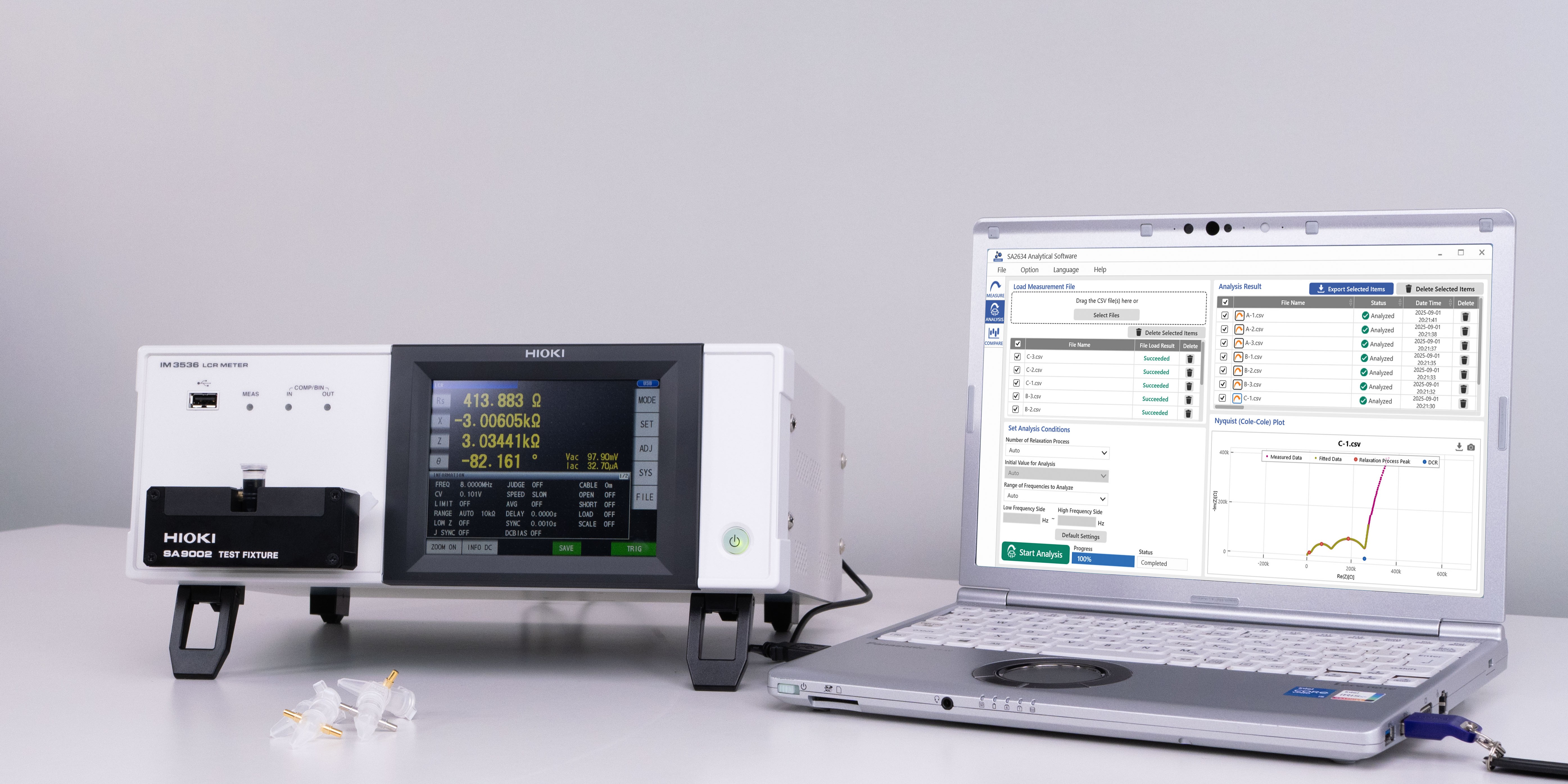
The HIOKI SA2634-KIT enables standardized evaluation of lithium-ion battery slurry quality before coating. By combining frequency-sweep impedance measurement from 4 Hz to 8 MHz with automated equivalent-circuit fitting, the system quantifies slurry conductivity and dispersion using three proprietary metrics: DCR, R-ratio, and Uniformity.
As a complete solution, the kit combines dedicated measurement software with the full hardware setup – from the LCR Meter and fixture to dedicated slurry sample containers for both aqueous and NMP-based slurries – supporting formulation development, process optimization, and quality control from R&D to production.
Analyze Li-ion electrode sheets before cell assembly
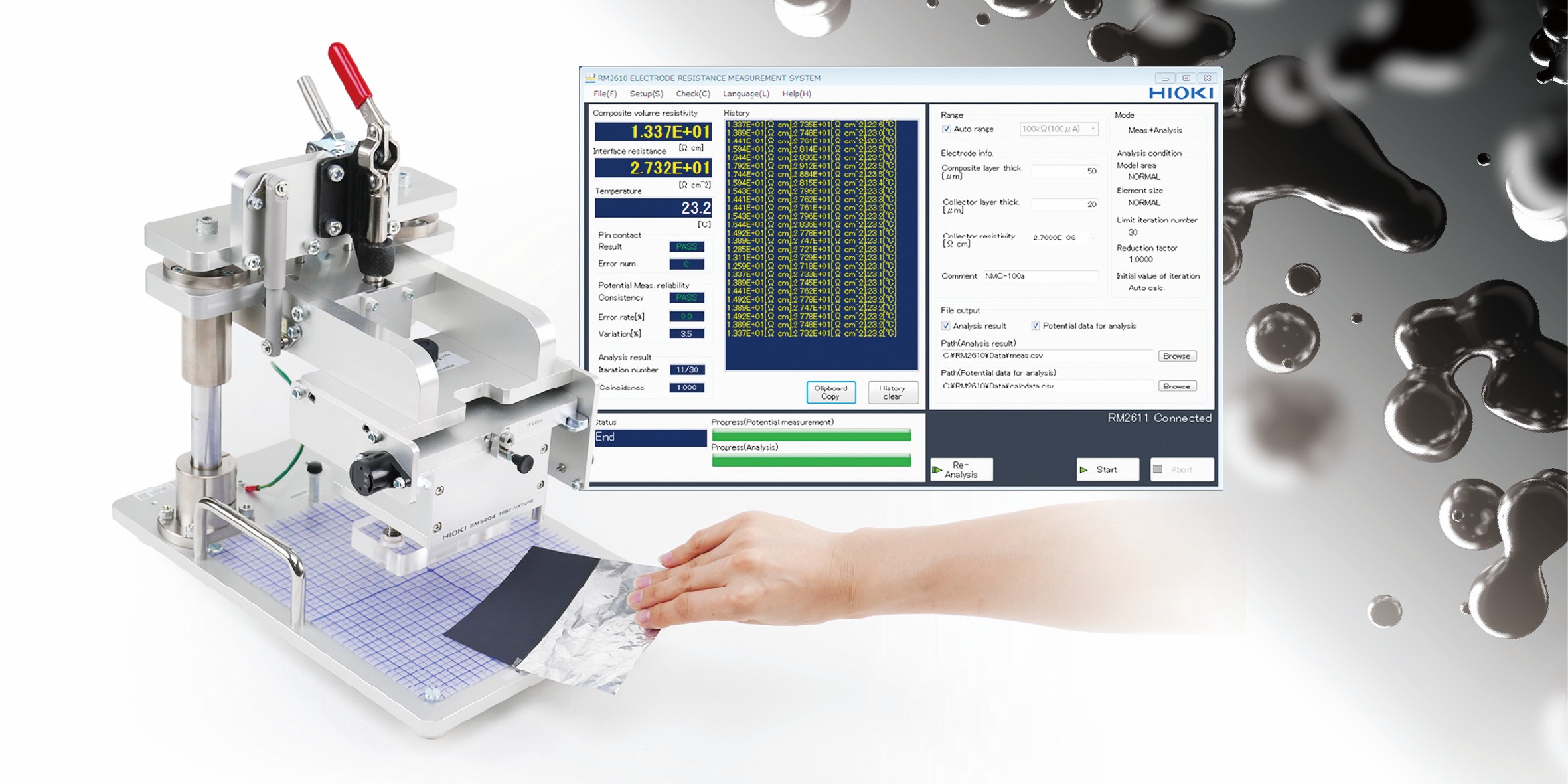
The HIOKI RM2610 Electrode Resistance Measurement System provides a unique method for quantitative evaluation of lithium-ion battery electrode sheets. It separately calculates composite layer volume resistivity and interface resistance between the composite layer and the current collector. These resistance parameters are difficult to isolate with conventional methods.
This enables the assessment of electrode quality before cell assembly, helping to save time in development and reduce the need for later-stage trial-and-error. The same method also benefits production, where the RM2610 supports regular quality checks before electrodes are built into cells.
Advanced EIS Solutions for Electrolysis and Fuel Cell Development
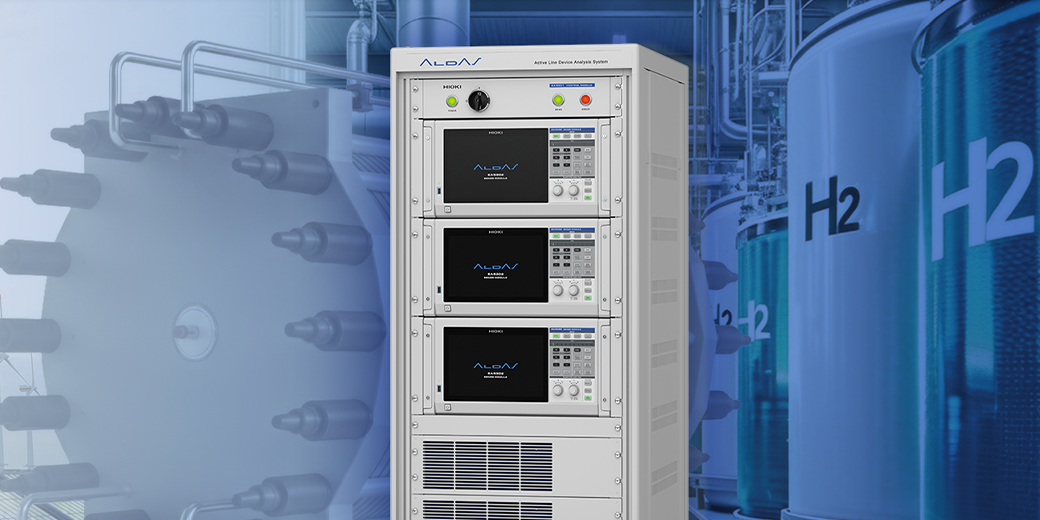
Precise electrochemical impedance spectroscopy (EIS) helps evaluate fuel cells and electrolysis systems supporting the progress of hydrogen technology from lab research to development of electrolyzers for commercial production.
HIOKI’s three ALDAS fuel cell analysis systems enable advanced EIS testing from R&D to commercial hydrogen production. They analyze internal resistances, reaction kinetics, and degradation mechanisms beyond conventional I-V testing - supporting faster development and validation from single cells to large-scale stacks. The portfolio includes three scalable solutions:
- ALDAS- α for compact, flexible electrolysis cell analysis in laboratory environments
- ALDAS- Mini for high-speed, multi-channel EIS measurements in advanced R&D
- ALDAS-E for in-operation analysis of kW to MW-class fuel cell and electrolysis stacks
| ALDAS-α | ALDAS-Mini | ALDAS-E | |
|---|---|---|---|
| Positioning | R&D / Cell evaluation | Pilot / Stack | Industrial / MW-scale |
| Typical Use Case |
Single cells, small test setups (Universities, research institutes, R&D labs) |
Cell scale up, small stacks, demonstration systems (System developers, pilot projects, system integrators) |
Large electrolyzers, industrial plants (Hydrogen producers, industrial operators) |
| Main Benefit | Fast R&D and material evaluation | Parallel stack diagnostics and scaling | Full system monitoring and optimization |