Fast enough for steep edges
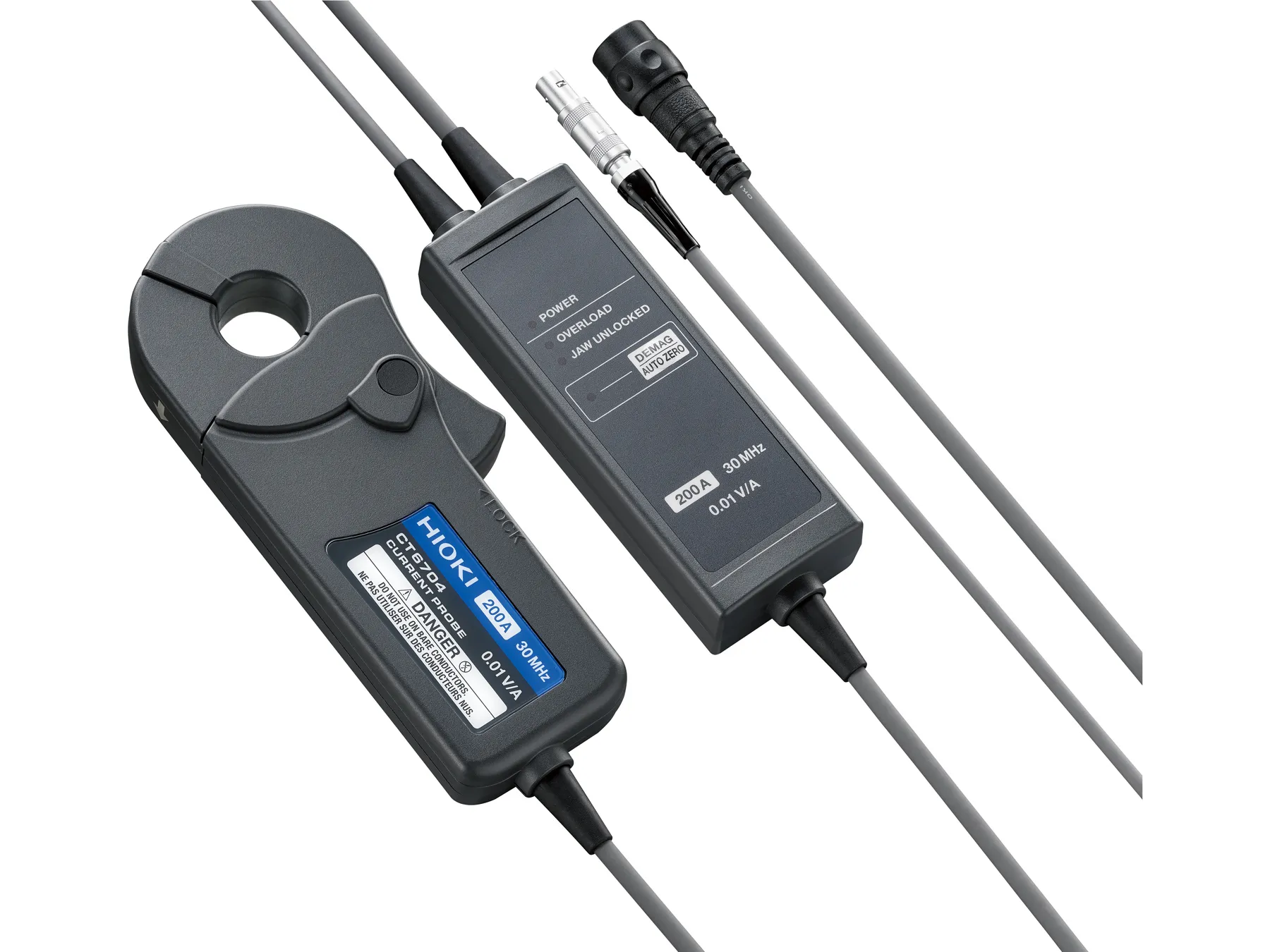
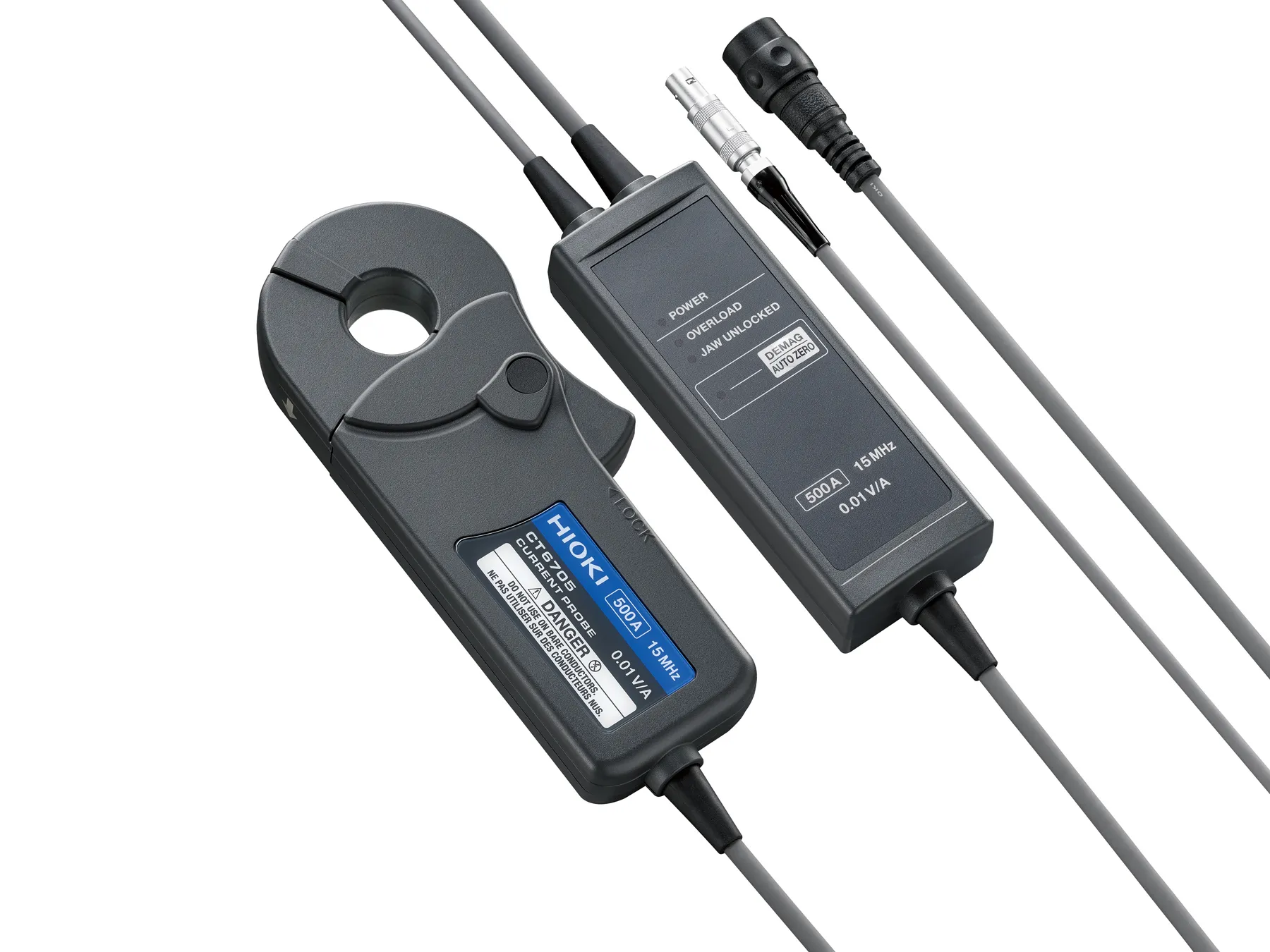
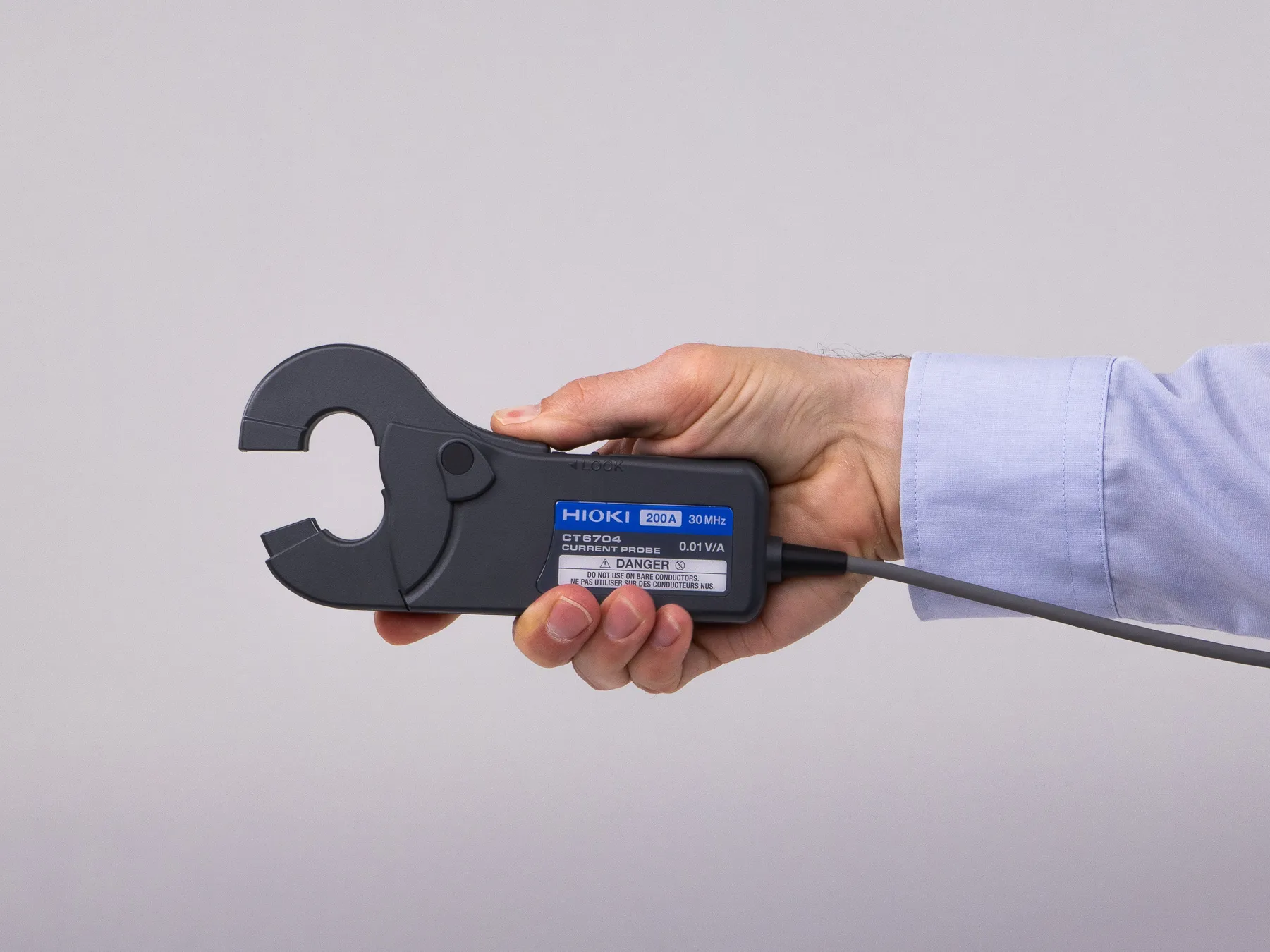
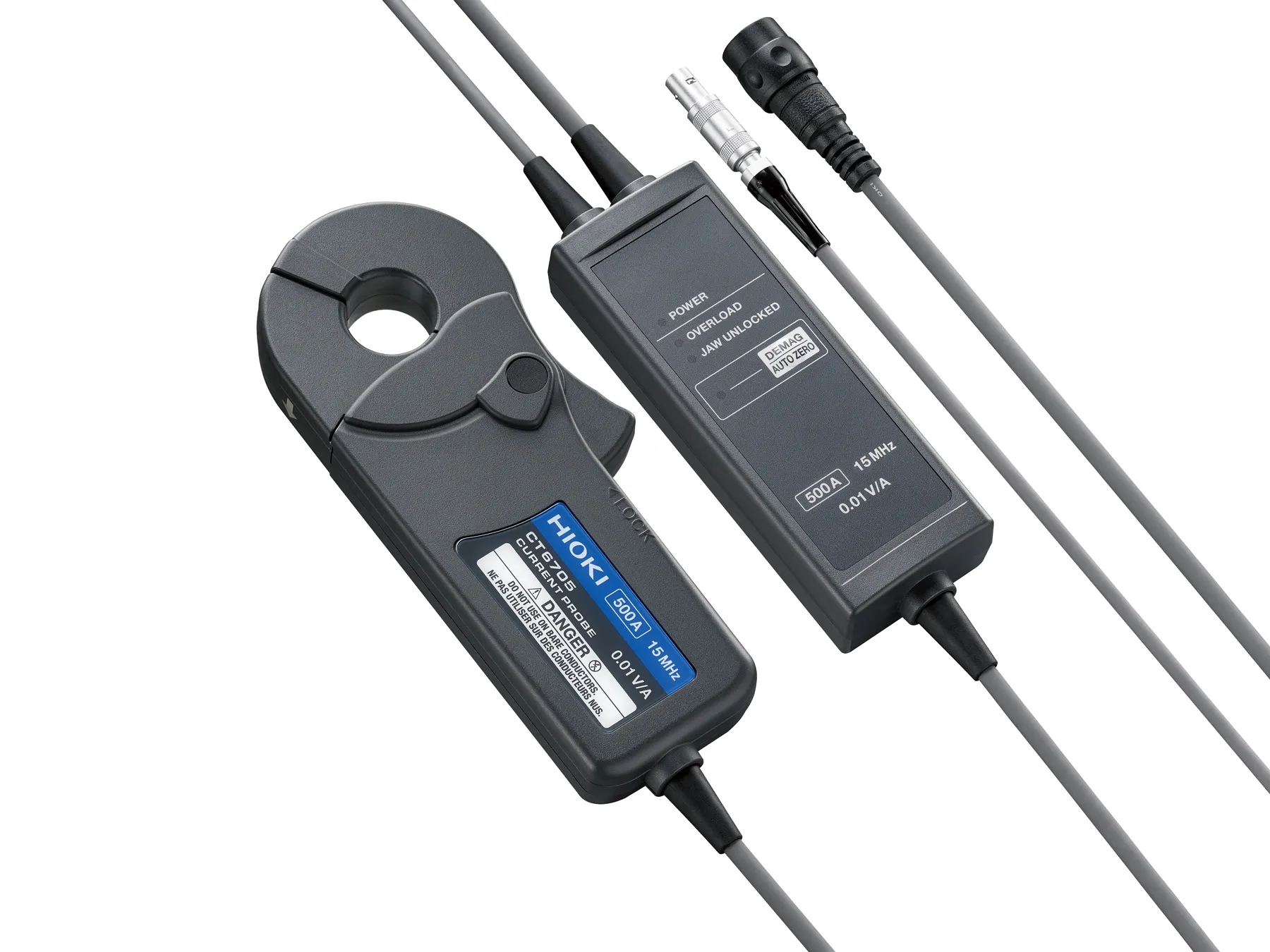
Switching transitions in SiC and GaN are so fast that a probe only reproduces them faithfully if its bandwidth reaches well beyond the fundamental. The CT6704 replaces the 3274, the CT6705 replaces the 3275, and the step in bandwidth is large.
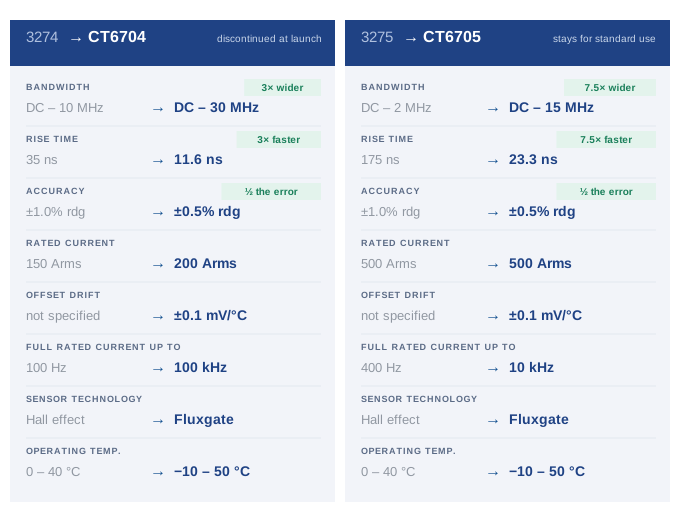
The CT6704 covers DC to 30 MHz with an 11.6 ns rise time, where the 3274 reached DC to 10 MHz at 35 ns. The CT6705 covers DC to 15 MHz with a 23.3 ns rise time, against the 3275's DC to 2 MHz and 175 ns. That works out to roughly three times the bandwidth on the one and more than seven times on the other, with correspondingly shorter rise times. On a real signal, that is the difference between seeing the edge and seeing an approximation of it.
Rated current, well into the kHz
A current probe also has a second limit, and it's the one that quietly pushed people toward a probe with a higher current rating, and usually a lower bandwidth to go with it: derating. As the frequency rises, a probe can no longer carry its full rated current, because it would overheat. The allowed value falls the higher the frequency climbs. The reason is heat, specifically the eddy currents that high-frequency currents stir up in the metal inside the probe.
With the older probes, that ceiling sat surprisingly low. The 3274 held its full rated current only up to a little over 100 Hz before the curve began to fall; the 3275 made it to 400 Hz. For modern, fast-switching power electronics that is far too low: switching frequencies now sit well above it, in a range where the old probe could only carry a fraction of its nameplate current. The usual fix was a probe with a higher current rating, which usually came with lower bandwidth and so a slower rise time. You bought current and paid in speed.
The CT6704 and CT6705 address this through a magnetic and thermal design that holds internal heating down at high frequency. At room temperature the CT6704 holds its full rated current all the way to 100 kHz and the CT6705 to 10 kHz, where the predecessors ran out at a little over 100 Hz and 400 Hz respectively.
The speed stays, the drift goes
The 3274 and 3275 read the DC and low-frequency part of the current with a Hall element. A Hall element is a semiconductor, and its balance shifts with temperature: when the probe gets warmer, the baseline drifts. And a probe gets warm easily. In a warm environment, say close to the power electronics as they heat up over time, and above all through high-frequency signal content that warms it from the inside. The current you are measuring is not the cause, though: direct current barely heats the probe.
The CT6704 and CT6705 replace that Hall element with a fluxgate, without giving up the high bandwidth these probes depend on. If anything, the bandwidth went up. And the fluxgate brings its real strength with it: a baseline that barely drifts with temperature, around 90 % less DC drift than before, for the first time on a probe for oscilloscopes an offset temperature coefficient on the datasheet (±0.1 mV/°C), and an operating temperature of −10 to +50 °C instead of 0 to 40 °C.
It is the same sensing principle behind the precision sensors that pair with our power analyzers, a proven detector now arriving in a clamp-on probe with a standard BNC plug. (If you've ever wondered where the slightly odd name "zero-flux" comes from, we told that story separately, with a small detour through Back to the Future.)
So is it a power-measurement probe after all?
A natural question: if the oscilloscope already has current and voltage in front of it, why not let it work out the power? The answer takes some care, because "measuring power on a scope" splits into two very different things.
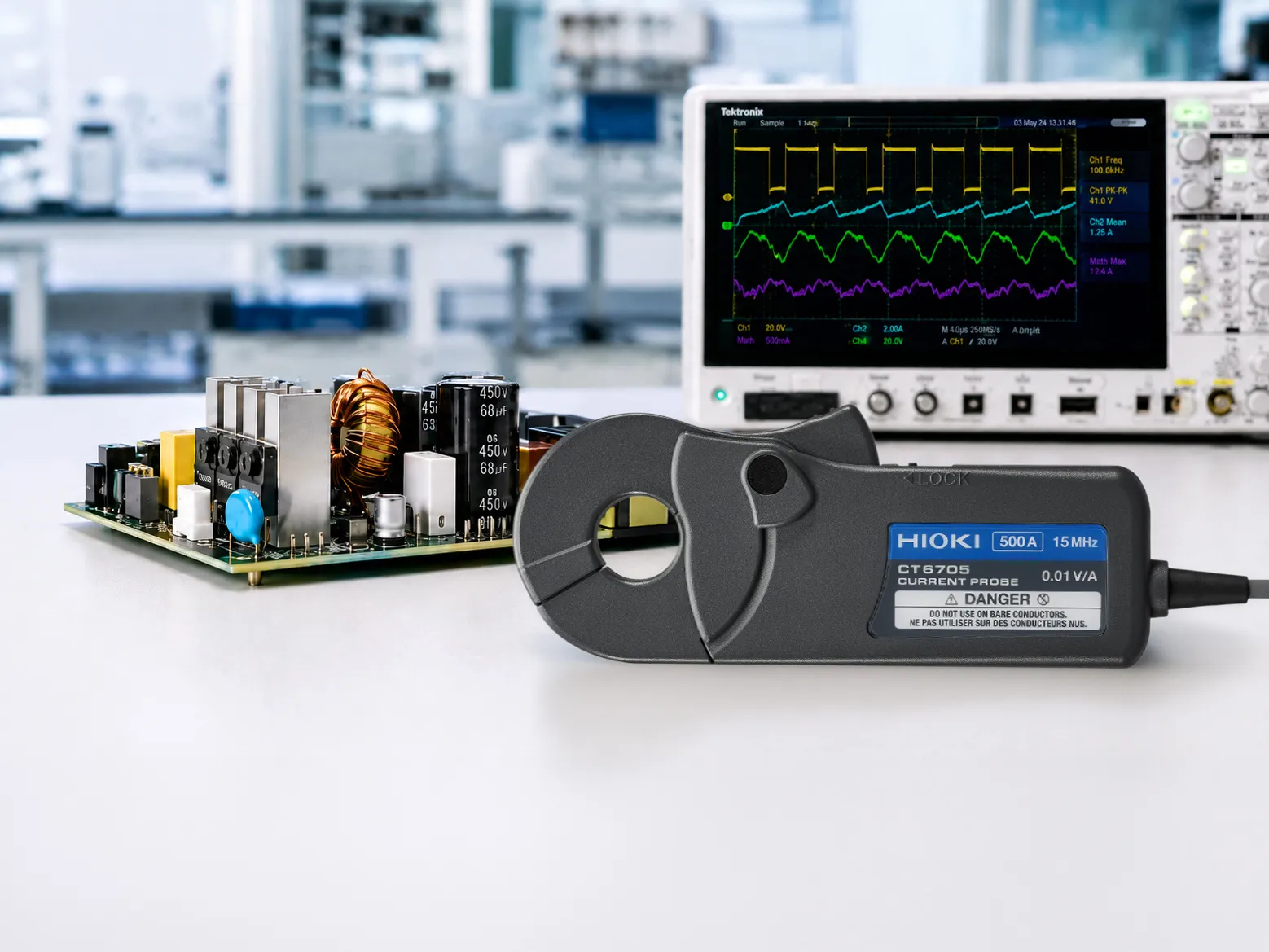
The first is switching loss at the semiconductor, the energy in each turn-on and turn-off. Here the oscilloscope is in a class of its own, capturing edges a power analyzer's bandwidth can't follow, which is exactly what the CT6704 and CT6705 are built for.
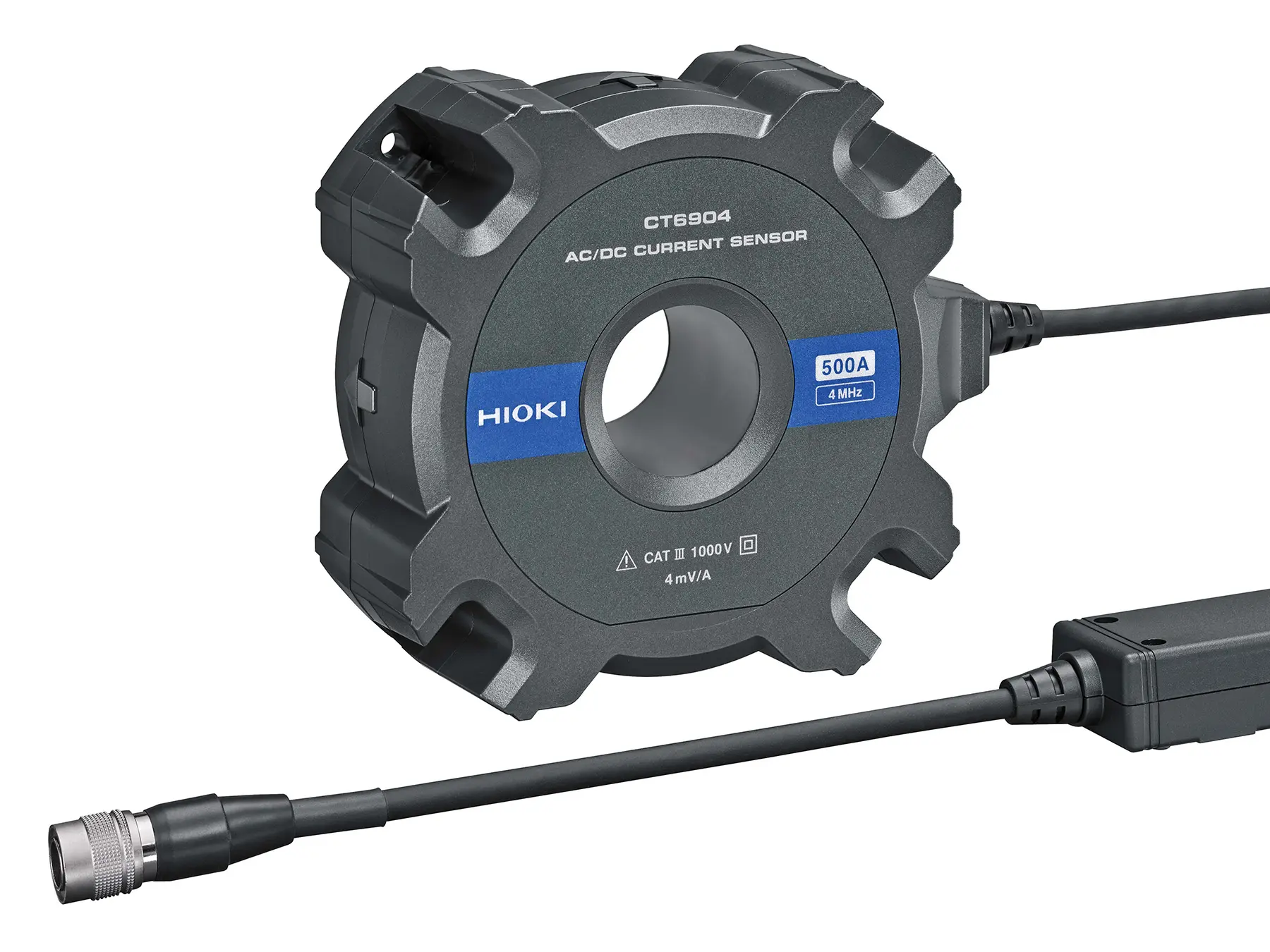
The second is the power balance across a whole circuit: efficiency, total losses, what goes in against what comes out. A high-resolution oscilloscope can compute that too. What becomes critical there is the phase between current and voltage, the more so the lower the power factor, where even a tiny phase error badly distorts the active power. That is why precise power measurement belongs to a power analyzer with sensors whose phase shift stays as constant as possible across the relevant frequency range, and for the highest precision to a pass-through transducer like the CT6904A. The CT6705 sets other priorities: a faithful edge and a fast rise time. For precise AC power measurement it isn't the right tool. (For why phase decides everything in power measurement, we wrote about it separately.)