Since pioneering the world’s first lithium-ion battery tester in 1986, HIOKI has set the benchmark in battery testing technology.
Today, the BT356xA series is the de facto standard for quality control in production and development facilities worldwide. It delivers reliable resistance and voltage measurements to ensure battery reliability.
For high-voltage battery packs, the
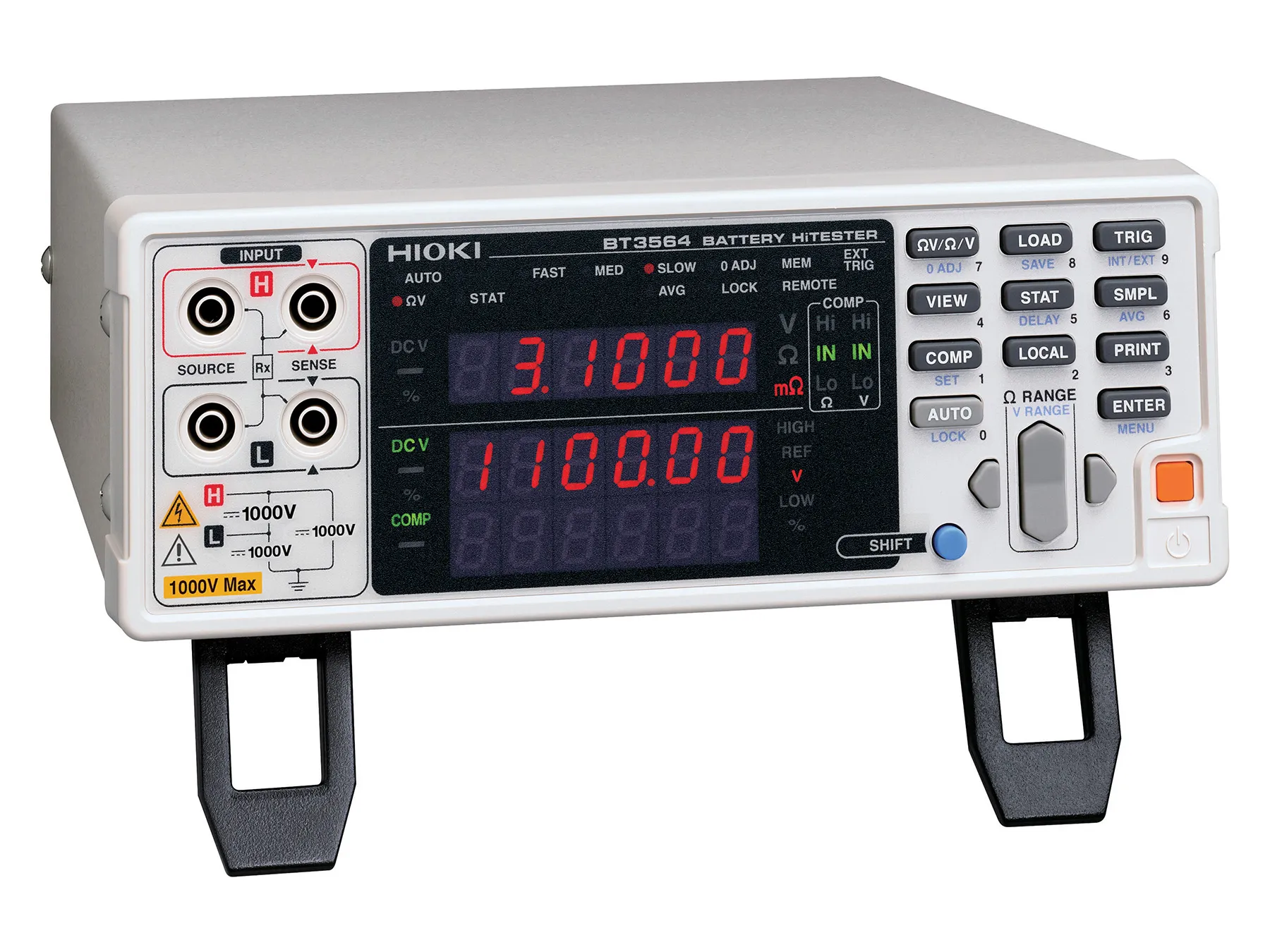
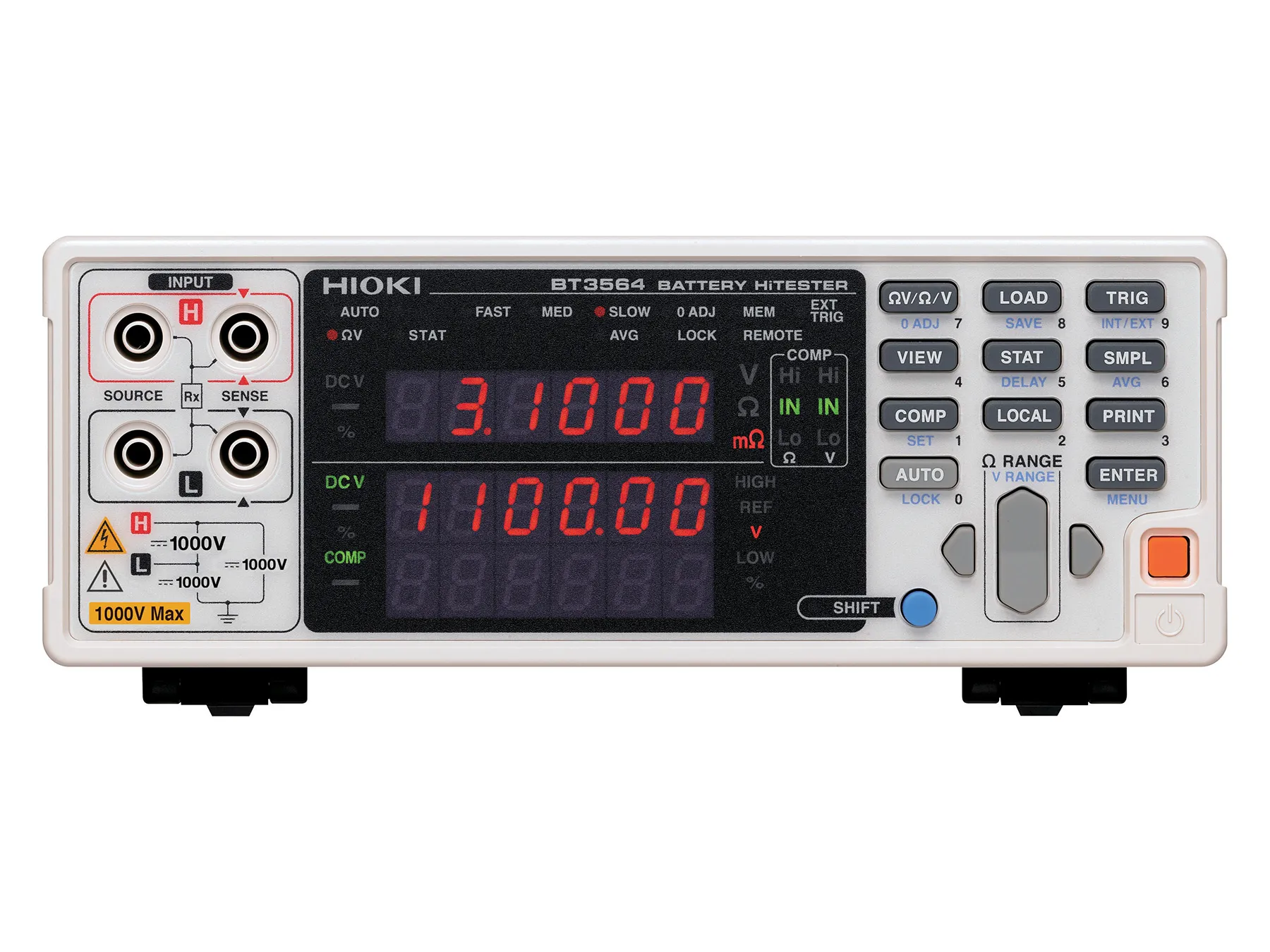
BT3564
supports testing up to 1000V.
Meanwhile, the
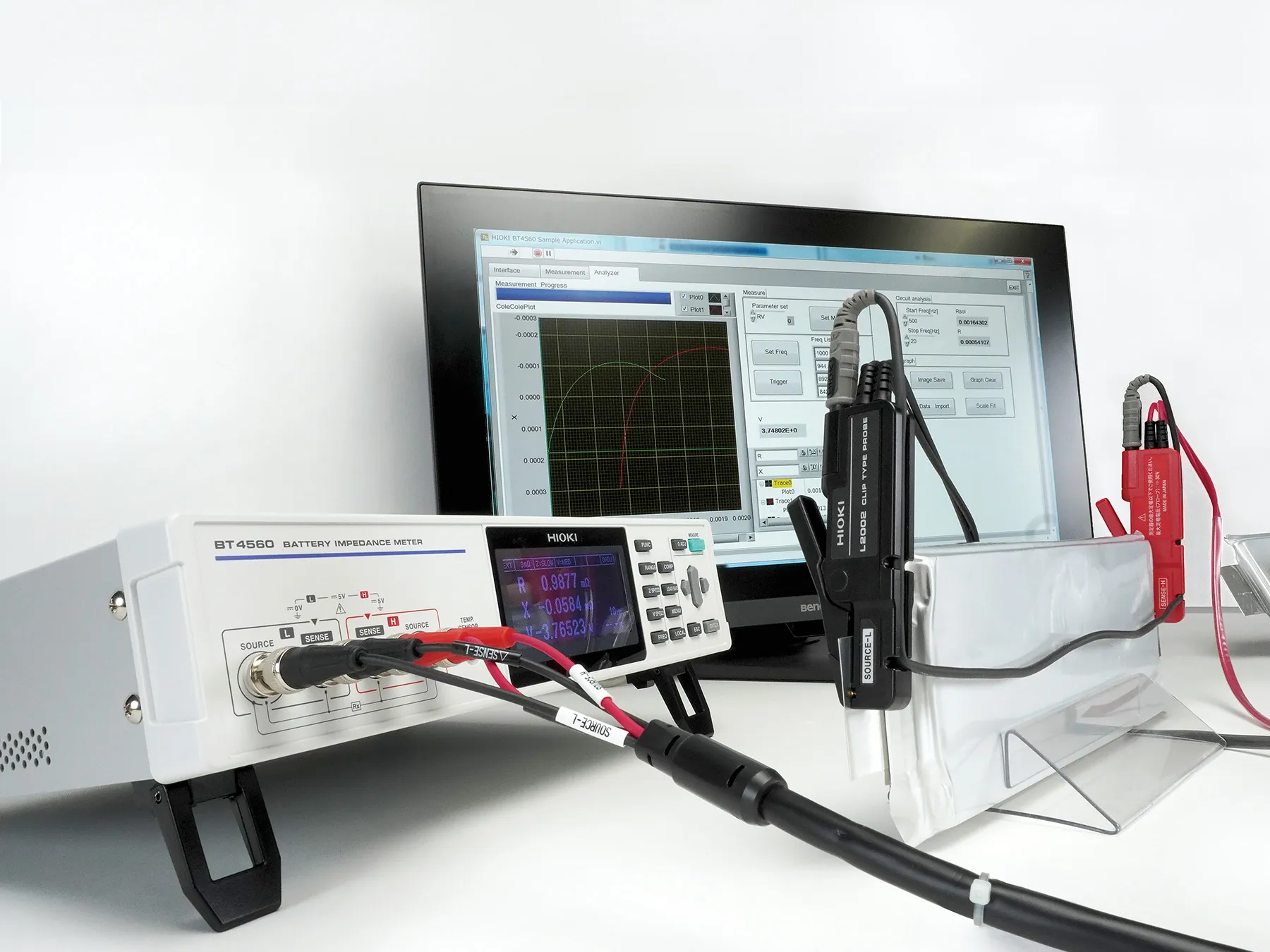
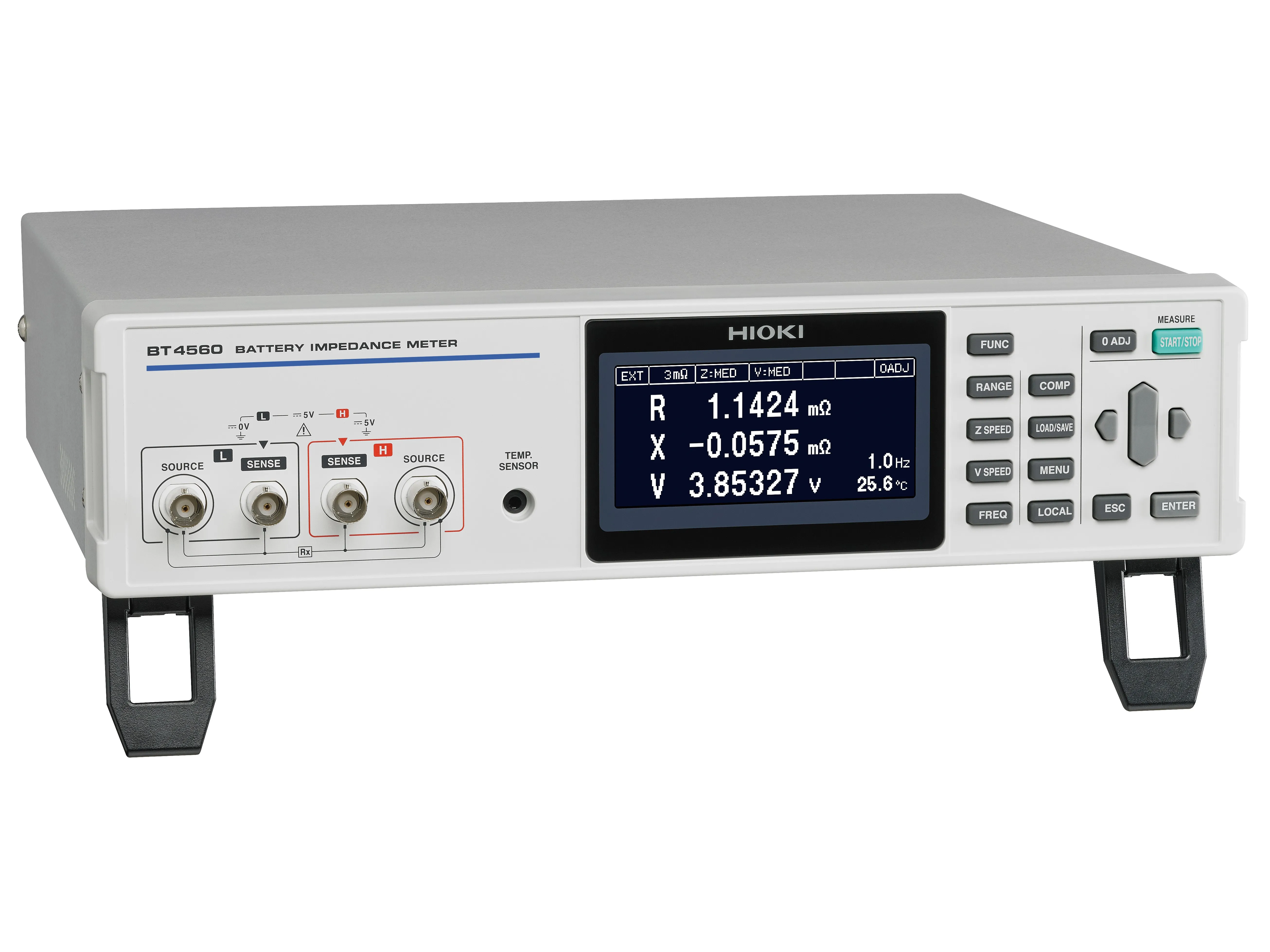
BT4560-50 Battery Impedance Meter
enables ultra-precise micro-ohm-level resistance measurements for advanced cell evaluation.
The
BT6065
and
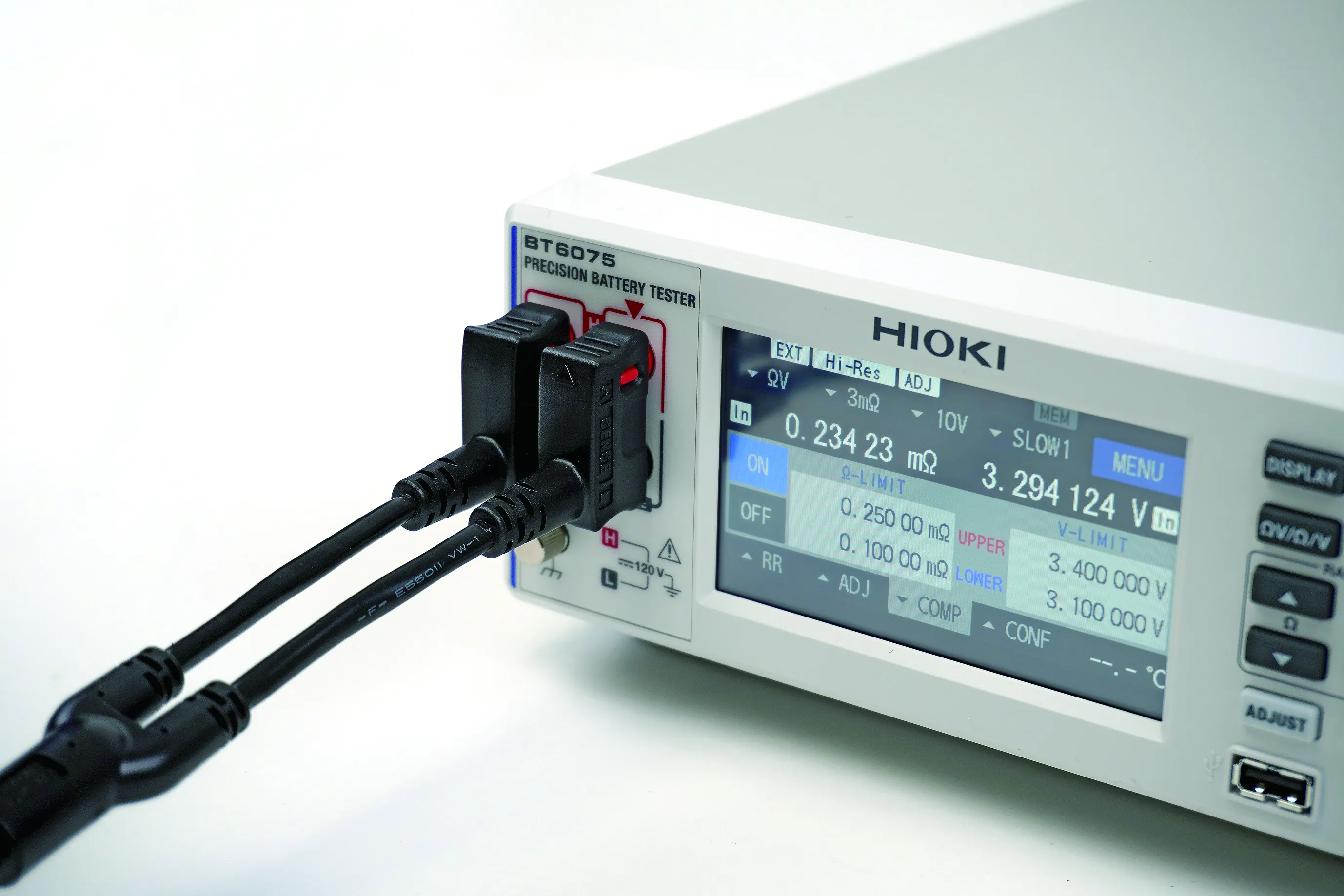
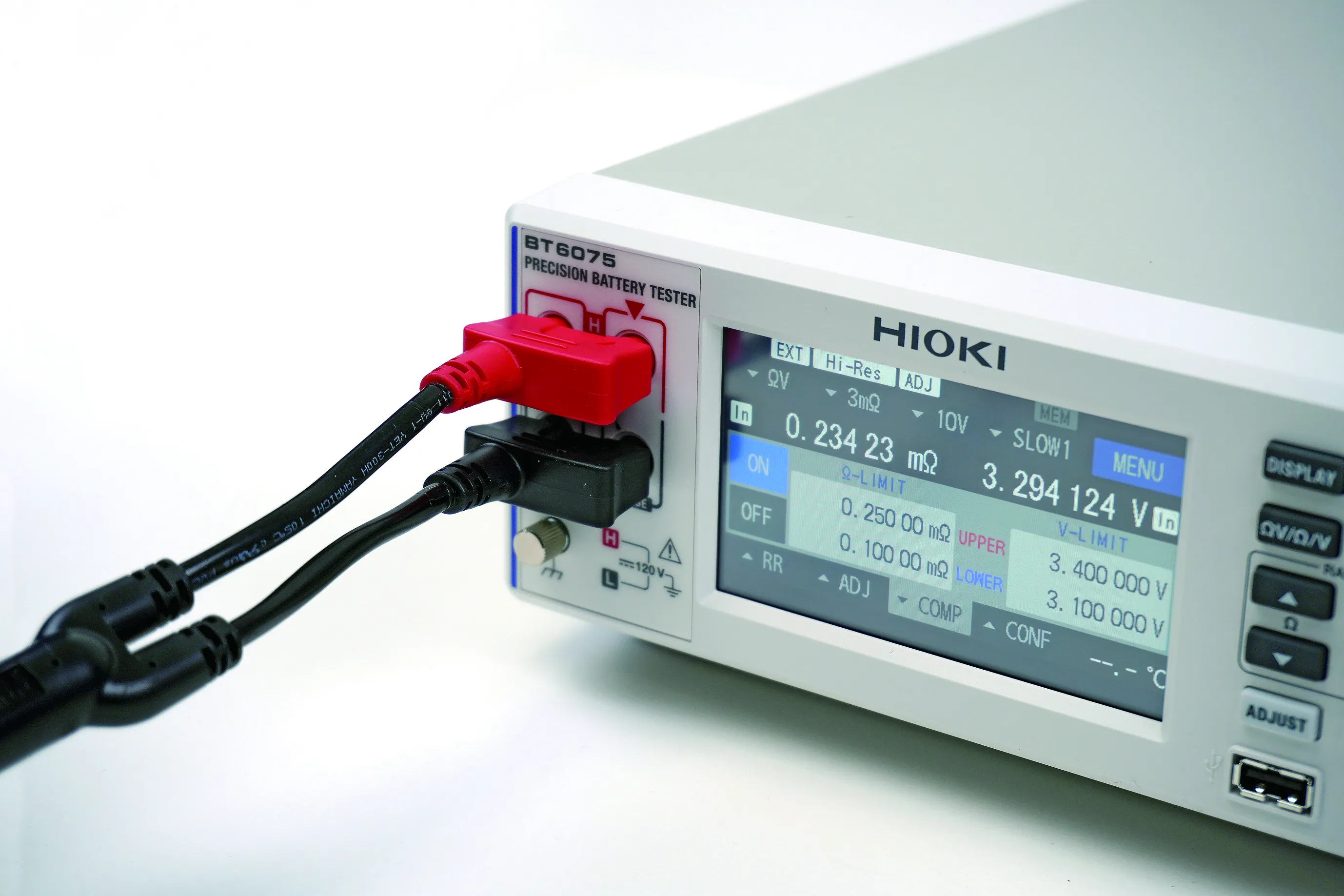
BT6075
offer a 2-in-1 solution, combining simultaneous measurements of internal resistance and voltage. This ensures efficient and accurate cell grading and quality assurance during battery production.
Find the perfect solution for your battery testing needs today!
The BT3561A Battery Tester is a high-precision tool designed for quality inspections, development, and maintenance of battery cells, modules, and packs.
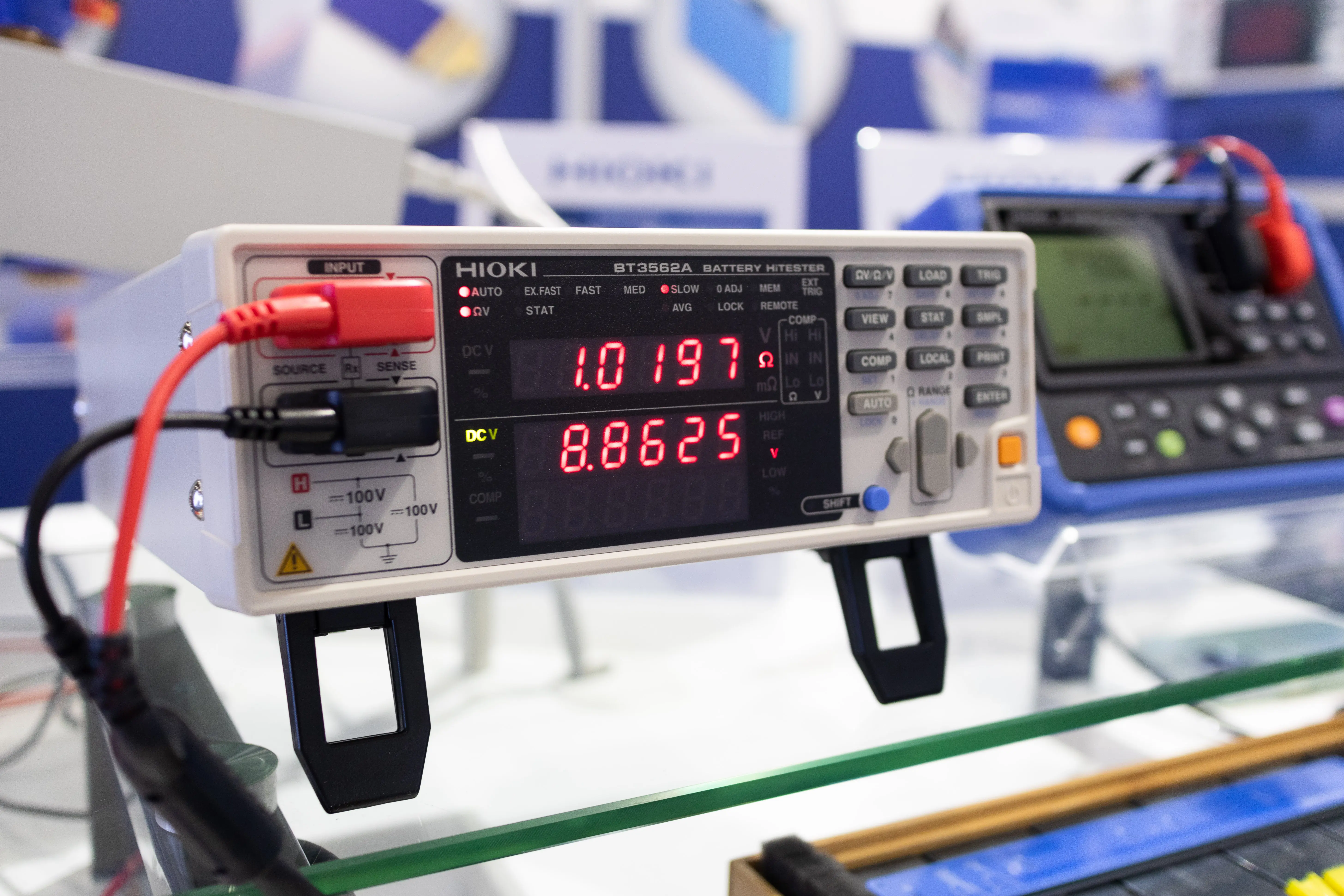
The Hioki BT3562A Battery Tester is an advanced measurement instrument designed for fully automated testing of battery packs, particularly in electric vehicles (xEVs).
The Hioki BT3563A Battery HiTester is an advanced measurement instrument, ideal for fully automated testing of large battery packs, particularly in electric vehicles (xEVs).
The Hioki BT3564 Battery Tester is an advanced measurement instrument ideal for fully automated testing of large battery packs, particularly in electric vehicles (xEVs).
Key SpecificationsMeasurement frequency: 0.01 Hz to 10 kHz DC voltage measurement range: 5 V Resistance ranges: 3 mΩ, 10 mΩ, 100 mΩ Maximum test current: 1.5 A rms (3 mΩ range) Interfaces: LAN, RS-232C, EXT. I/O Typical ApplicationsImpedance verification of lithium-ion and high-capacity battery cells in production and inspection Impedance-based cell matching and quality assessment for pack and module manufacturing High-frequency analysis of solid electrolyte interface (SEI) and separator behavior in R&D Automated impedance measurement using SW1001 / SW1002 multiplexing systems
Detailed Product OverviewThe HIOKI BT4560-60 Battery Impedance Meter is optimized for measuring the impedance of lithium-ion battery cells (LiB) and measures cell impedance from 0.01 Hz to 10 kHz with a DC voltage measurement range of ±5 V. The extended upper frequency limit enables impedance analysis of lithium-ion cells at higher frequencies. This allows the observation of effects related to the Solid Electrolyte Interface (SEI) and the separator, providing a broader view of electrochemical behavior. The instrument offers selectable ranges of 3 mΩ, 10 mΩ, and 100 mΩ, making it suitable for evaluating large-capacity cells with very low internal resistance such as those used in traction batteries and energy-storage applications. The maximum test current is 1.5 A rms in the 3 mΩ range and is correspondingly lower in higher ranges. The smallest impedance resolution is 0.1 µΩ. The four-terminal-pair measurement configuration minimizes errors caused by cable resistance, magnetic coupling, and eddy currents in the test setup. It is based on the principle of four-terminal measurement but additionally uses shielded pairs for the current and voltage paths, as commonly employed in LCR meters and impedance analyzers, to minimize coupling effects and phase errors at higher frequencies. The instrument can measure cell voltages of either polarity within the range of ±5 V, so the connection polarity of the cell under test does not affect measurement. Applications and Electrochemical Impedance Spectroscopy (EIS)
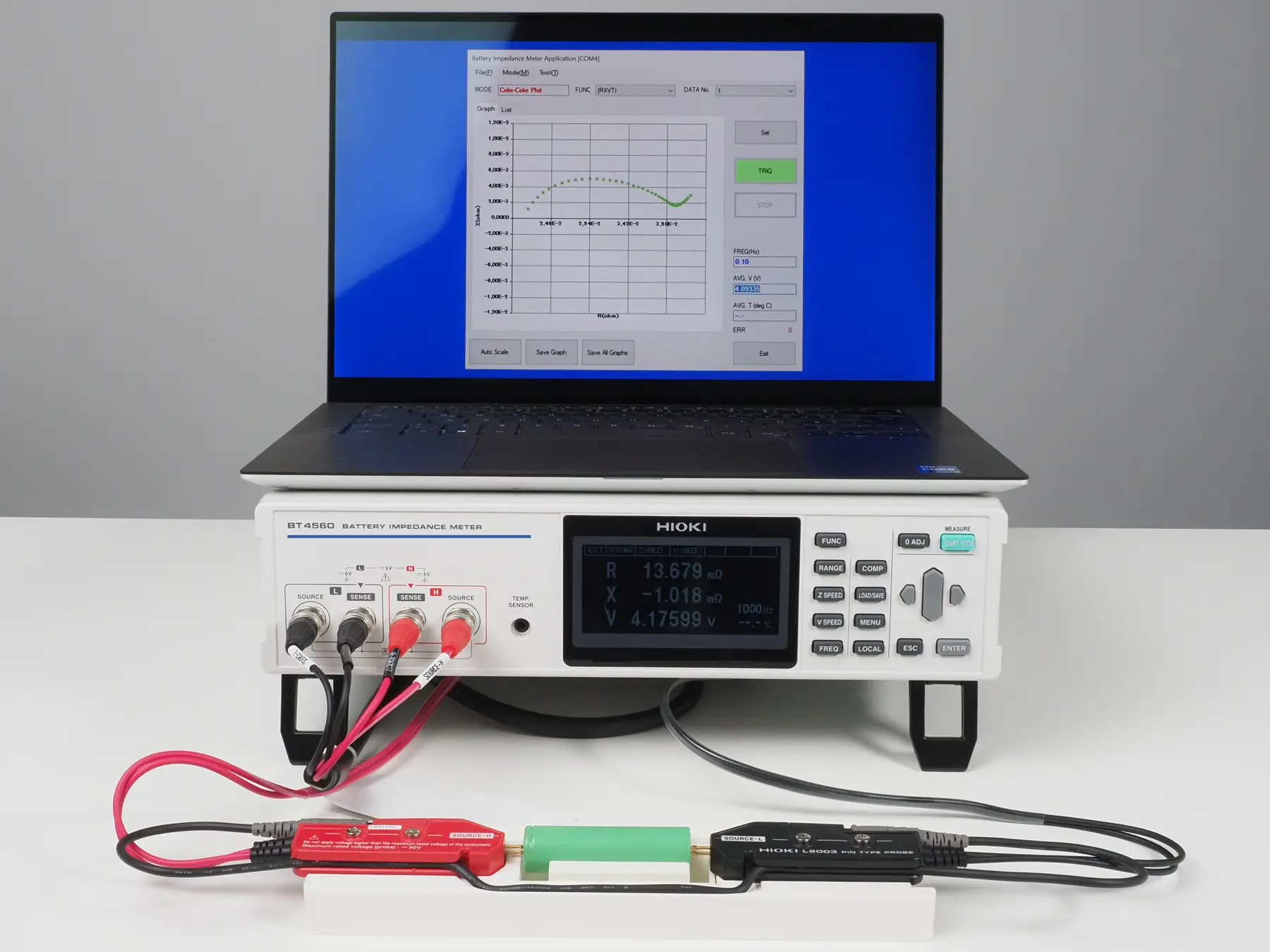
The BT4560-60 is used for evaluating large-capacity battery cells in traction batteries and energy-storage systems. In production environments it supports impedance measurement and verification at the end of the cell assembly process. In pack and module manufacturing it is used for incoming inspection and cell qualification to ensure consistent performance before installation. In research and development it is used to study impedance characteristics, diffusion behavior, and degradation phenomena related to the state of health (SoH). The extended 10 kHz range enables additional high-frequency observation of interfacial processes and dielectric behavior within cell components. The instrument is also suitable for cell matching, where cells are grouped by impedance and capacity to achieve balanced performance within assembled packs. When connected to a PC, for example via USB, the BT4560-50 can be used for electrochemical impedance spectroscopy (EIS). The supplied software controls frequency sweeps, collects impedance data, and displays Nyquist and Bode plots for analysis. This setup is ideal for laboratory environments where impedance measurements are performed directly from a computer. Data can also be exported to ZView® for detailed equivalent-circuit evaluation. Perfect for System Integration
With LAN and RS-232C interfaces and an EXT. I/O port for trigger and control signals, the BT4560-50 connects easily to automated measurement setups. It can interface with external controllers or multiplexing systems for sequence control, allowing flexible integration in production and quality-assurance environments. LabVIEW drivers and example programs are available for PC-based automation and custom control applications. The instrument can also be controlled directly by a PLC or used with the HIOKI SW1001 / SW1002 multiplexing systems and other suitable solutions, making it a practical choice for system integrators designing automated battery test setups. The BT4560-50 measures impedance using a low-level AC signal that does not affect the electrochemical state of the cell. This method allows precise impedance measurement without heat generation or degradation, even when testing high-capacity or newly developed cell types. Measurement cables for laboratory and production use are available separately. The L2002 Kelvin clip lead is designed for laminated battery cells such as pouch cells, while the L2003 Kelvin pin lead is suitable for cylindrical or mounted cells, including applications in automated test setups. Designed and manufactured in Japan, the BT4560-50 delivers the precision and stability required for reliable impedance testing of modern battery cells in research and production.
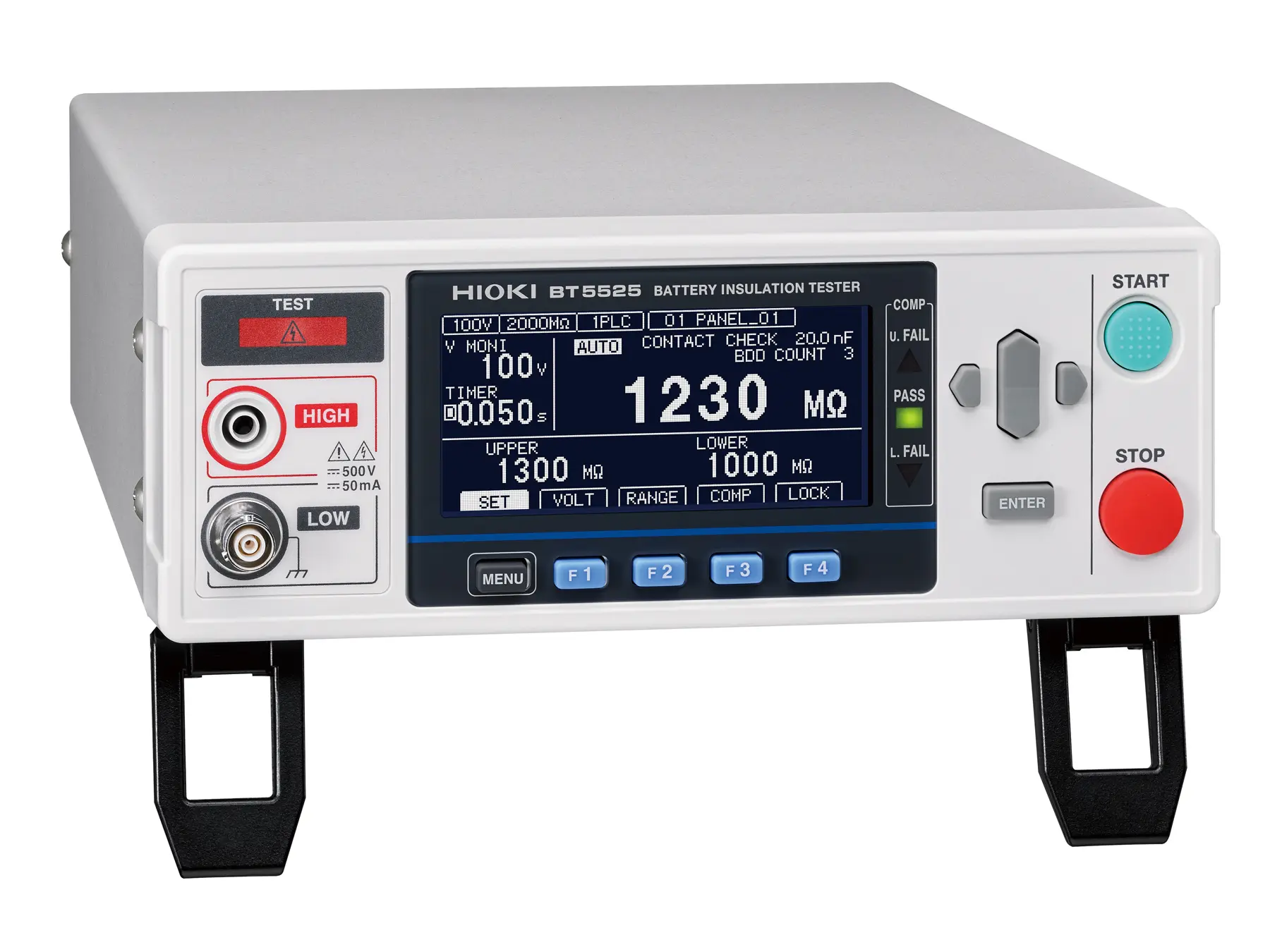
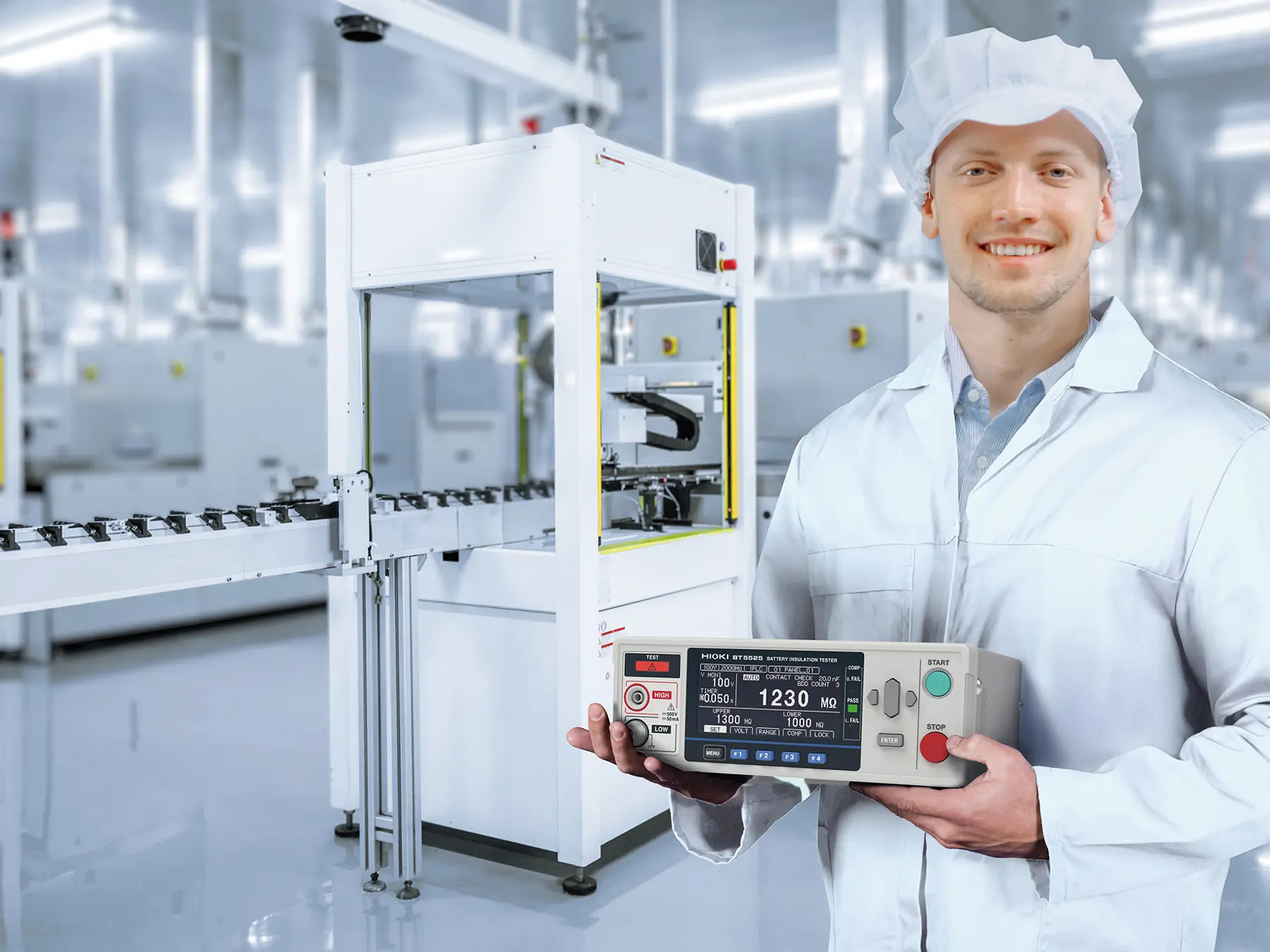
Battery Insulation Tester, Break Down Detection (BDD), contact check function, use in combination with Test Leads L2130 and L2131 for benchtop testing, use in combination with L2132 and L2133 for production line testing. Technical specificationsTest voltage: 25 V to 500 V Charging current: 50 mA maximumInsulation resistance measurement: up to 9999 MΩ Contact check functionBreak Down Detect (BDD) functionInterfaces: USB, LAN, RS-232C, EXT. I/O Use in combination with Test Leads L2130 and L2131 for benchtop testing, use in combination with L2132 and L2133 for production line testing. Helps prevent shipment of batteries with latent insulation defects that could lead to fire Enables easy system integration and automation via multiple interfaces Offers a wide range of functions for convenient and reliable measurements
HIOKI BT4560-50 battery impedance meter for precise impedance testing of Li-ion batteries, cells, modules and packs across 0.01 Hz–1050 Hz. Ideal for R&D and production. Order now from HIOKI Europe.
HIOKI BT6075 precision battery tester with integrated 7.5-digit voltmeter for ultra-accurate DC voltage and internal resistance measurement. Order now from HIOKI Europe.
Electrode Resistance Measurement System, isolates and quantifies the composite layer resistivity and the interface resistance between the composite layer and the aluminum or copper current collector foil of LIB electrode sheets in a single measurement
Key Specifications
Slurry conductivity and dispersion evaluation (DCR, R-ratio, Uniformity)Automated equivalent-circuit fitting For aqueous and NMP based slurries Impedance data from 4 Hz to 8 MHz Unique AdvantagesCombines frequency-sweep EIS with automated equivalent-circuit fitting for quantitative slurry evaluationProvides three proprietary metrics (DCR, R-ratio, and Uniformity) for consistent assessment of conductivity and dispersion Typical ApplicationsOptimization of slurry manufacturing conditions (e.g. mixing time, conductive agent content, dispersant ratio) in R&D and production Material research and evaluation using electrical dispersion analysis and comparative conductivity metricsQuality assurance and performance screening of lithium-ion battery slurries in production environments Product Description
The SA2634-KIT Slurry Analysis System is a software-based solution that quantifies the electrical characteristics of lithium-ion battery (LiB) slurries through impedance analysis. The KIT includes the SA2634 analysis software, the IM3536 LCR Meter, the SA9002 Test Fixture, and one pack each of disposable slurry sample containers SA9001 (for NMP-based slurries) and SA9001-01 (for aqueous slurries). By combining these components, the system enables standardized and repeatable evaluation of slurry conductivity and dispersion across a wide frequency range from 4 Hz to 8 MHz. Measurement and Analysis PrincipleUsing electrochemical impedance spectroscopy (EIS), the IM3536 acquires the impedance spectrum of the slurry. The SA2634 software models this data with an equivalent circuit to extract three proprietary parameters: DCR, representing the total resistance of the conductive path; R-ratio, indicating the relative contribution of conductive additives within that path; and Uniformity, reflecting the evenness of the conductive network distribution. Together, these metrics provide a quantitative understanding of how well conductive additives are dispersed and connected within the slurry. They help engineers identify the optimal ratio between active material and conductive agent, assess the homogeneity of dispersion, and directly link electrical behavior to electrode performance.Measurement Process and Practical ApplicationFor each measurement, approximately 1 ml of slurry is dispensed into a disposable sample holder. The SA9001 slurry sample container is used for N-Methyl-2-Pyrrolidone (NMP)-based slurries, while the SA9001-01 is intended for aqueous (water-based) slurries. The filled sample holder is placed into the SA9002 Test Fixture, a fixture developed specifically for this measurement system, where it establishes a stable electrical connection to the IM3536 LCR Meter. Once secured, the system performs an impedance sweep across a user-defined frequency range between 4 Hz and 8 MHz. Each measurement takes approximately one minute, minimizing changes in the slurry’s state during testing. By combining automated equivalent-circuit fitting with batch processing of up to 1,000 datasets, the SA2634 software significantly streamlines data handling and comparison between multiple samples. Over time, accumulated measurement data provide traceable reference values for long-term process control and quality assurance, enabling consistent evaluation across R&D and production environments. The SA2634 system establishes a standardized, quantitative framework for early-stage formulation studies, process optimization, and quality control, helping maintain uniform electrode conductivity and reproducibility from lab scale to mass production.