
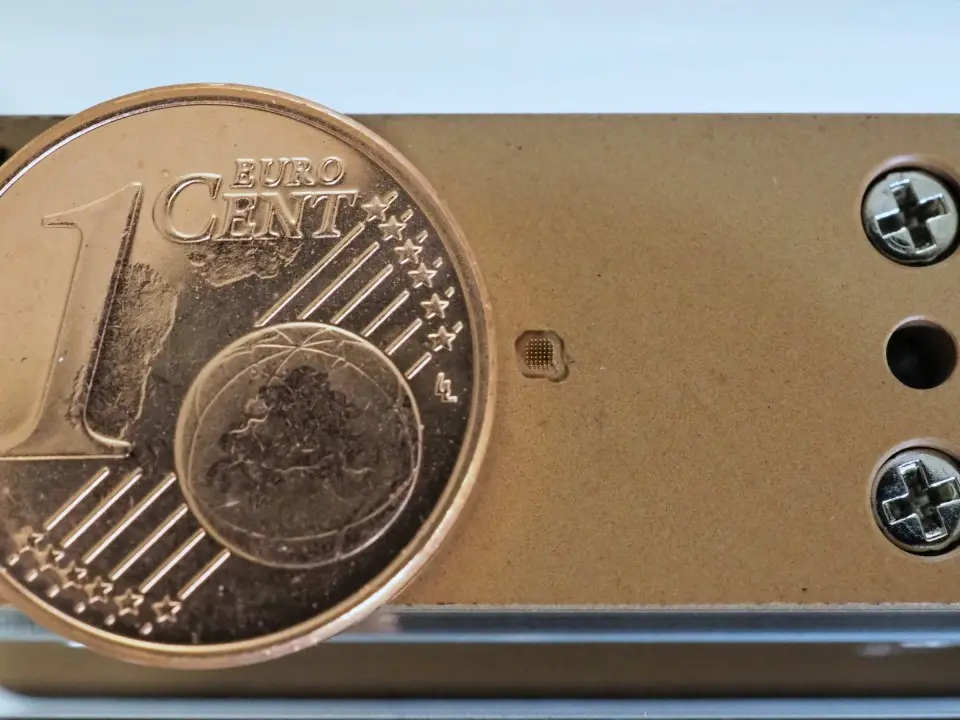
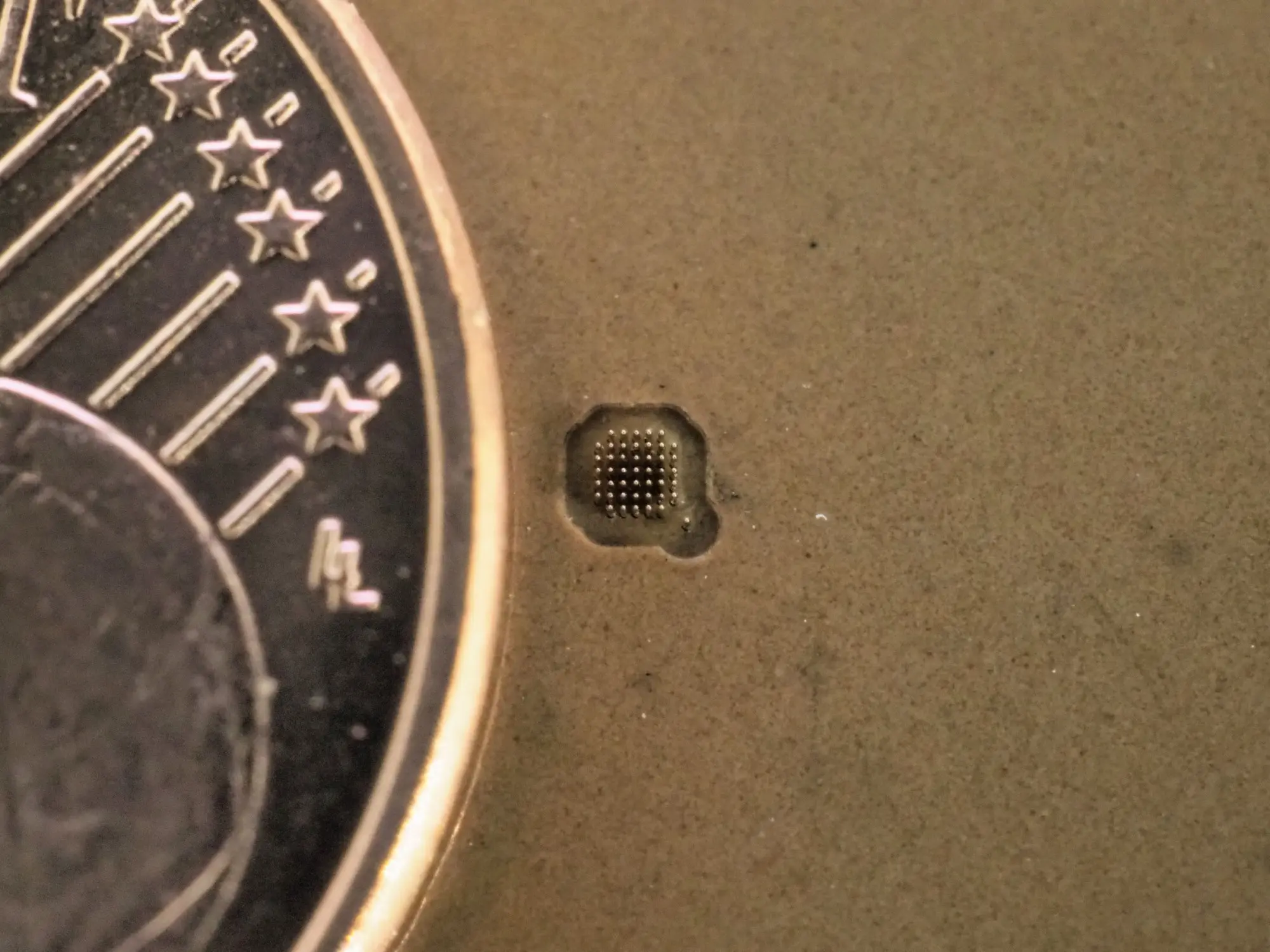
These are 46 probe pins spread on a size of just 1 square millimeter. When zooming out these dimensions become clearer:
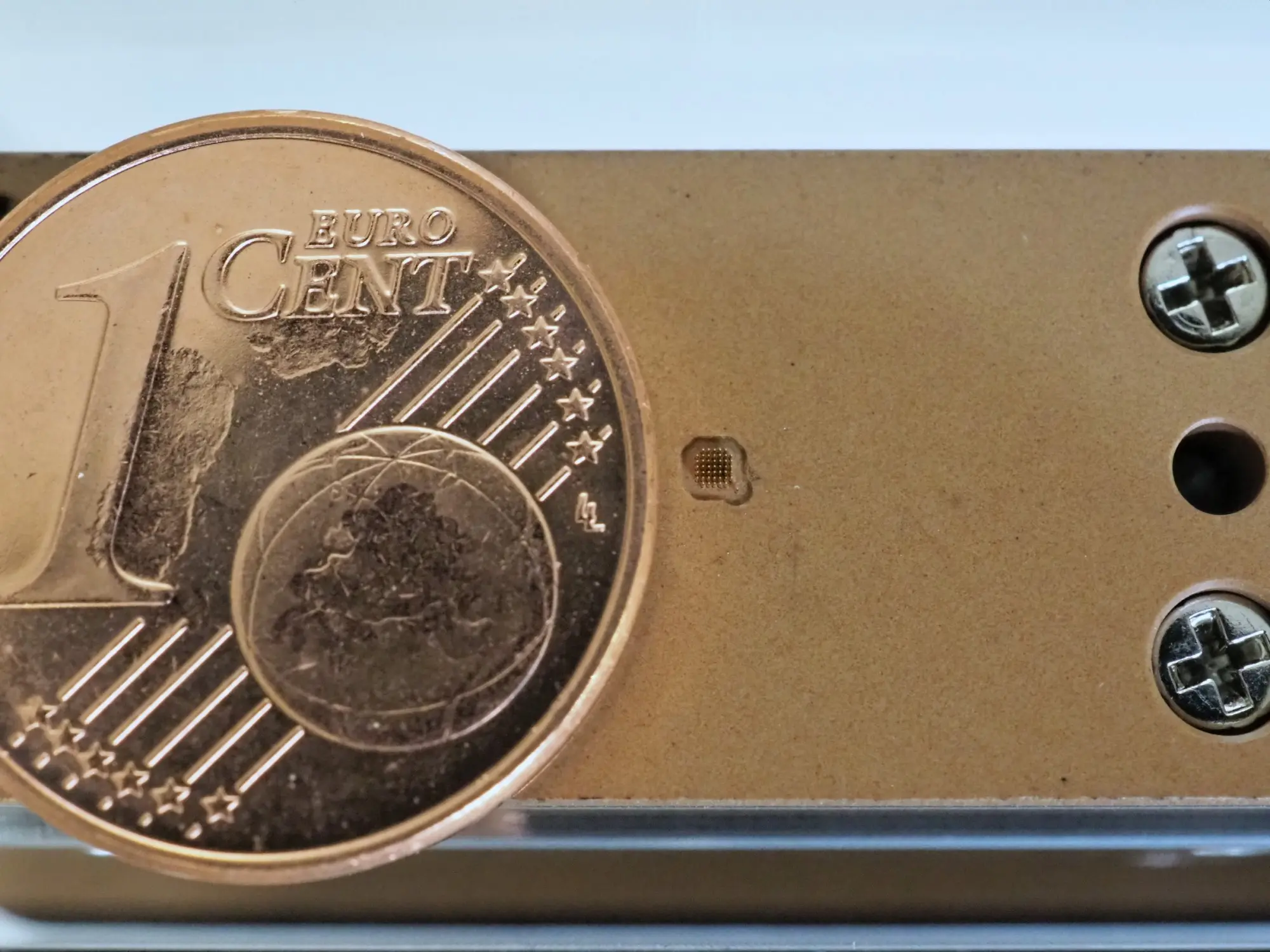
The 1 euro cent coin has a diameter of 16.25 mm. The next image shows where this probe head belongs to:
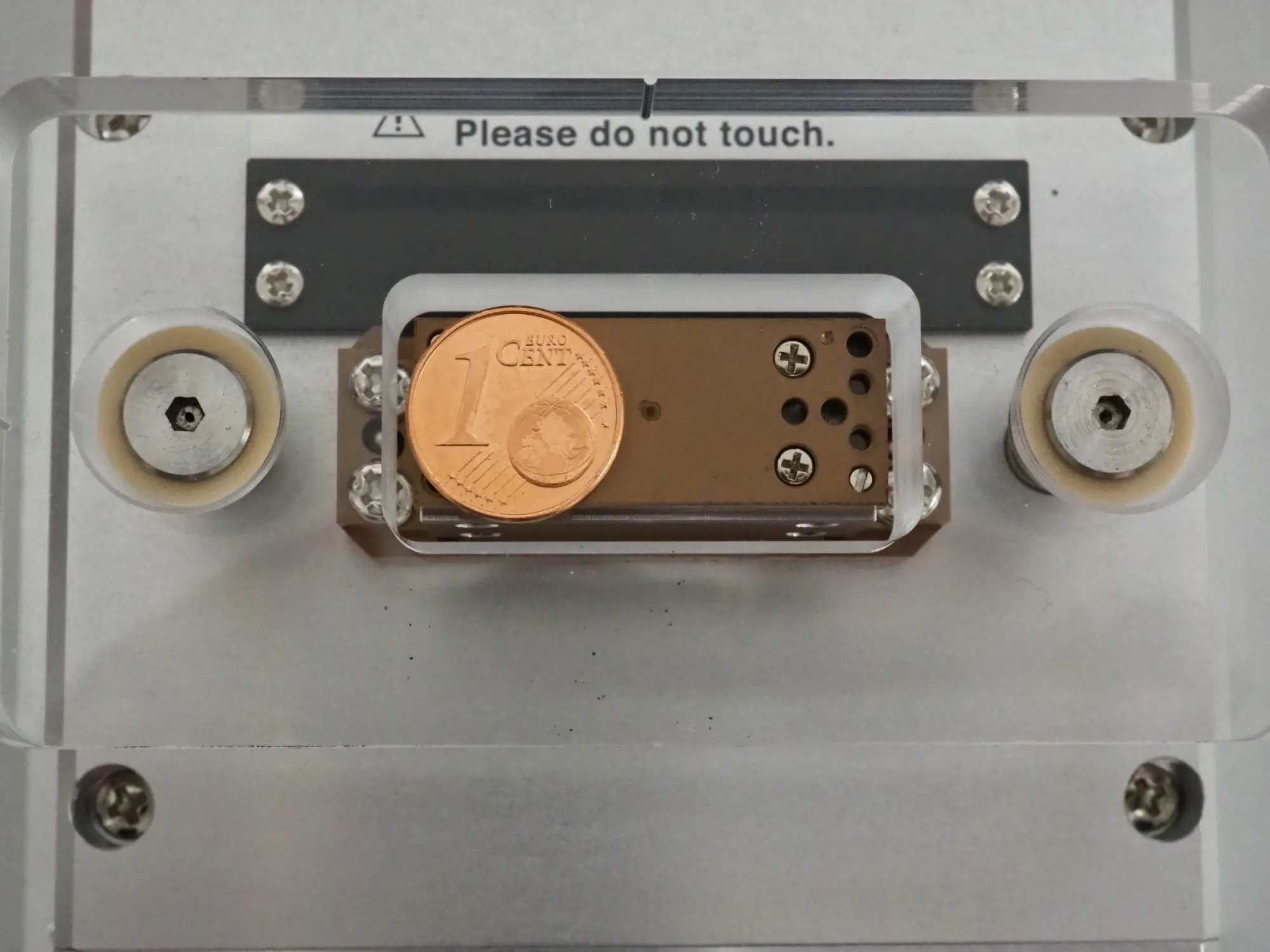
This probe head is mounted to HIOKI's RM9004 test fixture which is part of HIOKI's RM2610 Electrode Resistance Meter. The RM2610 helps quantifying composite layer resistance and interface resistance in Li-Ion battery electrode sheets and therefore helps to significantly reduce the time-to-market for new LIB cell by accelerating the R&D process.
This instrument not only underlines why HIOKI uses the claim "Japanese Precision since 1935". It is also a great example for HIOKI's aim to "contribute to society" because it helps to solve one of the big challenges of these times which is energy storage.
Skip product gallery


 Regular price:
€9,508.00
Regular price:
€9,508.00
RM2610
HIOKI RM2610 - Measurement System for LIB battery electrode sheets
Electrode Resistance Measurement System, isolates and quantifies the composite layer resistivity and the interface resistance between the composite layer and the aluminum or copper current collector foil of LIB electrode sheets in a single measurement
RM9004
HIOKI RM9004 - Probe Head for RM2610 Electrode Sheet Measurement System
Replaceable probe head for the RM2610 Electrode Sheet Measurement System with 46 spring-loaded measurement pins (75 µm each) and a contact area of just 1 mm²